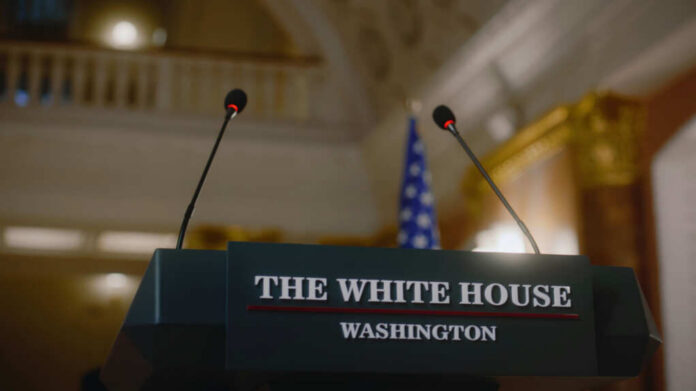
When a young Chicago man can face 20 years in prison for deleting a chat app, many Americans see less “justice” and more proof that the system now treats fear and politics as evidence.
Story Snapshot
- A 20-year-old Chicago man is charged with obstruction of justice tied to a foiled violent plot at a White House UFC event.
- Prosecutors say he ran Signal messaging groups where others discussed using drones, explosives, and snipers to attack the event.[3]
- He allegedly deleted the Signal app right after an FBI call, which investigators say destroyed key evidence.[3]
- Defense lawyers say the chat was about survivalism and camping, and that fear, not terror, drove his actions.[3]
What prosecutors say happened around the White House UFC event
Federal prosecutors say Alexander Iniguez Mercado, a 20-year-old from Chicago, helped run private Signal messaging groups that were used to plan a violent attack on the Freedom 250 Ultimate Fighting Championship event at the White House on June 14.[2][3] The indictment states that members of these chats “appeared to communicate” about attacking the event, which drew senior officials and wealthy guests.[3] Seven other people from different states have already been charged in the broader plot, making Mercado the eighth alleged conspirator.[3]
According to the Department of Justice, the plan involved talk of small drones, explosives, and sniper rifles aimed at government officials and attendees.[3] This kind of alleged plot fits a pattern where the government links online planning and extremist chatter to “domestic terrorism,” even though United States law does not have a stand-alone crime called domestic terrorism.[10][11] Because of that gap, prosecutors often lean on other laws, like obstruction of justice or conspiracy, to show they are tough on threats, especially around high-profile events at symbols of national power.[10][11]
The obstruction charge and the deleted Signal messages
The most serious claim against Mercado is not that he fired a shot or built a bomb, but that he allegedly destroyed digital evidence.[3] The indictment says that, one day before the event, a Federal Bureau of Investigation (FBI) special agent called Mercado to discuss online threats linked to the UFC fight.[3] When asked if he planned to travel to Washington, D.C., and help with an attack, Mercado allegedly denied it and refused to meet with the agent.[3] Right after that call, he uninstalled the Signal app.
Prosecutors say removing Signal from his phone made all message data on the device unavailable, and they claim he did this “knowingly” to hinder the investigation.[3] That single act is the basis for an obstruction of justice charge under federal law, which can carry up to 20 years in prison if he is convicted.[3] In many recent terrorism-related cases, the government has used obstruction, evidence tampering, and similar charges to punish people tied to plots even when no attack occurs and no weapons are found.[9][15] This strategy worries many Americans who feel the government stretches old laws to cover new fears rather than clearly defining what is and is not a terror crime.[10][11]
What the defense says and what we do not yet know
Mercado has pleaded not guilty in federal court and is being held while the case moves forward.[3][7] His lawyers argue the Signal groups were focused on survival skills and camping, not a terror mission against the White House.[3] They say Mercado “freaked out” after an offhand comment about survivalism in the chat, which could explain why he rushed to delete the app after the FBI call.[3] That argument challenges the idea that he was a committed planner rather than a scared young man caught in something bigger than he understood.
So far, there is no public record of the actual deleted messages from Mercado’s phone, because uninstalling Signal removed them from the device.[3] The indictment does not quote any message he personally wrote that clearly shows intent to attack, only that he was an administrator and member of chats where others talked about a violent plan.[3] No drones, guns, or explosives tied directly to him have been reported seized.[3] That gap in physical and digital evidence leaves many citizens uneasy: they see a justice system willing to assume intent from online roles and timing, while warning us that we must simply trust the government’s unseen files.
Why this case feeds broader mistrust in Washington
This story lands in a country already split and tired. Many conservatives look at the case and see more proof that federal agents and prosecutors can reach into private chats, label them “extremist,” and then use heavy charges to send a message, especially when events involve the White House and national security.[2][9] Many liberals see a different problem: a government that fights terrorism with broad tools but still fails to address root causes like inequality, mental health, and online radicalization.[11][12] Both sides share a core fear—that power in Washington is now used more to protect elites and reputations than to carefully weigh guilt and innocence.
Alexander Iniguez Mercado, 20, faces up to two decades in prison if convicted of the obstruction of justice charge in a grand jury indictment made public Friday. He was set to appear before a federal magistrate judge later Friday afternoon. https://t.co/DHDosj9O2T
— Chicago Sun-Times (@Suntimes) June 26, 2026
Legal scholars note that because Congress has never passed a clear domestic terrorism law, agencies like the Department of Justice and the FBI operate in a gray zone.[10][11] They stack charges like obstruction, conspiracy, and evidence tampering to show strong action, even when no attack happens and facts are murky.[9][15] At the same time, media outlets and political commentators rush to frame people like Mercado as terrorists long before any jury hears the full story.[2][3] For citizens who still believe in due process and equal justice, this case is not just about one young man and a deleted app. It is another warning light on a dashboard that already tells us the federal system is strained, politicized, and drifting away from the founding promise that the government serves the people, not the other way around.
Sources:
[2] Web – Chicago man charged in UFC plot at the White House | Fox News
[3] Web – Twenty-year-old Alexander Iniguez Mercado of Chicago is charged …
[7] Web – Ben – Twenty-year-old Alexander Iniguez Mercado of Chicago is …
[9] Web – Chicago Man Arrested in Connection with Planned Violent Attack at …
[10] Web – Alexander Iniguez Mercado charged after deleting messages tied to …
[11] Web – Alexander Iniguez Mercado, 20, faces up to two decades in prison if …
[12] Web – A Chicago man has been arrested in connection with the planned …
[15] Web – A Chicago man has been arrested in connection with the planned …