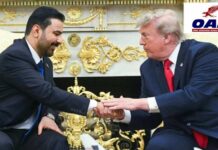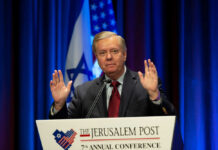


The Trump–Iran ceasefire deal now hands Iran new leverage over Gulf oil routes, and Marco Rubio is scrambling to convince uneasy Gulf leaders that Washington has not just armed the fox guarding the henhouse.
Story Snapshot
- Rubio is touring the United Arab Emirates, Kuwait, and Bahrain to sell a controversial U.S.–Iran memorandum of understanding that many Gulf leaders fear will strengthen Tehran, not tame it.[5]
- The 14‑point MOU ends active fighting and reopens the Strait of Hormuz, but it leaves Iran’s missiles and proxy networks untouched while dangling a $300 billion reconstruction fund.[6]
- Gulf states worry the deal gives Iran a bigger role in controlling vital shipping lanes and may funnel money toward weapons and militias instead of rebuilding civilian life.[5]
- Critics across the spectrum say the rushed, vague deal is more “process” than peace, feeding a familiar sense that Washington elites sign big checks while ordinary people absorb the risk.[26]
Rubio’s Gulf Trip After a Rocky Start to Iran Talks
U.S. Secretary of State Marco Rubio has begun a high‑stakes tour of the Persian Gulf to defend President Donald Trump’s 14‑point memorandum of understanding with Iran.[5] He is meeting leaders in the United Arab Emirates, then traveling on to Kuwait and Bahrain to speak with officials from the wider Gulf Cooperation Council, which also includes Saudi Arabia, Qatar, and Oman.[5] These governments were not warned in advance about the deal, and many feel blindsided and suspicious about what Washington has agreed to on their doorstep.[6]
Rubio’s mission is unusually delicate because he must calm Gulf fears without openly criticizing a deal his own administration is still trying to turn into a final agreement.[4] The MOU halted more than three months of war and reopened the Strait of Hormuz to shipping after a U.S. naval blockade had shut down much of Iran’s oil trade.[19] For Trump, the ceasefire and the slogan “Let the oil flow!” are a victory. For Gulf monarchies, the fine print looks like Washington trading hard‑won leverage for short‑term calm.[26]
What the 14‑Point Deal Gives Iran — and What It Ignores
The signed MOU declares an immediate and lasting end to military operations across all fronts, including Lebanon, and commits both sides to negotiate a final agreement within 60 days.[6] It orders the United States to fully lift its naval blockade within 30 days and promises waivers for the export of Iranian crude oil and related services as soon as the memorandum is signed.[6] In return, Iran pledges to ensure free passage of commercial ships for 60 days and formally restates that it will not seek nuclear weapons.[6]
Buried in the text is a promise by the United States and “regional partners” to build a huge $300 billion plan for Iran’s reconstruction and economic development.[6] Gulf leaders fear that much of that money could end up rebuilding Iran’s military and bankrolling armed proxy groups from Lebanon to Iraq, instead of fixing roads, hospitals, and homes.[5] The memorandum also lets Iran and Oman lead future management of maritime services in the Strait of Hormuz, which raises the stakes for countries that depend on that narrow waterway to ship almost all their oil and gas exports.[21]
Missiles, Proxies, and the Strait of Hormuz: Gulf Fears Boil Over
For many in the region, the biggest problem is not what the deal says but what it leaves out. The text does not mention Iran’s ballistic missile program at all, even though Washington’s public war aims included destroying Iran’s missile capabilities and curbing its support for armed groups abroad.[22] Trump has even said that denying Tehran missiles would be “unfair,” which clashes with years of concern about missile threats to Israel, Gulf bases, and shipping.[4]
There is also no direct mechanism in the MOU to cut off funding or weapons to groups like Hezbollah in Lebanon or militias in Iraq that continue to launch rockets and drones.[3] Israeli forces recently found a large drone factory in Lebanon that can produce weapons able to strike deep into Israel, underscoring how proxy warfare continues despite ceasefire language.[24] Gulf officials worry that, with sanctions eased and oil money flowing again, Iran can quietly grow these networks while claiming to follow the letter of the deal.
Rushed Diplomacy and a Long History of Fragile Iran Deals
Former U.S. negotiator Aaron David Miller has described the memorandum as a hastily written “process” document, closer to a rough outline than a durable treaty.[26] Some accounts say parts of it were hashed out over cell phones and scribbled notes, with little time for legal experts to close loopholes or define enforcement tools.[1] That raises a familiar fear for Americans and Middle Eastern allies alike: once again, a small circle of officials may have crafted a complex, risky agreement far from public oversight.
Rubio Seeks to Reassure Gulf Allies on Iran Deal https://t.co/2lCGQa5pSU
— Mutlu Civiroglu (@mutludc) June 24, 2026
This pattern fits a decades‑long cycle in U.S.–Iran relations. Past interim deals, like the 2015 nuclear agreement, often cooled tensions but never settled core disputes over uranium enrichment and regional power. Iran has used negotiation windows to keep enriching uranium and expand its leverage, while Washington has used sanctions and military pressure to force talks but then struggled to lock in lasting limits.[26] The new MOU repeats that structure by promising later talks on nuclear fuel, missiles, and sanctions, but delivering concessions up front.
Shared Frustration: Who Really Benefits From This Deal?
Rubio’s meetings in Abu Dhabi, Kuwait City, and Manama reflect a deeper unease that spans party lines back home. Many conservatives see the deal as proof that the “globalist” foreign policy class still gambles with American power, lifting sanctions and spending hundreds of billions overseas while problems at home mount.[5] Many liberals, meanwhile, question why Washington pours money into a war‑scarred autocracy without clear human‑rights safeguards or strong controls on weapons that fuel more conflict.
Across the spectrum, there is a growing sense that powerful insiders keep making high‑risk bargains in distant conference rooms and asking ordinary citizens, soldiers, and workers to absorb the fallout. Gulf leaders now worry that Washington may have strengthened a regional rival while leaving them exposed along key sea lanes. Americans watching from home see another complex Middle East deal rushed through, with vague promises and huge price tags. Rubio’s tour is not just about one agreement; it is about trying to prove that this time, the people who signed it are truly accountable to those who will live with its consequences.
Sources:
[1] Web – Rubio Meets Gulf Leaders After Rocky Start to US-Iran Talks
[3] Web – The #US has released the full text of its 14-point memorandum of …
[4] Web – US releases official agreement with Iran. Read the 14-point text | CNN
[5] Web – The Full Text of the Memorandum of Understanding between the …
[6] Web – Full text of Trump’s framework agreement to end Iran war – NPR
[19] Web – The US–Iran MoU rests on very little common understanding and is …
[21] Web – Fact Sheet: The Iran Deal, Then and Now
[22] Web – Read the Full Text of the 14-Point Agreement Between the U.S. and …
[24] Web – America and Iran: From Containment to Coexistence | Brookings
[26] Web – [PDF] Iran-Nuclear-Deal.pdf – Teach Democracy