Britain’s left-wing Prime Minister Keir Starmer resigned on June 22, 2026 — the latest proof that progressive policies and voter trust simply don’t mix.
Story Snapshot
- Starmer announced his resignation on June 22, 2026, after months of internal Labour Party revolt and crushing election losses.
- More than 80 Labour members of parliament had called for his departure by mid-May, with cabinet members joining the push.
- Labour lost nearly 1,500 council seats in local elections and suffered historic defeats in Wales and Scotland under Starmer’s watch.
- Manchester Mayor Andy Burnham won a by-election on June 18 and immediately confirmed he would run to replace Starmer as Labour leader.
A Slow-Motion Collapse Months in the Making
Keir Starmer’s fall from power did not happen overnight. The cracks started showing early in 2026, when Scottish Labour leader Anas Sarwar publicly called for his resignation in February. Starmer survived that challenge but emerged badly weakened. His top aide, Morgan McSweeney, had already quit amid backlash over the appointment of Peter Mandelson as U.S. ambassador — making Starmer’s search for his fifth chief of staff since taking office in July 2024.
By May 2026, the pressure became overwhelming. Labour suffered a historic wipeout in local elections across England, Wales, and Scotland. The party lost nearly 1,500 council seats and control of 40 councils. In Wales, Labour’s vote share collapsed to just 11.1%, costing them control of the Welsh Senedd for the first time. In Scotland, they recorded their worst-ever result in a Scottish Parliament election, winning only 17 of 129 seats. Voters were sending a loud, clear message.[18]
Revolt From Within His Own Party
The election disasters triggered open rebellion inside Labour. More than 80 Labour members of parliament demanded Starmer set a date to leave.[4] Four government aides resigned in a single day, urging an “orderly transition.” Junior ministers Amita Bambrah and Jess Phillips quit and publicly called on Starmer to step aside. Even Home Secretary Shabana Mahmood — a senior cabinet figure — privately urged him to announce a departure timeline.[10]
Business Secretary Peter Kyle, once one of Starmer’s most loyal supporters, told Sky News that Starmer was “reflecting on the political realities.” That kind of public signal from a cabinet ally typically marks the beginning of the end for any prime minister. Meanwhile, Nigel Farage’s Reform Party had surged to become the largest party in the UK Parliament, putting enormous pressure on Labour to find a leader capable of stopping the bleeding.[3]
Burnham Wins the By-Election, Starmer Announces His Exit
The final blow came on June 18, 2026. Andy Burnham, the popular Mayor of Greater Manchester, won the Makerfield by-election with 54.8% of the vote — more than every other party combined. A Labour ally, Josh Simons, had resigned his own parliamentary seat specifically to clear the path for Burnham to enter the race. The move signaled that the Labour establishment had already chosen its next leader.[4]
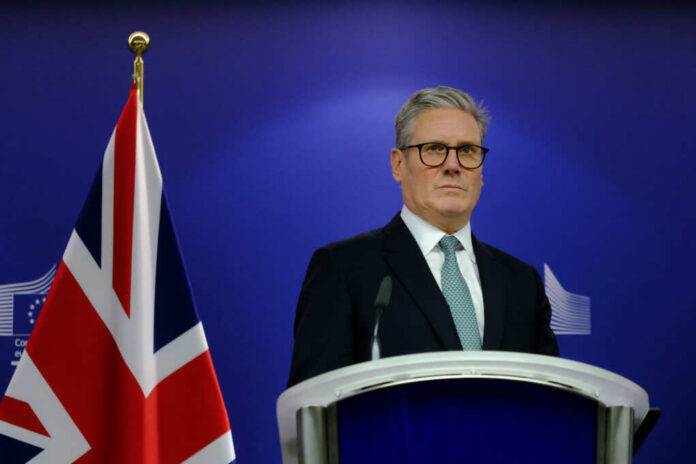
UK Prime Minister Keir Starmer announced his resignation outside 10 Downing Street following intense internal pressure from the ruling Labour Party.
Watch #ThePrintUncut: https://t.co/FhvHGJixSx pic.twitter.com/lAHYySeTSV
— ThePrintIndia (@ThePrintIndia) June 22, 2026
Four days later, Starmer stepped outside 10 Downing Street and announced his resignation. He told the nation he accepted his parliamentary party’s judgment that he was “not best placed” to lead Labour into the next general election. He informed King Charles III the same morning and asked Labour’s National Executive Committee to open leadership nominations on July 9. Burnham confirmed his candidacy the same day.[2] A YouGov poll of Labour members showed 47% ranked Burnham as their first choice for leader, compared to just 31% for Starmer.[17]
What This Means for British Politics
Starmer’s resignation caps a remarkable collapse. He entered Downing Street in July 2024 riding a historic 156-seat majority — Labour’s biggest landslide since Tony Blair in 1997. Less than two years later, he became one of the most unpopular prime ministers in modern British history, polling worse than every recent Conservative prime minister except the short-lived Liz Truss, at a -40% approval rating.[18] His failure is a textbook case of a left-wing government that overpromised, underdelivered, and lost the public’s trust at record speed.
For American conservatives watching from across the Atlantic, the lesson is familiar. Voters who feel ignored, overtaxed, and let down by elite-driven politics will eventually find another way to be heard. In Britain, that voice is now speaking through Reform. The question for Labour is whether Andy Burnham can stop the bleeding — or whether the party’s progressive era is simply running out of road.
Sources:
[2] Web – British Prime Minister Keir Starmer to resign, will stay on until … …
[3] YouTube – Sir Keir Starmer resigns as prime minister | Speech in full
[4] Web – Keir Starmer resigns, as Andy Burnham confirms he will run to … – …
[10] Web – Keir Starmer announces he’ll resign as UK prime minister, kicking off …
[17] YouTube – Senior Labour Figures Demand Resignation of Keir Starmer After …
[18] Web – Keir Starmer says he is ‘not prepared to walk away’ after call for …