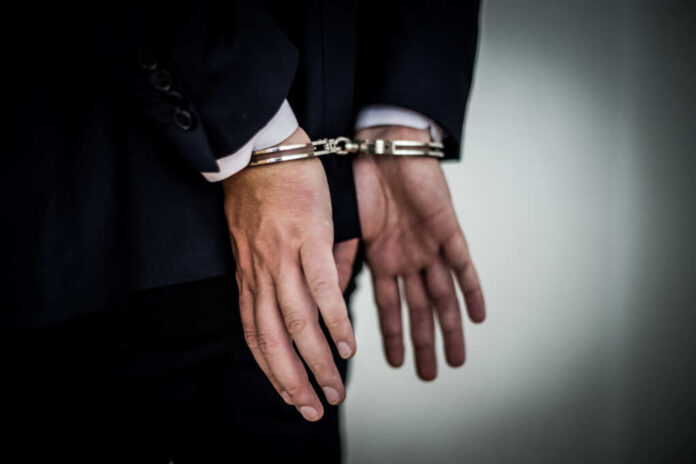
A self-declared U.S. Senate candidate is accused of spending a year leaving escalating voicemails urging President Trump’s assassination—then posting a campaign video just hours before federal agents arrested him.
Story Snapshot
- Federal prosecutors say Raymond Eugene Chandler III, a Pennsylvania Democrat claiming a 2028 Senate run, left repeated violent messages targeting President Donald Trump and an unnamed member of Congress and the lawmaker’s daughter.
- The FBI and U.S. Secret Service arrested Chandler on May 1, 2026, after investigators reviewed “numerous recordings” that allegedly escalated from threats to graphic specifics.
- Chandler faces two federal charges tied to threats against a federal official and a federal official’s family member; prosecutors are seeking pretrial detention.
- The case lands amid a broader rise in threats against public officials in 2026, increasing pressure on law enforcement resources and political leaders to tamp down rhetoric that crosses into violence.
What investigators say triggered the arrest
Federal authorities say Raymond Eugene Chandler III, of Wilkinsburg near Pittsburgh, was taken into custody May 1 by the FBI and the U.S. Secret Service after a long string of voicemails allegedly targeted President Donald Trump and an unnamed member of Congress. According to reporting based on a federal complaint unsealed in the Western District of Pennsylvania, Chandler is charged with threatening a federal official and threatening a federal official’s family member. A preliminary hearing was set for May 8.
The allegations focus on a pattern over roughly a year, from April 2025 through April 2026, in which the caller allegedly identified himself by name and address. Investigators say the messages became more explicit with time, including an April 18, 2026 voicemail that referenced slitting the throats of the congressman and the congressman’s daughter. Another voicemail on April 29 allegedly urged the lawmaker to assassinate Trump by putting a gun to his head. Those details explain why prosecutors argue the matter rose beyond “bluster.”
The campaign-video timing and the political signal it sends
One detail making this case politically radioactive is the timing: Chandler reportedly posted a YouTube campaign video the morning of May 1—hours before the arrest—titled “It’s time to tax the billionaires,” announcing his Senate ambitions. That sequencing matters because it blends political branding with alleged threats, muddying what voters might otherwise dismiss as internet rage. Even without evidence of an operational plot, investigators appear to treat repeated, attributable threats as a real security risk.
Authorities also point to language that referenced buying combat knives, building gallows, and “armed resistance” tied to grievances about ICE. That context lands in the middle of a national debate over immigration enforcement and the rule of law, especially with Republicans controlling the federal government in Trump’s second term. The First Amendment protects harsh political criticism, but the law draws a bright line at credible threats of violence—particularly when specific targets and family members are named.
A wider pattern of threats is stretching the system
Reporting around the Chandler complaint links the case to a broader 2026 trend: a heightened threat environment around Trump and federal officials. Other cases cited in coverage include threats posted online by different suspects in other states, some paired with unrelated criminal allegations and personal instability. The common thread is that each new incident forces a labor-intensive response—documentation, threat assessment, and, often, protective measures—adding to the workload for agencies already tasked with protecting national leaders.
Why this matters to Americans across the political divide
For conservatives, the most immediate takeaway is that violent political rhetoric is not staying contained to anonymous social media posts—it can surface from people seeking power and legitimacy. For liberals, the case is another reminder that political anger can spiral into the kind of intimidation that undermines democratic participation. The strongest, verifiable is not about party labels; it is that federal authorities say the threats were repeated, specific, and escalatory, prompting joint action by the FBI and Secret Service.
Here's Why This U.S. Senate Candidate Got Arrested For Threatening Trump https://t.co/9b3F9IIvwF
— Tim Lewis (@TimSLewis) May 4, 2026
Limited public detail remains, including the identity of the unnamed member of Congress and what, if any, additional evidence exists beyond the alleged recordings referenced in the complaint. Those gaps matter, because the public deserves transparency while courts protect due process. Still, the immediate significance is clear: in a moment when many Americans already suspect government and politics are broken, cases like this deepen cynicism and fear—while also testing whether institutions can respond quickly and fairly without turning everyday political speech into a criminal matter.
Sources:
U.S. Senate Candidate Arrested for Trump Threats
Democrat Senate Candidate Charged Over Alleged Trump Assassination Threats