Washington’s new Ebola flight limits once again blur the line between legitimate disease control and a government that reaches for sweeping border powers before showing the public its math.
Story Snapshot
- The Centers for Disease Control and Prevention and Department of Homeland Security have imposed tighter Ebola-related screening and entry limits tied to outbreaks in East and Central Africa.[2]
- Non‑U.S. passport holders who recently spent time in Uganda, the Democratic Republic of Congo, or South Sudan now face targeted entry restrictions and routing rules.[2][3]
- Federal officials admit the immediate risk to the U.S. public is low, raising questions about whether restrictions match the actual threat level.[2]
- Past research and World Health Organization norms warn that broad travel limits can be more political theater than effective health strategy.[1][4]
DHS tightens flight rules as Ebola outbreaks escalate abroad
The Centers for Disease Control and Prevention (CDC) and the Department of Homeland Security (DHS) have rolled out a fresh round of Ebola-related travel controls aimed at keeping new cases from reaching American soil.[2] The move responds to ongoing Ebola Virus Disease outbreaks linked to the Bundibugyo strain in East and Central Africa and follows a World Health Organization emergency declaration for the region.[2][3] Federal officials say the measures are temporary, grounded in current data, and focused on blocking importation of the virus.
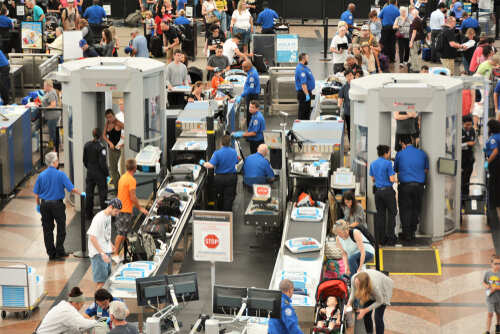
Under a new order issued May 18, 2026, CDC is enhancing public health screening and traveler monitoring for people arriving from outbreak‑affected areas, while DHS tightens how certain travelers can enter the country.[2] Non‑U.S. passport holders who have been in Uganda, the Democratic Republic of Congo, or South Sudan within the previous twenty‑one days now face entry restrictions, with some flights reportedly funneled through Washington‑Dulles International Airport for concentrated screening.[2][3] Officials frame the package as a targeted response rather than a blanket travel ban.
How the new screening regime fits a long pattern of crisis controls
Public health authorities describe a layered system: exit screening in affected countries, enhanced checks on arrival, and intensive contact tracing if someone appears sick.[1][2] During the 2014 West Africa outbreak, DHS required travelers from Guinea, Liberia, and Sierra Leone to enter through a small set of airports where officials could check symptoms and travel history, a model now echoed in the Dulles‑focused routing plan.[1][3] CDC again stresses coordination with airlines, airport staff, and international partners to identify and manage potential exposures.[1][2]
Federal health experts have long said exit screening in outbreak countries is the most effective way to stop infected passengers before they ever board.[1] World Health Organization guidance similarly calls on affected nations to screen all departing travelers and bar anyone with suspicious symptoms from flying, while cautioning other governments against broad trade or travel bans.[5] That history matters, because it suggests today’s route restrictions are an added layer placed on top of tools that were already considered the core defense against cross‑border spread.[1][5]
Low stated risk, high authority, and gaps in the public evidence
The same CDC statement that justifies these restrictions also concedes that “the immediate risk to the general U.S. public is low,” even as it invokes emergency powers under Title 42 of the Public Health Service Act.[2] Officials say they are acting on “current epidemiological evidence” and “ongoing risk assessments,” yet the publicly available documents do not include the underlying models, thresholds, or detailed rationale for selecting the specific country list, the passport‑based rule, or the twenty‑one‑day window.[2][3] That leaves citizens asking to see the homework behind far‑reaching authority.
Academic research on the 2014 Ebola crisis found that many travel restrictions were not supported by evidence and conflicted with international rules that warn against “unnecessary interference” with global traffic.[4] That paper argued that such measures can erode cooperation, strain economies, and still fail to stop determined travelers or asymptomatic carriers.[4] CDC has not publicly released a study showing how much extra protection this 2026 routing plan adds beyond exit screening, arrival checks, and hospital readiness, so both supporters and skeptics are largely arguing in the dark.[1][2][4]
Why both conservatives and liberals are wary of how this power is used
Many Americans on the right look at these Ebola rules and see another example of Washington reaching for sweeping powers without proving they are tightly focused, effective, and temporary. They remember COVID‑era emergency measures that morphed into open‑ended mandates, and they notice that this order differentiates by passport status rather than specific exposure, a distinction CDC has not fully explained.[2][3] That raises familiar worries about bureaucrats using health law to pursue broader border control agendas.
DHS to tighten Ebola-related flight restrictions for some foreign travelers: https://t.co/P1V8DZzhT7 pic.twitter.com/OU3hSKyUku
— Georgeanne Matranga ☮️🟧 (@DTPORGE) May 21, 2026
Americans on the left bring a different but related concern: when government mixes genuine outbreak response with nationality‑based limits, it can fuel stigma, hurt frontline health workers, and distract from investments in hospitals, laboratories, and local preparedness that actually save lives.[4][5] Both sides see another instance of powerful agencies acting first and explaining later, with little independent oversight of how data, rights, and international obligations are weighed. That perception deepens the sense that an unaccountable “expert” class, not accountable citizens, is steering policy.
What to watch next: transparency, time limits, and measurable results
The core question now is whether CDC and DHS will show their work. Releasing risk assessments, airport performance data, and clear criteria for lifting or tightening restrictions would allow Americans to judge whether this is a precise tool or just political reassurance. Past experience suggests that even well‑intended travel rules can outlive the evidence that created them.[1][4] A government serious about both safety and liberty would pair strong containment measures with equally strong transparency about how and why they are used.
Sources:
[1] Web – DHS boosts screening for travelers from Ebola outbreak nations
[2] Web – CDC Statement on the Use of Public Health Travel Restrictions to …
[3] Web – United States | State Department, DHS and CDC announce actions …
[4] Web – Unsanctioned travel restrictions related to Ebola unravel the global …
[5] Web – Public Health Travel Restrictions to Prevent the Introduction of Ebola …