

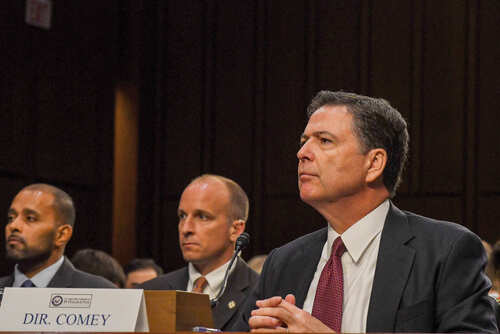
Former FBI Director James Comey faces federal charges for allegedly threatening President Trump’s life through a cryptic Instagram post featuring seashells arranged to spell “8647,” which prosecutors claim is coded slang for eliminating the 47th president.
Story Snapshot
- Comey indicted on two federal counts for posting seashells spelling “8647” on Instagram, interpreted by DOJ as coded threat against Trump
- Acting Attorney General Todd Blanche announced zero tolerance policy, with each count carrying up to 10 years in prison
- This marks Comey’s second indictment; the first on unrelated charges was dismissed
- Comey maintains innocence and expresses faith in independent American judiciary
DOJ Interprets Deleted Social Media Post as Threat
A federal grand jury in North Carolina returned a two-count indictment against James Comey on charges of threatening to take the life of President Donald Trump and transmitting an interstate threat to kill. The charges stem from an Instagram post Comey made around May 15, 2025, featuring seashells arranged to spell “8647.” The Department of Justice interprets the number as internet slang, where “86” means to eliminate or get rid of something, combined with “47” referencing Trump as the 47th president. Comey deleted the post shortly after publishing it.
Zero Tolerance Policy Under Trump Administration
Acting Attorney General Todd Blanche announced the charges, emphasizing the administration’s firm stance on presidential security. Blanche stated that threatening the life of the president will never be tolerated, highlighting that each count carries a maximum sentence of 10 years in federal prison. The prosecution treats the social media post as a threat transmitted via interstate commerce, a federal offense that falls under DOJ jurisdiction. This aggressive interpretation of symbolic online speech raises questions about the boundaries between political expression and criminal threats in an increasingly polarized climate.
Longtime Adversaries Clash Again
The indictment represents the latest chapter in the contentious relationship between Comey and Trump, dating back to Comey’s tenure as FBI Director from 2013 to 2017. Trump fired Comey in 2017 amid the Russia investigation, and the two have publicly criticized each other repeatedly since. This case emerges in a politically charged environment following Trump’s return to office, with Blanche serving in the administration that is now prosecuting Trump’s longtime nemesis. The power dynamics underscore concerns among critics who view the prosecution as politically motivated, while supporters argue it demonstrates equal application of the law regardless of the accused’s stature.
Comey Declares Innocence and Faith in Judiciary
In a video response to the indictment, Comey maintained his innocence and stated he remains unafraid while trusting in the independent American judiciary to vindicate him. This marks Comey’s second indictment, though his first on unrelated charges was dismissed, potentially providing legal precedent for his defense team. The dismissal of the previous case raises questions about the strength of the current prosecution and whether these charges will withstand judicial scrutiny. Free speech advocates worry the case could chill symbolic political expression on social media, while law enforcement officials argue that protecting the president from credible threats must take priority.
Broader Implications for Online Expression
The prosecution of Comey based on interpreting internet slang and symbolic imagery sets a potentially far-reaching precedent for how authorities monitor and prosecute online speech. Many Americans across the political spectrum are troubled by the government’s expanding power to interpret coded messages on social media platforms, fearing this could lead to selective enforcement against political opponents. The case highlights growing concerns that unelected bureaucrats and prosecutors wield excessive discretion in determining what constitutes a criminal threat versus protected political speech. Whether courts will uphold the DOJ’s interpretation of “8647” as an actionable threat remains uncertain, but the outcome could significantly impact how millions of citizens express political dissent in the digital age.