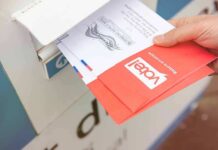


The Supreme Court’s 5-4 ruling to allow late-arriving, postmarked ballots sparked an unusual public rebuke from President Trump toward the very Court he helped shape.
Story Snapshot
- The Supreme Court said states may count mail ballots that arrive after Election Day if postmarked on time.
- President Trump blasted the decision as a major loss and warned it harms election integrity.
- Research and prior statements say mail-ballot fraud is rare, though slower counts can delay results.
- The ruling preserves existing rules in many states and keeps local control over ballot deadlines.
What The Court Actually Decided
The Supreme Court ruled that states can count mailed ballots that arrive after Election Day as long as they were postmarked by Election Day, rejecting a challenge led by the Republican National Committee and backed by President Trump. The majority concluded that federal election-day statutes do not force states to discard such ballots. The practical effect is to leave state grace-period rules in place for the midterms. Several states already use these rules as part of normal election administration.
President Trump called the decision a significant defeat and linked late-arriving ballots to risks for election integrity. His view matches a long-running push from allies who argue that counting after Election Day weakens trust and delays clear winners. Critics of the ruling say it opens doors to confusion and more disputes in the days after voting ends. Supporters say the decision respects state authority and protects voters from mail delays outside their control.
How Many States Use Grace Periods, And Why
Think tanks and election-law explainers say many states accept ballots that are postmarked by Election Day and arrive within a set window after. Brookings lists at least 17 states and the District of Columbia with postmark-based grace periods. The Constitution Center notes that courts have often treated these as choices for states unless federal law clearly says otherwise. These rules aim to avoid throwing out lawful votes because of mail delays, especially in rural areas and during peak postal traffic.
Administrative reviews show the mail system can struggle with ballot handling. A ProPublica report cited audit findings of training gaps, tracking issues, and delivery delays that could push some ballots past return windows. These are management and logistics problems, not proof of fraud. They do show why states built short grace periods in the first place. Counting these ballots can slow final tallies, which frustrates voters who want fast results and fuels claims of misconduct even when none is found.
Fraud Risk Versus Counting Delays
Public claims often frame mail ballots as a unique fraud threat. Decades of research and statements from federal law enforcement paint a different picture. The Federal Bureau of Investigation (FBI) said it had no evidence of coordinated mail-voting fraud schemes in past cycles. FactCheck.org reports that mail voting is largely secure and that fraud is rare. It adds that late-arriving, postmarked ballots can be lawful under many state rules. These findings speak to risk levels, not the pace of counting.
Delays are real. Legal briefs filed against grace periods argue that late receipt extends counting and dispute timelines, which can slow when the public learns who won. That delay can fuel mistrust, especially when tight races shift as on-time, valid ballots are added. Election officials say the process continues until certification and that adding lawfully received ballots is part of the normal count, not a sign of wrongdoing. Balancing speed and accuracy remains the core tension.
Why This Clash Resonates Across Party Lines
Voters on the right and the left share a deeper worry: powerful institutions make rules that seem to suit insiders, not citizens. To many, a patchwork of deadlines, lawsuits, and late-night counts looks like a system built for confusion. The Court’s ruling does not end that feeling. It keeps state rules in place, which vary widely, and it leaves the Postal Service’s performance as a key link in a high-stakes chain. That mix invites doubt even when the data show low fraud.
In blow to Trump, Supreme Court blocks mail ballot restrictions from taking effect in 2026 – Votebeat https://t.co/H0EN9yaas9
— Linda Mintun (@linda_mintun) September 15, 2026
Here is the bottom line for readers. The Court said states may keep counting postmarked ballots that arrive soon after Election Day. President Trump opposes that call and says it harms integrity. Research says fraud is rare, but audits show mail delays are real and can slow results. If you want faster, clearer outcomes, the pressure points are simple: better Postal Service performance, tighter and more uniform state deadlines, and timely funding for election staff and equipment.
Sources:
theguardian.com, apnews.com, cnbc.com, supremecourt.gov, nytimes.com, npr.org, abcnews.com