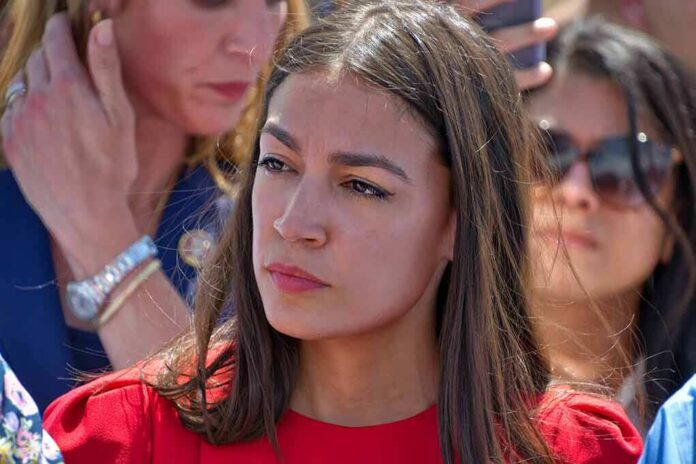
The Associated Press said the viral claim that Rep. Alexandria Ocasio-Cortez lied about being inside the Capitol on Jan. 6 is false, and that simple fact cuts against years of recycled outrage that many media outlets still amplify.
Story Snapshot
- Associated Press and Agence France-Presse found Ocasio-Cortez said she was in a nearby office building, not the main Capitol.
- Washington Post reported she clarified her location while describing a tense officer encounter.
- Multiple fabricated posts about her have circulated for years, according to fact checks.
- The fight shows how short, distorted claims can outrun later corrections across partisan media.
What The Fact Checks Actually Say
Associated Press reviewed the claim that Ocasio-Cortez lied about being in the main Capitol building on Jan. 6 and found it false. The outlet said she never claimed she was in the main structure, and instead said she was in her office in a neighboring building during her Instagram Live talk about that day. Agence France-Presse reached the same conclusion after reviewing the video clips and posts that spread online. It said she made clear she was at her office in a building near the Capitol.
The Washington Post also reviewed the uproar. Its analysis said critics distorted her account and that she explicitly said she was in a House office building, not the main Capitol structure. These findings focus on a narrow point with clear answers: where she said she was. They do not judge how people feel about the tone of her story. But on the central claim that she lied about her location that day, the three outlets align in the same way.
Why This Keeps Coming Back
Old claims about Ocasio-Cortez keep returning because they travel fast in simple forms, like a screenshot, a clipped video, or a punchy line. By the time a correction lands, many readers have moved on. That is not a left or right problem. It is a media and attention problem. When emotion is high and trust is low, the first version can “stick,” and later context feels like spin. That cycle feeds the belief that powerful players edit the truth.
Several examples show how this pattern repeats. Associated Press debunked a fake screenshot that said she called for a “conservative purge”. It also found a viral truckers quote tied to her came from a satire site, not a real statement. Another video claim said she cried on a cable news show; that did not happen, the outlet reported after reviewing the footage. FactCheck.org said posts about her having millions in assets were baseless and did not match her disclosure.
The Media Question People Keep Asking
Some readers ask whether big outlets hide key facts or leave out context to protect a favored figure. One commentary piece on a New York radio site argued that timelines and records show she was in the Cannon House Office Building, not the Capitol, which the fact checks already say. But opinion does not add new evidence. It repackages the same point while implying a broader doubt. That framing keeps distrust alive without changing the core facts already verified.
The core facts are narrow but important. The reviewed video shows she did not claim to be inside the main Capitol building. She described fear in a nearby office and a stressful encounter with a police officer who she said did not announce himself. Disputes over her tone are judgment calls and will vary by viewer. But the location claim can be tested, and the tests from multiple outlets agree on that point.
Why Both Sides Feel Burned
Many conservatives over 40 feel worn down by years of media framing they see as slanted, and they carry a long list of policy fights that sharpen that view. Many liberals over 40 feel the same way about selective edits and pressure from partisan channels. Both camps think elites use spin and delay to protect their own. This case fits that fear: a simple false claim was catchy, and the later fix never spread as far as the first blast.
What should citizens do with that? Start with first-source facts. Check what the person actually said, in full if possible. Then look for a single best corroborating source, not a pile of repeats. In this case, Associated Press, Agence France-Presse, and the Washington Post each tied their findings to the video claim at issue. That does not settle every feeling about Jan. 6, but it does settle the question of what she claimed about where she was.
Sources:
twitchy.com, ocasiocortez.com, factcheck.org, apnews.com, wral.com, pbs.org