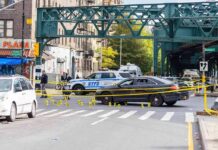
Georgia National Guard helicopters helped police spot backyard marijuana grows from the air, leading to search warrants and plant seizures in Dalton.
Story Snapshot
- Guard aircrews flew summer counterdrug missions that fed probable-cause for warrants.
- A helicopter crew in Dalton spotted a grow behind a home, enabling a judge-signed warrant.
- State and local teams removed 343 illegal marijuana plants across Georgia this season.
- The flights are part of a decades-old Guard-law enforcement counterdrug partnership.
What Happened: Helicopter Spotting Led To A Dalton Warrant
Georgia National Guard counterdrug aviators spent several days in September flying surveillance in northwest Georgia. A Guard release says a UH-72 helicopter crew spotted marijuana plants behind a private residence in Dalton. Local law enforcement used that aerial observation to secure a search warrant signed by a judge. Officers then seized outdoor plants and processed marijuana inside the home. The Guard describes this as assisting “probable cause generation” for marijuana eradication efforts.
Task and Purpose reported that Guard helicopters carried a civilian police officer during these flights. The officer scanned from the air while Guard pilots and crew flew county-wide routes. When a suspected grow was seen and verified, the officer used that observation to support a search-warrant request. The news outlet called the mission “probable cause generation,” echoing Guard language that its counterdrug program fills resource gaps for local agencies.
By The Numbers: Plant Removals And Seasonal Output
The Georgia National Guard said state and local agencies, with Guard support, removed 343 illegal marijuana plants during this summer’s eradication push. The public account ties that outcome to multi-day flights in early September, including the Dalton case that led to a felony search warrant and seizures. The release highlights air-to-ground coordination and surveillance from the Guard’s light utility helicopters as key contributors to the season’s results.
The Guard’s public affairs page lists the counterdrug unit and shares imagery of surveillance from a Georgia Army National Guard UH-72 helicopter. The images and captions depict summer eradication operations and the aircraft type used for spotting. While the release does not identify each individual sortie, it frames the plant total as the measurable output of the campaign supported by Guard aviation this year.
The Playbook: A Long-Running Counterdrug Partnership
This operation follows a long pattern of National Guard support to civilian drug enforcement. A memorandum of understanding and National Guard histories describe state Guard units aiding police with aerial observation, transportation, and intelligence for eradication since the 1990s. Earlier Georgia materials also show sheriffs working with Guard helicopters and crews to find and remove large outdoor grows during seasonal campaigns across multiple counties.
Historical accounts note that National Guard aviation has commonly flown detection and eradication support flights nationwide. Past Georgia examples cite thousands of plants eradicated with Guard airlift, ground teams, and coordination cells. The Dalton flights fit this model: Guard aircrews provide the platform and coordination, a police officer observes and verifies from the aircraft, and local agencies seek warrants or carry out eradication on the ground as required by state law.
Why It Matters: Police Resources, Warrants, And Civil Boundaries
Local departments often lack aircraft and trained aircrews. Guard aviation fills that gap under state control for counterdrug work, which can speed plant detection during peak growing months. The described method relies on a judge-signed warrant before officers search a home, anchoring the process in Georgia’s probable-cause standards. That chain—spot, verify, seek warrant, then seize—aims to keep the line between surveillance and a lawful search clear in practice.
The federal framework for military support to civilian law enforcement has long allowed such assistance when authorized, and states have used Guard units to bolster drug enforcement for decades. Georgia’s 2026 flights reflect that settled approach: military-owned helicopters, flown under state authority, help police find likely grows, while civilian officers and courts handle warrants and seizures. The Guard reports the system removed hundreds of plants this season, including the Dalton case built from an aerial spot.
Sources:
taskandpurpose.com, newsnow.com, militarywar.whatfinger.com, doi.gov, dvidshub.net, ajc.com