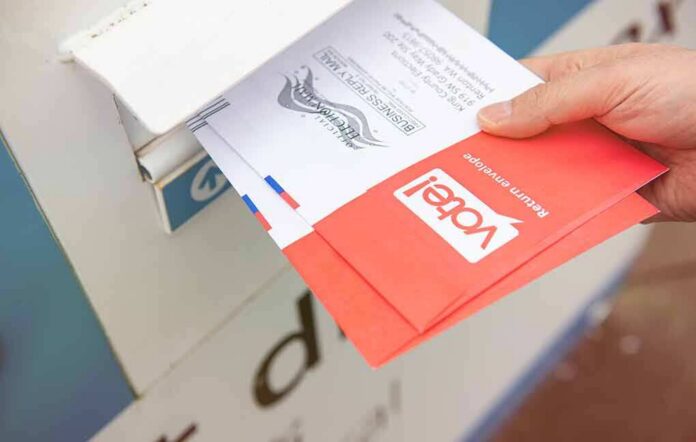
The Supreme Court kept new federal limits on mail ballots off the table for November, averting last-minute election rule changes that could have sown confusion for voters and officials alike.
Story Snapshot
- The Supreme Court left in place lower-court orders blocking the Postal Service from enforcing new mail-ballot rules for the midterms.
- The case turns on who controls election rules: states and Congress, or federal agencies carrying out a president’s order.
- Earlier rulings briefly gave the administration room to proceed, but appeals judges later refused to lift the block.
- The justices did not decide the final legality of the policy, so more litigation will follow after the election.
What The Supreme Court Did And What It Means Now
The Supreme Court declined to let the U.S. Postal Service enforce parts of a new rule tied to President Trump’s executive order on mail voting. The unsigned order leaves in place a Boston judge’s injunction that stops key provisions for this election cycle. The Washington Post and VoteBeat reported that the practical result is clear: the new restrictions will not apply for the midterms. The Court did not resolve whether the order is lawful. That question remains for later, after full briefing and argument.
The blocked provisions reportedly would have required strict envelope design standards and allowed the Postal Service to refuse outbound ballot mail that did not comply. A nonpartisan research brief from the Congressional Research Service explains that a temporary restraining order first paused most of these sections in late August, setting the stage for the current fight. Civil rights groups praised the injunction, saying it prevents likely voter disenfranchisement while courts sort out the issues.
How We Got Here: A Whiplash Legal Timeline
The legal path has seesawed for weeks. In late August, the Supreme Court granted a narrow interim win to the administration in a related case, which led a district judge to revisit an earlier, broader block. Soon after, the same district court again halted the Postal Service’s final rule, and a three-judge appeals panel refused to put that halt on hold. Reuters reported that the First Circuit’s refusal kept the injunction in place as the case advanced. Monday’s Supreme Court action left that status quo intact for November.
These emergency rulings do not answer the deepest question in the case. Courts often avoid changing election rules close to voting, to reduce confusion for voters and officials. That approach explains why interim decisions focus on timing and harm, not final merits. NPR noted the justices did not bless or strike down the policy itself; they only decided what can happen before Election Day. That keeps the legal stakes high after the midterms conclude.
The Core Dispute: Who Sets The Rules For Mail Voting?
At the heart of the case is power. Democratic-led states and voting groups argue the Constitution gives states and Congress, not a federal agency, control over election rules for mail ballots. They say the Postal Service’s rule tries to decide who can vote by mail and how ballots must be prepared, which they call unlawful. Supporters of the administration counter that the Postal Service can set mail-handling standards for sensitive items, including mailed ballots, to protect election integrity.
Both sides claim they are protecting trust in elections. Many conservatives want stronger checks to stop illegal voting and to restore faith in results. Many liberals warn that new hurdles risk blocking lawful voters and expanding federal power beyond its lane. The Supreme Court’s move addresses only the near-term risk of sudden rule changes. It does not settle whether Washington can rewrite mail-ballot procedures through agency rules tied to an executive order. Expect more briefs, more hearings, and a final answer later.
Sources:
youtube.com, scotusblog.com, congress.gov, cnbc.com, cnn.com, reuters.com, washingtonpost.com, aclu.org