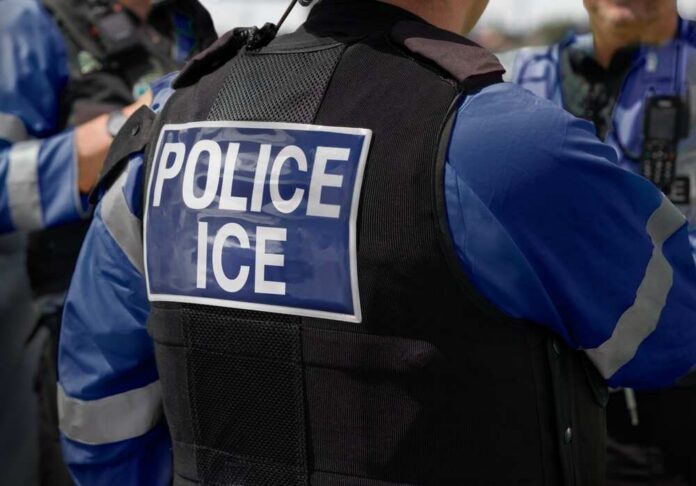
Federal immigration agents are now supposed to wear body cameras, yet people keep dying in encounters that are never filmed, deepening public fear that the system protects itself more than it protects the public.
Story Snapshot
- ICE has a formal nationwide body-camera mandate on paper, but cameras still cover only part of the force.
- Several recent deadly shootings by immigration officers involved agents who had no cameras at all.
- Policy language promises transparency, yet it carves out big gaps, including detention centers and “security” exceptions.
- Funding fights and slow rollouts feed the sense that Washington talks accountability while quietly delaying it.
What ICE’s Body-Camera Policy Actually Requires
U.S. Immigration and Customs Enforcement created a formal body-camera policy in January 2024, then updated it in February 2025 with Directive 19010.3. The directive says law enforcement officers must turn cameras on at the start of enforcement activities and leave them on until the action ends. If officers do not activate their cameras, they must write an explanation afterward. The agency’s own privacy assessment says the program will cover all aspects of immigration enforcement work, except some sensitive investigative operations.
ICE’s public news release said body cameras are required during at-large arrests, search warrant operations, removal flights, and when officers respond to violent disturbances at their facilities. Cameras cannot be used just to record people exercising free speech rights, like peaceful protests. The policy also lays out rules for storing video and reviewing footage when someone is seriously hurt or dies in custody. On paper, this sounds like a strong step toward transparency and clearer records of how officers behave in the field.
Slow Rollout, Deadly Incidents, and Missing Footage
Even with a sweeping mandate, ICE admits it does not have enough cameras for every immigration officer. The agency began by deploying about 1,600 devices to officers in five cities: Baltimore, Buffalo, Detroit, Philadelphia, and Washington, D.C., with plans to expand only if Congress provides more money. That limited rollout left many agents across the country without cameras during serious incidents, even as the directive said cameras were required during enforcement work.
News reports about deadly shootings show how this gap plays out in real life. In a high-profile fatal shooting in Houston, the Department of Homeland Security confirmed that the ICE agents involved were not issued cameras, despite a $20 million grant meant to fund the program. Families and witnesses dispute officials’ account of what happened in that van, but there is no body-camera video to confirm either story. Similar problems have surfaced in other cities, where officers used deadly force without any official footage, leaving only shaky phone videos and conflicting testimony.
Loopholes, Blind Spots, and Ongoing Accountability Fights
Critics argue that even where cameras exist, ICE rules leave major blind spots. Policy language and outside analysis note that cameras are not allowed inside immigration detention centers, even though many complaints about abuse and poor treatment come from those facilities. The directive also allows officers to skip recording when they claim “operational-security” concerns, a term civil rights advocates say is broad enough to become a loophole if not tightly monitored.
Research groups, including the Brennan Center for Justice, say ICE has not given agents clear, simple instructions about exactly when to activate cameras, which weakens the program’s real-world effect. Past pilot programs showed no clear drop in uses of force or complaints, raising questions about whether cameras alone can fix deeper cultural and oversight problems. At the same time, lawmakers introduced the Immigration Enforcement Staff Body Camera Accountability Act to require cameras for all immigration enforcement staff, a sign that Congress sees the current patchwork approach as not enough.
Politics, Funding Cuts, and Public Frustration With “The System”
Fights over money sit at the center of this story. The body-camera push began under a 2022 order that told federal law enforcement agencies to adopt camera policies, but that order was later rescinded while ICE kept much of the policy language. Reporting shows that Trump-era budget proposals moved to cut funding for immigration body cameras and reduce oversight spending, which slowed nationwide deployment. This allowed leaders to say they supported cameras for transparency while delaying full coverage on the ground.
The protests in Maine aren't random unrest. They're a response to a specific set of confirmed facts:
Joan Sebastian Guerrero was work-authorized confirmed by DHS Secretary Mullin to Sen. King. He was NOT the target of the warrant. Security footage shows the vehicle driving away…
— 𝐌𝐈𝐂𝐇𝐀𝐄𝐋 𝐎𝐋𝐈𝐏𝐇𝐀𝐍𝐓 (@MichaelOliphant) July 15, 2026
People across the political spectrum see a pattern they recognize. Conservatives who worry about government waste see millions of dollars granted without basic gear reaching front-line agents in time to record deadly incidents. Liberals who fear abuse of power see officers killing people without video evidence, then hearing officials frame victims as aggressors while investigations stay under tight federal control. For both sides, the gap between written policy and real-world practice feels like proof that Washington talks about accountability mainly to shield itself, not to fix the system.
Sources:
cbsnews.com, ice.gov, bostonglobe.com, immpolicytracking.org, rstreet.org, abc7ny.com, dhs.gov, theconversation.com, facebook.com