When federal agents show up at reporters’ homes over a story about the president’s plane, it raises chilling questions about who the government is really protecting — national security or its own power.
Story Snapshot
- The Trump Justice Department subpoenaed four New York Times reporters over a story on security flaws in the new Air Force One.
- Prosecutors want the journalists to testify before a federal grand jury in Manhattan to help identify whoever leaked the information.
- Acting Attorney General Todd Blanche says going after leakers, including using subpoenas on reporters, is now a clear policy priority.
- Press freedom advocates call the move a dangerous escalation in using government power against critical reporting and whistleblowers.
What Triggered the Subpoenas
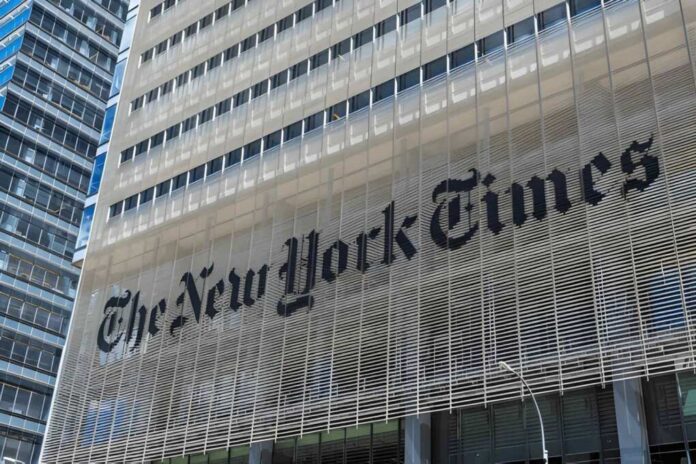
The Trump administration’s latest clash with the press started with a New York Times report about the new presidential jet. The story said President Trump chose to leave Turkey on the older Air Force One because of security concerns with the new plane, a Qatari-gifted jet nicknamed “Qatar-A-Lago.” Reporters described missing or faulty defenses compared with the older aircraft. Soon after that report, the Justice Department sent subpoenas to four Times journalists who worked on the piece.
The subpoenas order the reporters to appear before a federal grand jury in Manhattan. The goal is not to charge the journalists themselves, but to question them about who told them the security details. Federal agents even went to at least some reporters’ private homes to deliver the documents, which stunned many in the media world and beyond. This kind of direct pressure on journalists over a single story about a government plane is unusual and rare.
How Trump’s DOJ Is Justifying Its Actions
Acting Attorney General Todd Blanche has made clear that leak investigations are now front and center for the Trump Justice Department. A 2025 policy change allowed prosecutors to once again use subpoenas and search warrants on news organizations in leak cases, undoing protections put in place under President Biden. Blanche has said that “any witness, including reporters” who knows about unlawful leaks of classified information should expect subpoenas. The department argues that revealing weaknesses in Air Force One’s defenses could endanger the president and national security.
Officials say the grand jury needs testimony to find who illegally shared sensitive details about the jet’s systems. They frame the case as part of a broader crackdown on leaks from inside the government, especially on national security topics like military operations and high-level travel. Supporters of these moves claim that too many insiders have been secretly feeding information to the press for political reasons, and that this behavior must be stopped to protect the country and the presidency. To them, subpoenas are a lawful tool, not an attack on the First Amendment.
Why Press Freedom Advocates Are Alarmed
Press freedom groups, civil liberties lawyers, and many journalists see the same events very differently. They argue that forcing reporters to help the government hunt down their sources crosses a bright line that has long protected watchdog reporting in the United States. Dow Jones, the publisher of The Wall Street Journal, earlier called similar subpoenas an “assault on constitutionally safeguarded rights” when its own reporters were targeted in a leak case. Critics say these tactics intimidate whistleblowers who expose wrongdoing and scare journalists away from sensitive stories.
This Air Force One fight also comes right after the Justice Department quietly withdrew earlier grand jury subpoenas aimed at reporters from The Washington Post and The Wall Street Journal. Those outlets filed secret legal challenges, and the government backed off rather than defend its position in court. That history makes many wonder if the legal basis for the new subpoenas against the Times is shaky as well. Yet until a judge steps in again, the threat hangs over the reporters and their sources, adding pressure every time they cover national security.
What This Reveals About Power, Security, and the “Deep State”
For many Americans across the political spectrum, this episode feeds a deeper fear: that the federal government protects itself first and the public second. Conservatives who distrust the media see proof that powerful insiders are leaking to shape the story about Trump, Air Force One, and foreign deals. Liberals who distrust Trump see proof that the administration is willing to bend the justice system to chase its critics. Both sides worry that elite players in Washington operate by their own rules.
NYT JOURNALISTS SUBPOENAED AS TRUMP UPS PRESSURE ON MEDIA
DoJ is seeking to compel testimony from reporters who wrote about the new Qatari-donated Air Force 1, an extraordinary escalation in Trump’s efforts to threaten & intimidate independent news organiz https://t.co/No5q1V3VEA— Penny Cahill (@PennyLCahill) July 11, 2026
The Air Force One case also highlights how “national security” has become a very broad label. If reporting on a plane’s safety can trigger grand jury subpoenas, then many other kinds of public-interest stories could, too. Advocates warn that when the government can decide which stories are security risks and then go after reporters, it holds a powerful weapon against dissent. Meanwhile, there is still no public proof that the specific details in the Times story were classified, leaving citizens stuck between official claims and unanswered questions.
Sources:
mediaite.com, nytimes.com, wbaltv.com, yahoo.com, aol.com, kdhnews.com, ynetnews.com, youtube.com, washingtonpost.com, nbcnews.com, rcfp.org, cnn.com, knightcolumbia.org