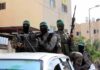

As President Trump welcomes Iraq’s new prime minister to the White House, Washington is quietly tying its support to a risky plan to strip guns from Iran-backed militias that have helped shape Iraq’s politics for nearly two decades.
Story Snapshot
- Trump gives strong public backing to Iraqi Prime Minister Ali al-Zaidi during his first White House visit.
- Washington is pressing al-Zaidi to disarm Iran-linked militias and bring all weapons under full state control.
- The visit centers on security, energy, and big U.S. investment deals, not just counterterrorism.
- Al-Zaidi’s rise was shaped by U.S. pressure and Iraq’s struggle to balance Iran and America.
Trump’s Unusual Embrace of Iraq’s Political Newcomer
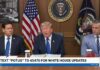
President Donald Trump rolled out an unusually warm welcome for Iraqi Prime Minister Ali al-Zaidi at the White House, praising their “tremendous chemistry” and calling him a future “great leader in the Middle East.” Al-Zaidi, a wealthy banker and media owner with no prior political experience, only became prime minister after months of deadlock in Baghdad’s parliament over who should lead the country following the 2025 elections. Trump had earlier threatened to cut off U.S. support if Iraqi leaders chose a different, Iran-friendly candidate.
Trump’s backing did not start with this visit. Earlier this year, he publicly congratulated al-Zaidi when he was named prime minister-designate and said it would be the “beginning of a tremendous new chapter” between the United States and Iraq. Trump’s phone call inviting him to Washington signaled clear U.S. support for this newcomer, especially after Washington helped block a bid by former prime minister Nouri al-Maliki, who is widely seen as closer to Iran. This made al-Zaidi’s rise a key example of how outside powers still shape Iraqi politics.
A Visit Built Around Militias, Iran, and American Leverage
Al-Zaidi’s trip to Washington is officially framed as a push to “strengthen economic and development partnerships, attract investment, and expand the role of U.S. companies” in Iraq’s infrastructure and energy sectors. But behind the friendly language, U.S. officials set clear expectations. According to reporting on the visit agenda, Washington is demanding the disarmament of Iran-linked militias, increased state control of weapons, and a promise that Iraq will not be used as a base for attacks on other countries in the region. In simple terms, U.S. support now comes with strings attached.
The United States has long worried that Iranian-backed armed groups inside Iraq threaten American troops, allies, and Gulf energy routes. Under Trump, those worries fit his broader “America First” message: fewer U.S. soldiers in harm’s way, more pressure on foreign governments to handle their own security, and better access for American companies to oil and reconstruction contracts. Many Americans, both conservative and liberal, see these demands as part of a pattern where Washington backs foreign leaders if they protect elite interests and resources, not everyday citizens.
Al-Zaidi’s Disarmament Promise and a Tough Iraqi Reality
Just weeks before coming to the White House, al-Zaidi and U.S. special envoy Tom Barrack issued a joint statement promising “complete disarmament and disbandment of all armed groups and formations operating outside the authority and control of the Iraqi state.” That is a sweeping pledge. It targets the powerful Iran-backed militias that fought the Islamic State group, gained political clout, and now hold seats in Iraq’s parliament and posts in its ministries. Disarming them would reshape Iraq’s balance of power and cut deeply into Iran’s influence there.
🚨FLASH: President Trump hosts Iraqi PM Ali al-Zaidi at the White House.
Meeting focuses on disarming Iran-backed militias in Iraq, per AP. Trump admin says future US-Iraq relationship will hinge on Baghdad's progress on this.
Iraq deadline for militia disarmament: Sept 30.
— Flash Update (@flashupdatenews) July 14, 2026
History suggests this will be very hard. Since 2006, Iraqi leaders have announced disarmament drives every few years, but none have fully and permanently shut down major Iran-backed factions. At best, some groups agree to place weapons “under state control,” or to integrate parts of their forces into official security units, while keeping real power and guns in reserve. Hardline militias like Kataib Hezbollah have openly rejected past calls to disarm unless all U.S. troops leave Iraq first, showing how militia negotiations are tied directly to the U.S. military presence.
Why This Matters for Americans Watching From Home
For many Americans, this story taps into familiar frustrations. Republicans who are tired of endless foreign wars see Trump pushing Iraq to take over security and talking about reducing U.S. military presence, which fits their desire to stop spending blood and treasure overseas. At the same time, they notice the push for U.S. companies to win big energy and infrastructure contracts, which can look like politicians doing favors for corporate elites instead of fixing problems at home.
Democrats who worry about human rights and growing inequality see another foreign leader backed mainly because he is business-friendly and useful against Iran, not because he represents deep reform for ordinary Iraqis. Analysts already warn that al-Zaidi’s nomination reflects Iraq’s elite choosing stability and the status quo over real change. Both sides can agree on this: powerful people in Washington and Baghdad are making high-stakes deals, while regular citizens in both countries still struggle with weak services, corruption, and a political class that seems more focused on its own survival.
What Comes Next for Iraq, Iran, and the United States
Al-Zaidi’s government is still incomplete, with key ministries like defense and interior not yet fully approved, which could slow any serious move against the militias. Some Iran-backed groups have signaled they might place weapons under state control or shift toward political work, often under U.S. pressure or fear of conflict. Others send mixed messages or stall, hoping to keep their leverage while easing outside pressure. This tug-of-war will likely continue long after the cameras leave the White House driveway.
The stakes are high. If al-Zaidi manages even partial disarmament and stronger state control, Iran’s grip on Iraq could weaken, and the risk of attacks on U.S. soldiers and partners might drop. If the effort fails, militias may stay entrenched, Iran may keep using them to project power, and Iraq may remain stuck between two rival giants: Washington and Tehran. For Americans who feel the “deep state” and global elites keep playing games overseas while ignoring problems at home, this visit is another reminder that foreign power struggles and domestic frustration are deeply linked.
Sources:
youtube.com, gulfif.org, jpost.com, apnews.com, atlanticcouncil.org, fdd.org, ynetnews.com, rudaw.net, english.aawsat.com, en.abna24.com, reuters.com, longwarjournal.org