

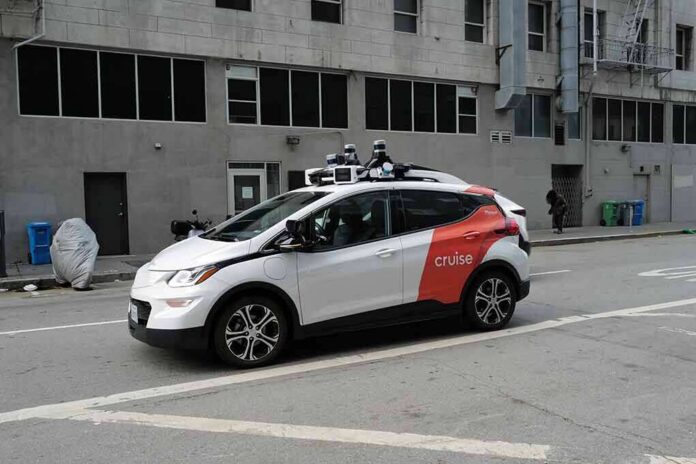
Portland is considering rules that would force a human driver to ride in every robotaxi, a move that could price the service out of the city and stall the technology’s launch.
Story Snapshot
- City leaders weighed rules that include a human-in-vehicle mandate for robotaxis.
- Rideshare drivers warned about job losses and raised public-safety concerns.
- Waymo has started mapping Portland while officials push stricter guardrails.
- Safety, workforce impact, and data oversight are the core regulatory fault lines.
What Portland Is Proposing And Why It Matters
Portland’s City Council public works committee reviewed proposals that could require a licensed human operator inside every robotaxi and cap fleet sizes. Staff from the transportation bureau also outlined limits on loading zones, data sharing, and privacy rules if services launch in the city. A conservative outlet framed the human-onboard rule as a likely deal-breaker on cost and scale for companies like Waymo. Officials said they want strong guardrails before commercial service begins.
A local rideshare-driver group argued an onboard human is needed for safety and jobs. The group said a person could take control during road work or speak with first responders in an emergency. They said the mandate would help protect workers from displacement if self-driving fleets expand. Their warning taps a wider fear across the country that automation could hollow out driving jobs and widen the gap between winners and losers in the economy.
Where The City’s Rules Stand Today
Portland already has a permit framework for testing autonomous vehicles set in 2018 policy, with updates drafted in 2026. City documents describe Waymo’s current activity as mapping with a licensed human driver at the wheel while sensors run, a pre-launch step seen in other cities. A July 2026 committee item was placed on file, and leaders have since pressed forward with more detailed rule concepts to govern any future commercial rollout.
The proposals include fleet caps, service-area controls, data-reporting rules, privacy protections, and fees to fund oversight. These tools mirror steps other cities debated after high-profile incidents elsewhere. The rules also aim to coordinate robotaxis with existing taxi and rideshare codes, which limit long shifts and set conduct standards for human drivers. City staff said companies would need to certify compliance and face civil penalties for violations under the draft rule structure.
The Core Tension: Safety, Jobs, And Practical Oversight
Supporters of a human-in-vehicle rule point to crash responses, disabled passengers, or blocked lanes as moments when a person can act fast and talk to authorities. They argue recent history shows robots still need help in odd street scenes, and workers should not bear the brunt of tech risk. Research from the United States Department of Transportation highlights dozens of potential hazards for urban Level 4 systems, underscoring how safety goes beyond normal driving to rare failures and edge cases.
Industry voices counter that safety should hinge on strict testing, reporting, and design rules, not a blanket human-driver mandate that undercuts automation’s purpose. Reporting has noted companies like Waymo argue for national standards on testing, vehicle design, data, and first-responder plans rather than putting a person in every vehicle. Cities often split the difference with fleet caps, stepwise deployments, and required data-sharing so regulators can track performance in the real world.
Economic Stakes For Riders, Workers, And The City
Analysts warn that adding a human to every car could turn a robotaxi into a standard ride with extra costs, shrinking any price benefit for riders and pushing companies to avoid the market. If fleets stay small, service may cluster in wealthier areas, reducing access and keeping car trips expensive for working families. If fleets scale without guardrails, traditional drivers could lose shifts and income quickly as fares shift toward automated service.
Federal research says automation could affect a sizable share of jobs and that planning for retraining and transition is vital. Other studies expect job impacts to unfold over years and vary by sector, suggesting room for local policy to shape outcomes. Portland’s data, fee, and privacy proposals give the city leverage to demand transparency and fund oversight, but the human-operator rule is the biggest swing factor for cost, coverage, and speed of rollout.
What To Watch Next
Watch whether councilors codify a permanent human-in-vehicle mandate or adopt a phased model tied to performance data. Look for clear first-responder protocols and real-time contacts, since those details matter most on bad days. Track any fleet caps and service-area limits that decide who gets rides and when. Finally, follow how the city uses reporting to judge safety and equity, because trust will rise or fall on what the numbers show, not the promises made.
Sources:
townhall.com, katu.com, koin.com, portland.gov, opb.org, theverge.com, philkoopman.substack.com, ntc.gov.au, fox9.com