New York City’s mayor demanded a halt to all federal immigration enforcement in the city after an agent shot a man in a car with a 5-year-old inside, escalating a long-running clash over who keeps communities safe and how.
Story Highlights
- Mayor Zohran Mamdani condemned an Immigration and Customs Enforcement shooting in Marble Hill and called President Trump to end enforcement in New York City.
- City accounts said agents fired multiple rounds at a man while a 5-year-old child was in the vehicle; the child was not reported injured.
- Federal law and policy require force to be “objectively reasonable,” with deadly force limited to preventing death or serious injury.
- National reporting shows dozens of Immigration and Customs Enforcement force incidents yearly, underscoring recurring tension between federal operations and local leaders.
What Happened in Marble Hill
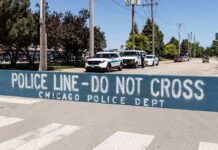
City officials said an Immigration and Customs Enforcement agent shot a man around 4 p.m. in Marble Hill, a New York City neighborhood. Mayor Zohran Mamdani stated agents surrounded the man’s car with a 5-year-old child inside before firing multiple rounds. The mayor called the incident “unconscionable” and “incredibly serious.” Reports said the child was not hurt. The mayor’s office said the shooting occurred on a residential block, heightening concern over public safety and bystander risk.
Mayor Mamdani said he contacted President Trump and would demand an end to federal immigration enforcement actions in the city. He also criticized the agency’s tactics and urged a full review. National outlets and local stations carried the updates as police and federal authorities worked to gather facts. Early coverage centered on the presence of the child and the number of shots fired, details that shaped swift reactions across the city’s political spectrum.
Mamdani’s Response and Political Stakes
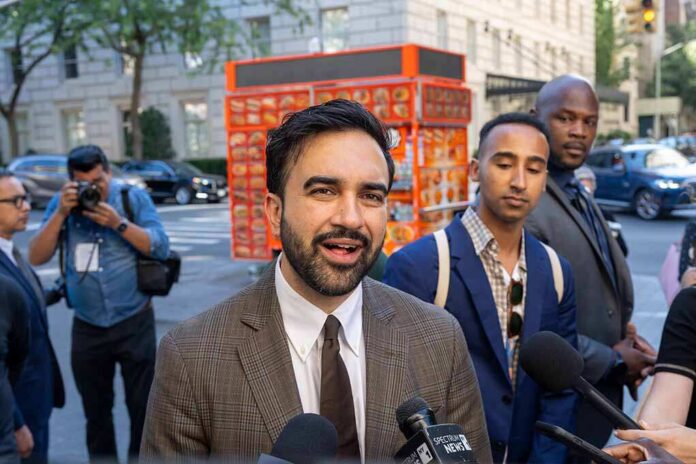
Mayor Mamdani framed the shooting as a line crossed in a dense neighborhood where families live and walk daily. He argued that enforcement near children and homes puts the public at risk. He told reporters he would press the White House to stop Immigration and Customs Enforcement operations within city limits. That demand challenges federal authority and puts a local leader in a direct clash with the executive branch over safety and control in the nation’s largest city.
New York City has long fought federal immigration arrests near homes and courts. Local leaders say these tactics erode trust and discourage victims and witnesses from speaking up. Legal advocates have argued that arrests in sensitive locations burden access to justice and strain community relations. The mayor’s call to halt operations echoes past city positions, but it is sharper and faster than many prior responses after use-of-force incidents involving federal officers.
What the Law Says About Use of Force
Federal standards say officers may use only the force that is “objectively reasonable” for the situation. Deadly force is limited to moments when an officer reasonably believes it is needed to stop an immediate threat of death or serious injury. This flows from United States Supreme Court precedent and Department of Homeland Security rules that aim to balance public safety with the rights of people being arrested or detained.
Courts have applied these standards to immigration arrests and detention. Judges look at what the officer knew at the time, not with hindsight. They weigh factors like the threat level, the presence of weapons, and bystander safety. The standard does not depend on whether the officer is local, state, or federal. The rule is the same: use only force that is reasonable under the facts on the ground at that moment.
Why This Clash Keeps Returning
Federal reporting shows Immigration and Customs Enforcement officers were involved in 78 use-of-force incidents in fiscal year 2023. That total included cases with deaths and serious injuries. Numbers like these do not prove wrongdoing in any one case. But they show that high-stress enforcement encounters happen often enough to fuel repeated conflicts between Washington and cities over risk, oversight, and accountability.
"ICE is rotten to its core."
NYC Mayor Zohran Mamdani unleashes a sharp attack on federal immigration enforcement following an ICE-involved shooting that leaves one person wounded in the Bronx.
Mamdani accuses the agency of operating "with impunity" and spreading "chaos and…
— Olusegun Adepoju – RCIC-IRB (@Oluvik) October 9, 2026
Each new incident revives core questions. Who decides where and how federal teams operate inside cities? How do leaders keep families safe when arrests unfold on crowded blocks? Supporters of strong enforcement argue that federal law must be carried out, even in hard moments. Critics argue that tactics near homes and children break trust and put the wrong people in danger. Both sides claim public safety, but they define it differently.
What to Watch Next
Investigators will review the agent’s actions, the reason for the stop, and any threats seen at the time. Key facts include why the agents approached the car, what commands were given, and what triggered the shots. Video, ballistics, and witness accounts will shape findings. City leaders will press for transparency. Federal officials will weigh officer safety and ongoing cases. The outcome will inform future rules on where and how arrests happen in dense neighborhoods.
Sources:
redstate.com, nyc.gov, usatoday.com, longisland.news12.com, politico.com, abc7ny.com, hindustantimes.com, lanacion.com.ar, nypost.com, abcnews.com