Hawaii’s Kīlauea volcano is building toward its 51st major lava fountaining episode — and scientists say it could begin at any moment.
Story Snapshot
- Kīlauea’s summit eruption paused after Episode 50 ended on June 27, but low-level activity restarted on July 14, signaling Episode 51 is close.
- The U.S. Geological Survey raised the volcano alert level from Advisory to Watch and the aviation color code from Yellow to Orange on July 14.
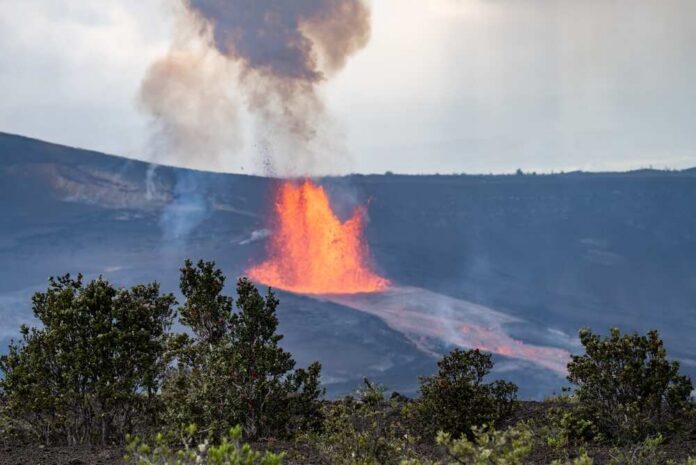
- During Episode 50, the north vent shot a lava fountain nearly 1,030 feet into the air — taller than the Eiffel Tower.
- Scientists warn exact timing is hard to predict; the forecast window has already shifted more than once due to changing ground pressure.
Episode 50 Ends, Episode 51 Builds
Episode 50 of Kīlauea’s ongoing eruption ended suddenly at 5:10 p.m. Hawaii time on June 27, 2026, after seven hours of continuous lava fountaining. The north vent had sent a fountain nearly 1,030 feet (314 meters) into the sky during that episode — one of the tallest recorded in the current eruption cycle. After the episode ended, the volcano entered a pause as magma pressure underground shifted.
Scientists at the U.S. Geological Survey’s (USGS) Hawaiian Volcano Observatory (HVO) tracked ground movement closely during the pause. Monitoring tools showed the ground first inflated — a sign magma was building — then switched to deflation on July 11, meaning magma movement slowed. Small bursts of lava spatter appeared on July 11 but stopped without turning into a full episode. The volcano was not done, though. It was just catching its breath.
Alert Level Raised as Activity Returns
On July 14, 2026, HVO raised the volcano alert level from Advisory to Watch and changed the aviation color code from Yellow to Orange. Those changes signal a higher chance of eruption and warn pilots about possible ash or gas in the air. That same afternoon, at 2:51 p.m. Hawaii time, lava began overflowing from the north vent — the first sign that Episode 51 was getting started. HVO said full lava fountaining was expected to begin soon.
The forecast window for Episode 51 had already shifted several times. Scientists first expected it between July 8 and 15, then moved that window to July 14–16 after deflation slowed things down. HVO was clear that the timeline could shift again if underground pressure kept dropping. That kind of uncertainty is normal in volcano science — there is no single alarm that goes off right before an eruption starts.
Why Forecasting Volcanoes Is So Hard
Predicting exactly when a volcano will erupt is one of the hardest jobs in science. Researchers estimate that only about 20% of eruptions worldwide happen after the right alert level has been raised in time. Scientists watch for earthquakes, ground swelling, gas releases, and heat changes — but no single signal tells the full story. At Kīlauea, HVO uses tiltmeters to measure tiny shifts in the ground and combines that data with other tools to make its best forecast.
Getting ready to go live from Kilauea eruption. hit the notifications and the follow button if you're not already pic.twitter.com/APmpQSajP6
— Constituent 🇺🇸🌺🐦🕊️ 🕉️ (@808constituent) July 15, 2026
The current eruption at Kīlauea’s summit crater, called Halemaʻumaʻu, began on December 23, 2024, and has been going ever since in an on-and-off pattern. Before-and-after images show how much lava has built up inside the crater over that time. The eruption zone inside Hawaiʻi Volcanoes National Park remains closed to the public for safety reasons. Visitors can check USGS webcams and daily updates to follow the action from a safe distance. Each episode lasts only hours, but the science behind it has been building for decades.
Hawaii's highly active Kilauea volcano has begun its 51st episode of its ongoing eruption. USGS live cams are capturing powerful lava fountaining from the north vent pic.twitter.com/j1jp5NUrwR
— Pacific Wire (@ChynoNews) July 15, 2026
Sources:
youtube.com, usgs.gov, volcanoes.usgs.gov, pangea.stanford.edu