High above the Brooklyn Bridge roadway, New York City police officers grabbed a woman’s arm at the last second, turning what could have been another tragic headline into a rare moment of life-saving courage in a city many feel is falling apart.
Story Snapshot
- New York City Police Department officers climbed a Brooklyn Bridge beam to stop a woman from jumping, forcing lane closures and stunning drivers.
- Video from bystanders and news outlets shows officers talking with the woman for an extended time before pulling her to safety.
- The Emergency Service Unit is specially trained for dangerous rescues on bridges and buildings, including high-angle rope work.
- The rescue highlights both the growing mental health crisis in cities and the gap between dramatic front-line heroism and slow government reform.
Dramatic Rescue High Over Brooklyn Bridge Traffic
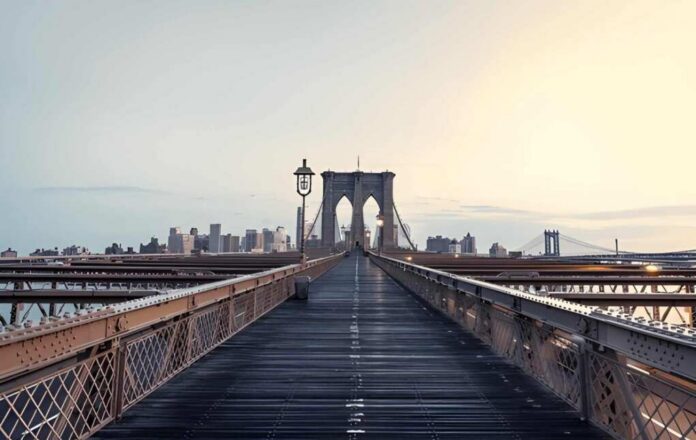
On a rainy July evening, drivers on the Brooklyn Bridge watched eastbound lanes shut down as New York City Police Department officers raced to reach a woman perched on a narrow beam above the roadway. Video from local television and social media shows her standing high over the bridge deck, with nothing between her and the river except a steel cable and a few feet of metal. Police officers climbed the bridge structure, spoke with her, and then grabbed her as she appeared close to falling or jumping.
News clips describe the scene as “heart-stopping” and show at least one officer slowly edging along the beam to reach her. A body camera video, shared by national outlets, captures officers pleading, “Please, don’t do it,” as they try to keep her talking and calm. After they secure her, officers guide her back toward the safer part of the bridge, and traffic later resumes. Media reports say she was taken away for evaluation, but official records about her treatment or any charges have not been released.
Inside the Emergency Service Unit’s High-Risk Mission
The officers on the bridge include members of the New York City Police Department Emergency Service Unit, a small, elite group that takes on some of the city’s most dangerous calls. The Emergency Service Unit handles high-risk rescues, hostage situations, barricaded people, and operations that need special weapons or high-angle rope skills. The unit trains to move on bridges, rooftops, and building ledges, and has been called “911 for the New York City Police Department” because regular patrol officers call them when a situation becomes too risky.
Recent videos from the New York City Police Department show Emergency Service Unit officers rescuing a woman in crisis on top of a Brooklyn high-rise, using ropes and careful negotiation before bringing her down safely. Another media piece lets viewers “walk” atop the Brooklyn Bridge with these officers, highlighting the narrow paths, strong winds, and real danger they face during every rescue. On the night of the bridge incident, that special training likely made the difference between a recovery and a body search, even though the department has not yet released its own detailed incident report or full footage.
Mental Health Crisis Meets Public Distrust of Government
This rescue did not happen in a vacuum. Across New York City and the country, police officers are increasingly the first line of response when someone has a severe mental health crisis in public. A major study of police encounters with people in crisis found that about 80 percent end with the person taken or referred to a hospital, while only around 11 percent lead to community mental health services. Arrests are more common when the person is treated as a suspect, which adds to fears on both the left and right about criminalizing mental illness.
"NYPD officers safely rescue a woman who was threatening to jump off the Brooklyn Bridge.
If you or someone you know is in crisis, contact the 988 Suicide & Crisis Lifeline."https://t.co/wrHXWAlck2
— MAXSON, Dikibugerere Edmond (@WinningPoet) July 9, 2026
City leaders talk about fixing this gap. New York City has announced hundreds of millions of dollars for programs that promise treatment, temporary housing, and ongoing support for people with severe mental illness, including those living on the streets. Yet many citizens, whether conservative or liberal, see more press conferences than real change. They watch stories like the Brooklyn Bridge rescue and ask why a woman in clear distress ends up on a bridge beam before help appears, and why it is armed officers, not doctors, hanging over traffic to save her.
Heroism on the Front Line, Frustration with the System
For many Americans, this event captures a deep split in how they see government. On one hand, New York City Police Department officers risked their lives to save a stranger, using training, courage, and patience while the rest of the city rushed past below. On the other hand, this dramatic rescue sits inside a larger pattern where mental health systems are stretched thin, basic infrastructure security depends on luck and quick action, and leaders in Washington argue while crises play out in real time.
Conservatives who are tired of what they call “woke” politics see proof that front-line workers, not distant agencies, still hold the line against chaos. Liberals who worry about inequality and weak safety nets see another person pushed to the edge, literally and figuratively, before anyone noticed. Both sides often agree on one thing: the system feels broken, even when its individual members are heroic. The Brooklyn Bridge rescue is a powerful reminder that brave officers can save a life in seconds, but fixing the deeper causes that bring people to the edge takes far more than a single dramatic climb.
Sources:
facebook.com, abc7ny.com, nypost.com, instagram.com, pix11.com, wpde.com