

As NATO moves to replace its aging U.S.-built radar planes with Swedish GlobalEye jets, the fight over who really runs Western defense policy is suddenly out in the open.
Story Snapshot
- NATO allies announced plans to buy up to 10 Saab GlobalEye jets to replace part of the Boeing E-3 AWACS fleet, signaling a major shift away from automatic U.S. dominance in alliance weapons deals.
- The GlobalEye choice reflects rising concerns in Europe about supply chains, cost, and political autonomy after years of delays and shortages on U.S. systems.
- No binding contract is signed yet, giving Washington, Boeing, and lobbyists time to push back behind closed doors as media on both sides spin the deal as a “snub.”
- The radar debate (Saab’s multi-domain GlobalEye vs Boeing’s E-7 Wedgetail) is really a power struggle over who profits from NATO’s rearmament and who pays when the system breaks down.
What NATO Actually Decided In Ankara
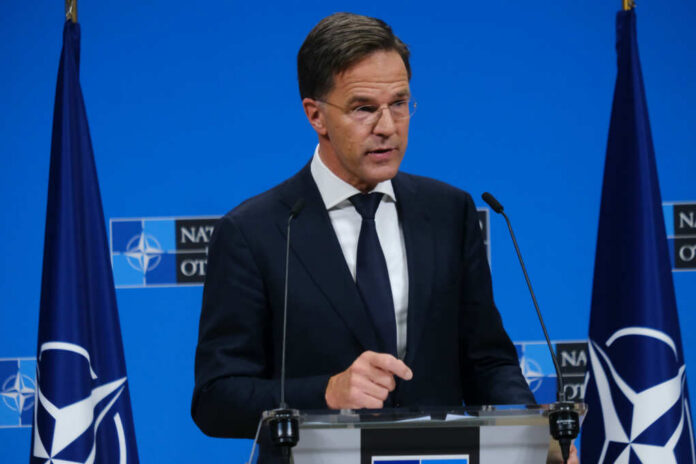
At the 2026 NATO summit in Ankara, Secretary General Mark Rutte announced that a group of 11 allies will jointly procure up to 10 Saab GlobalEye aircraft to replace part of the alliance’s old Boeing E-3 Sentry radar fleet. NATO’s official release calls GlobalEye the alliance’s new Airborne Warning and Control System and says it will boost tracking of drone swarms, ballistic missiles, and cruise missiles while improving awareness over land, sea, and air. Rutte framed the move as a modernization step, not a break with the United States, but headlines quickly branded it a “snub” of Boeing.
Saab’s own statement confirms that NATO has selected GlobalEye as its chosen solution, but it also makes clear that no contract has been signed and no orders have been placed. The next phase is formal talks with the NATO Support and Procurement Agency to lock in price, delivery schedules, and support terms. That detail matters for people on both the left and right who have watched big defense deals morph in the shadows; what NATO announced is a political commitment, not a completed purchase, and there is still room for pressure and backroom changes.
Why NATO Turned To Sweden’s GlobalEye
GlobalEye is built by Sweden’s Saab on a Bombardier Global 6500 business jet airframe and carries the Erieye Extended Range radar in a long “plank” on top of the fuselage. The system is designed to watch air, sea, and land at the same time, detect low-flying aircraft at ranges of hundreds of kilometers, and track drones, ballistic missiles, and even hypersonic threats in heavy jamming. Saab and NATO both stress endurance of more than 11 hours and the ability to operate from 6,500-foot runways, which lets the aircraft use smaller airfields closer to the front lines.
Cost, speed, and industrial politics also pushed NATO toward Saab. Saab has told partners it can produce up to about three GlobalEye aircraft per year and begin deliveries within three years of a contract, helping NATO meet a 2031 operational goal. European leaders are under pressure after the war in Ukraine and years of U.S. weapons delays, so a platform already in service with other countries looks less risky. Canada’s decision in May 2026 to negotiate for up to six GlobalEyes for Arctic surveillance reinforced this trend and signaled that even close U.S. allies are willing to bypass American suppliers when they feel exposed.
How This Hits Boeing And U.S. Influence
Boeing and its supporters argue that the E-7 Wedgetail, based on the Boeing 737, offers stronger 360-degree radar coverage for classic alliance air war, thanks to its fixed radar arrays that scan all directions at once. They point out that E-7 carries ten operator consoles, compared with around seven on GlobalEye, and can refuel in midair to stay on station longer, both key for long, high-intensity missions. To many in Washington, losing NATO’s next radar fleet after the United States Air Force canceled its own E-7 buy in 2025 looks like a self-inflicted wound that hands business, jobs, and leverage to Europe.
On Capitol Hill, lawmakers have still tried to keep E-7 alive with funding lines, highlighting how often Congress and the Pentagon pull in different directions. For Americans who already believe the system serves defense contractors more than troops or taxpayers, this is another example: allies pick one plane based on their needs, Congress funds another to keep factories humming, and ordinary people pay the bill either way. European governments are not saints in this story; they also see GlobalEye as a way to channel billions into their own industries while talking about “burden shifting” inside NATO.
A Bigger Shift: Europe Pulls Away From U.S. Defense Dependence
Analysts say the GlobalEye choice fits a larger pattern that started after Russia’s 2022 invasion of Ukraine: European countries are trying to rely less on U.S. weapons, both because of U.S. supply problems and to rebuild their own defense factories. Studies of defense supply chains show how missile shortages, long delivery times, and export limits have pushed frontline states to look at South Korean and European systems instead of defaulting to U.S. kits. For many Europeans, GlobalEye is not mainly about beating Boeing on technology; it is about proving Europe can field high-end systems even if U.S. politics swing wildly every four years.
At the @NATO Summit in Ankara, Secretary General Mark Rutte announced that NATO will begin formal negotiations with Saab regarding the acquisition of up to 10 GlobalEye Airborne Early Warning & Control (AEW&C) systems to replace AWACS. https://t.co/5iM5vPaqr3 pic.twitter.com/lET0d3ITSB
— Aeronews (@AeronewsGlobal) July 8, 2026
For Americans on both the right and the left, the deal raises hard questions. Conservatives angry about globalism see another lost Boeing program as proof that U.S. leaders let industry and jobs drift away while still asking taxpayers to underwrite NATO. Liberals worried about the “military-industrial complex” see a familiar pattern: a huge contract decided by a mix of generals, lobbyists, and foreign governments, far from public oversight, with little debate over whether these systems actually make ordinary people safer. Both groups can agree that when alliance leaders and corporate boards make these calls, regular citizens have almost no voice, even though their money and their security are on the line.
Sources:
defenseone.com, cbc.ca, aerotime.aero, resetera.com, youtube.com, finance.yahoo.com, facebook.com, breakingdefense.com, ioplus.nl, militarywatchmagazine.com, newamerica.org, tandfonline.com