
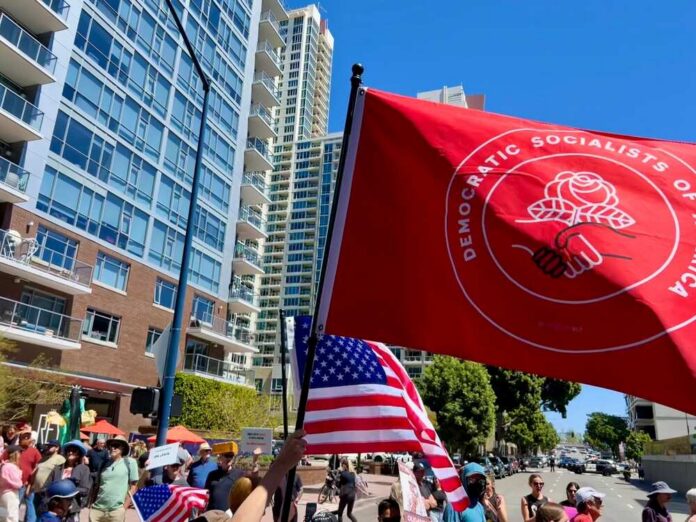
While Washington keeps failing to fix basics like wages, housing, and health care, a quiet wave of democratic socialist primary wins is reshaping who will actually wield power in statehouses and city halls.
Story Snapshot
- More than a dozen candidates backed by the Democratic Socialists of America (DSA) just won or advanced in primaries across five states, including a new member of Congress. [1]
- These gains build on years of local and state victories that have quietly placed over 200 DSA-aligned officials in public office nationwide. [2]
- Critics warn many of these wins come in safe Democratic districts or low-turnout contests, raising doubts about broader electability. [1][2]
- Both the left and right see the surge as another sign that frustrated voters are bypassing establishment politicians who seem more loyal to party machines than to solving real problems. [1][2][3]
Democratic socialist primary gains and why they matter now
Fox News reports that a recent multi-state primary night produced outright wins, apparent victories, and runoff advancements for more than a dozen candidates linked to or backed by the Democratic Socialists of America across five states, including races for Congress, state legislatures, and local offices. [1] The Democratic Socialists of America’s own election-night live blog called the results for its “ambitious slate of candidates” “rosy” and celebrated by declaring, “There is a new Democratic Socialist in Congress.” [1] For voters on both sides who see Washington as captured by lobbyists and career politicians, these numbers signal that organized grassroots factions are starting to convert anger into actual seats, especially in down-ballot offices that quietly control budgets, policing, zoning, and schools. [1][2]
One of the most concrete examples is Pennsylvania’s 3rd Congressional District, where state representative Chris Rabb, a self-identified democratic socialist, won the Democratic primary and is running unopposed in the November general election. [1] Fox News notes that this path will make him the second nationally endorsed Democratic Socialists of America member in the United States House of Representatives. [1] Supporters claim his campaign relied on small donors rather than corporate political action committee money, which appeals to Americans across the spectrum who believe big-money interests dominate Congress. [3] Critics counter that winning an uncontested general election does not prove broad appeal, but it does mean another openly socialist voice will hold real power in Washington’s daily negotiations over spending, oversight, and foreign policy. [1][2]
A growing network of local power, not just headline races
While national media fixate on a handful of congressional names, Governing magazine reports that Democratic Socialists of America chapters have already helped elect dozens of officials at the state, county, and municipal levels, describing this trend as “the rebirth of the American socialist movement after generations in retreat.” [2] Governing tallies forty winning candidates at those levels in one cycle, with eleven endorsed by the national organization and twenty-nine by local chapters. [2] These positions include New York state senator Julia Salazar, Maryland delegates Gabriel Acevero and Vaughn Stewart, and Pennsylvania state representatives Summer Lee, Sarah Innamorato, and Elizabeth Fiedler. [2] A separate list of public officeholders now counts more than two hundred individuals who are endorsed by Democratic Socialists of America, by its local chapters, or are members serving in public office, giving the group a broad, if still modest, footprint inside government.
Local results in places like Milwaukee underline how this dynamic plays out far from cable news studios. The Milwaukee chapter of Democratic Socialists of America documents a series of recent victories, including Alex Brower’s win for Common Council District 3, where he defeated an establishment Democrat. The chapter notes that Missy Zombor became the first democratic socialist to serve on the Milwaukee Public Schools Board, while Juan Miguel Martinez and Ryan Clancy now hold two of eighteen seats on the Milwaukee County Board of Supervisors. Earlier, the chapter highlighted historic primary wins by Dana Kelley and Darrin Madison Jr., the first Black socialists to advance through a primary for elected office in Milwaukee’s history, and described Brower as the first socialist candidate to clear a Milwaukee municipal election since 1956. For citizens who feel local elites have ignored working-class neighborhoods for decades, these incremental gains look like an attempt to reclaim city governments from long-entrenched political machines. [2]
How big is the movement, and what are the limits?
Supportive commentators emphasize momentum but also concede that the socialist surge has real limits. Dissent magazine notes that after Senator Bernie Sanders’s 2016 presidential run, membership in Democratic Socialists of America quadrupled, making it the largest socialist organization in the United States since the 1960s. [3] Yet the same article cautions that any talk of a mass socialist upsurge must be kept in perspective, pointing out that the group counted only around twenty-seven thousand dues-paying members at the time. [3] Governing similarly reports that in one cycle Democratic Socialists of America chapters endorsed ninety-three state and local candidates, but forty-three lost their primaries and at least thirty lost general-election races. [2] These figures suggest an energetic but still niche movement, winning in specific districts while failing to break through in many others. [2][3]
Opponents also argue that many of these victories happen in safe Democratic seats, uncontested races, or low-turnout primaries, which makes them weak tests of broader public support. Fox News highlights that Chris Rabb is unopposed in November, while other cited socialist winners are clustered in heavily Democratic urban districts. [1][2] Party leaders sometimes react defensively: one television segment describes New York legislative leaders pressuring allies not to back socialist challengers to Democratic incumbents, underscoring real friction inside the party. [5] At the same time, Democratic Socialists of America strategists openly acknowledge that the Democratic Party, though “deeply flawed and repellent to left challenges,” still offers the easiest path for socialists to win elections through its primaries, which is exactly where many of these breakthroughs are happening.
What this says about faith in the political system
Behind the statistics is a deeper story about trust in government. Many conservatives see these democratic socialist wins as proof that the Democratic Party is drifting further left, threatening higher taxes, more regulation, and identity politics on steroids. [1][2] Many liberals, however, see the same results as a protest against corporate Democrats who backed free trade agreements, overseas wars, and bailouts while wages stagnated and inequality widened. [3][4] Both sides, in different language, are reacting to the same perception: that the existing political class has protected donors and insiders while leaving ordinary Americans squeezed by housing costs, medical debt, and declining public services. [1][2][3]
When DSA wins Democratic primaries, it's because their candidates are more compelling to voters than establishment candidates. Instead of trying to shut down competition inside the DP, the establishment should try to run better candidates and campaigns. Why is that so scary?
— The Indypendent (@TheIndypendent) May 18, 2026
Whether voters cheer or fear the rise of Democratic Socialists of America-backed candidates, the trend exposes the widening gap between professional politicians and the people they claim to represent. Primary elections, especially in safe districts, are becoming the real battlegrounds where organized factions can capture offices that once defaulted to party insiders. [2] That shift raises questions both conservatives and liberals should watch closely: Who is actually writing the laws and budgets that affect daily life, and whose interests shape those decisions? As democratic socialists quietly build a bench of local and state officials, the answer is starting to change—not because Washington reformed itself, but because frustrated citizens found a way to go around it. [1][2][3]
Sources:
[1] Web – Socialists cheer ‘shockwave’ primary night as DSA-backed …
[2] Web – Democratic Socialists Rack Up Wins in States – Governing Magazine
[3] Web – Naming Our Desire: How Do We Talk About Socialism in America?
[4] Web – DSA vs. WFP – by Michael Lange – The Narrative Wars
[5] Web – Election Victories Across U.S., Socialist Caucus Coming to …