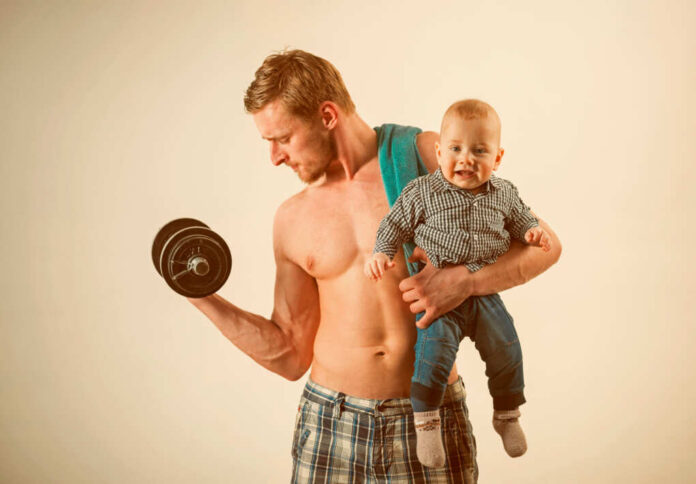
A culture-war slogan is colliding with thin evidence and thick frustration, as a viral clip of Shane Winnings insisting “kids need a mom and a dad” meets a public hungry for clear facts—and tired of elites and institutions that will not level with them.
Story Snapshot
- Shane Winnings promotes distinct father roles and says absent dads fuel family distress [1][2]
- Supportive sources are ministry-aligned; primary video context is limited [1][2][3][4]
- Social science broadly ties better outcomes to stability and resources, not sex of parents alone [10]
- Online outrage clips risk drowning out careful evidence on family structure [3][4]
What Winnings Is Arguing And Why It Resonates
Shane Winnings, a former soldier and police officer now leading Promise Keepers, frames fatherhood as a three-part calling—provider, protector, and family priest—and links absent dads to cultural confusion and struggling kids [1][2]. Ministry pages and podcast summaries describe his message as spiritual leadership first, warning that passive parenting cedes formation to outside forces [1][2]. That pitch lands in a country where many parents feel public institutions have failed, costs keep rising, and cultural guardrails look unmoored.
Promise Keepers’ site explicitly declares a fatherhood crisis, citing broken homes and lost identity as nationwide consequences [2]. The Mama Bear Apologetics episode notes that a father’s spiritual presence shapes a family’s direction and resilience and urges men to lead conversations and protection at home [1]. Winnings’ biography—military and law enforcement experience—bolsters his authority for some audiences who distrust academia and government but respond to service credentials and moral clarity [1].
Where The Evidence Is Solid—And Where It Is Thin
The research package supporting Winnings’ specific claim relies on Christian media summaries and organizational messaging rather than peer-reviewed developmental data [1][2][4]. The original viral video’s full wording and context are not provided, limiting precision about whether he argues an ideal arrangement or a necessary one excluding other households [1][3][4]. That gap matters because it influences public interpretation—pastoral guidance differs from an empirical claim about universal child outcomes.
Broader social-science literature consistently finds that children tend to fare better on average in stable, low-conflict, resource-sufficient homes with two parents, but it stresses that much of the advantage is explained by income, time, and stability rather than the sex of caregivers per se [10]. This distinction challenges rhetoric that treats “mom and dad” as the sole explanatory factor while still validating concerns about instability and absenteeism. It also cautions against sweeping claims that other family types cannot succeed when stability and resources are present.
How Viral Outrage Warps The Conversation
Recent online clips fueling the debate feature same-sex parents and a crying infant framed as proof that “there is no mama” [5][6]. These videos generate anger and clicks, but they do not establish causation or control for age, bonding time, or household stability [5][6]. The result is a discourse shaped by spectacle: strong assertions meet thin documentation, and careful evidence is pushed aside. Viewers on both left and right end up more convinced the other side is acting in bad faith—and more certain institutions will not give straight, contextualized facts.
Americans frustrated with government performance see echoes of a larger pattern: agencies and experts offer little clarity while elites monetize outrage. Parents who want practical guidance are left to choose between theological certainty and algorithmic drama. The vacuum of neutral, primary evidence in the conversation around Winnings’ viral moment keeps the public stuck in a binary: slogan versus counter-slogan, rather than data-driven comparisons that control for income, conflict, and caregiver quality.
What To Watch For Next
Clearer accountability starts with basics. First, secure the original video transcript and identify Winnings’ exact assertions about outcomes and mechanisms, distinguishing spiritual formation from developmental claims [1][3][4]. Second, compare those assertions with longitudinal studies that examine single-parent, two-parent, and same-sex-parent households while adjusting for income and household stability [10]. Third, demand transparency from ministries and advocacy groups about whether their claims are theological guidance or empirically tested statements.
Readers across the spectrum can share a practical standard: reward sources that publish methods, cite primary studies, and acknowledge limits; penalize those who lean on slogans or viral clips without context. Families deserve better than a culture-war proxy fight. They need clarity on what most reliably improves child well-being—stable caregiving, conflict reduction, time investment, and sufficient resources—and a government and media ecosystem willing to present those facts without fear or favor.
Sources:
[1] Web – 129. How Dads Can Disciple Their Kids with Shane Winnings
[2] Web – Promise Keepers – Men of Integrity
[3] YouTube – Episode 128: What every Dad needs from his Family, …
[4] Web – 128. What every Dad needs from his Family, Church, and …
[5] Web – The two-parent privilege and how it helps families escape poverty
[6] Web – 4 Reasons Equally Shared Parenting is Good for Parents (As Well …