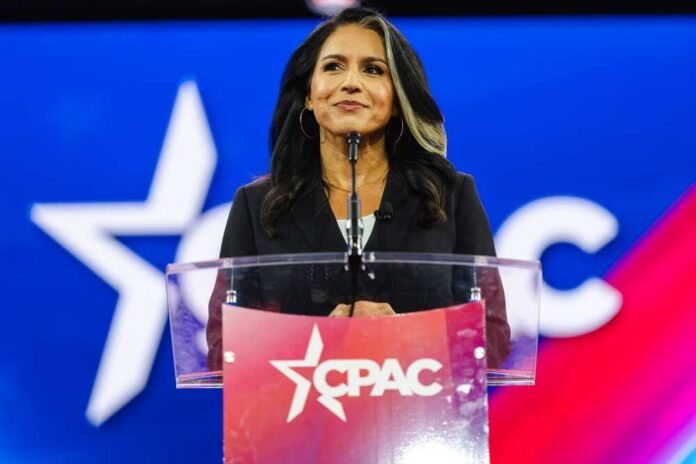
When Steve Bannon warns that Tulsi Gabbard’s ouster from the intelligence world signals a “hostile takeover” of America’s spy apparatus, he is tapping directly into a long‑running fight over who really controls national security policy in Washington.
Story Snapshot
- Bannon is framing Tulsi Gabbard’s reported removal from a Director of National Intelligence orbit role as part of a “hostile takeover” by entrenched security elites.
- The only documented precedent in the public record remains Bannon’s own 2017 removal from the National Security Council Principals Committee by formal memorandum, which reshuffled top seats at the table.[1][2]
- Available evidence shows procedural memos and executive orders, not hard proof of a covert coup inside the intelligence community.[1][2]
- The gap between what the paperwork shows and what insiders claim fuels left‑right suspicion that an unaccountable “deep state” is steering policy behind the scenes.[4]
Bannon’s New Alarm And His Long Fight With The Security Establishment
Steve Bannon is now publicly arguing that Tulsi Gabbard’s ouster from a Director of National Intelligence orbit role represents a “hostile takeover” of America’s intelligence structure by entrenched national security elites. His claim fits a pattern. As former White House chief strategist, Bannon built his brand around attacking what he calls the “administrative state” and foreign policy establishment. Supporters hear his warning as confirmation that elected leaders do not really control the security machinery; critics see rhetoric unsupported by public evidence.
Video clips circulating on social media show Bannon describing Gabbard as “the great Tulsi Gabbard” who was “fired,” and tying her exit to figures such as former Director of National Intelligence John Ratcliffe and foreign intelligence services, calling it a “hostile takeover” of the Director of National Intelligence. These statements reflect Bannon’s view, not declassified documents. The supplied research does not include official Director of National Intelligence staffing records or a public explanation from the administration about Gabbard’s reported departure.
What The Record Actually Shows About Bannon, Memos, And Power Shifts
Publicly verifiable documentation about Bannon and high‑level security reshuffles comes from an earlier episode: his 2017 removal from the National Security Council Principals Committee.[1][2] A new memorandum, published in the Federal Register, changed the committee’s composition by taking Bannon off and restoring the Director of National Intelligence and the Chairman of the Joint Chiefs of Staff as regular participants.[1] The change occurred after Lieutenant General H. R. McMaster replaced Michael Flynn as national security adviser, suggesting an internal rebalancing of influence.[2]
Contemporaneous reporting described this as a procedural reorganization rather than a proven conspiracy. An ABC‑affiliated broadcast said the White House had “rejiggered” the Principals Committee, removed Bannon, and restored senior intelligence and military officials, while conceding, “we do not really know the motivation behind all of this.”[2] Representative Ted Lieu’s office likewise summarized the move as President Trump signing an executive order that removed his chief strategist from a key national security post, again emphasizing formal executive action. None of these records use language like “hostile takeover.”
The Missing Pieces Around Tulsi Gabbard And The Director Of National Intelligence
The research available for this story includes no primary public documents about Tulsi Gabbard’s specific role or departure within the Director of National Intelligence structure, which is a major gap for evaluating Bannon’s present claim.[1][2] There are no personnel charts, appointment letters, termination notices, or internal memoranda in the record shown. That means there is currently no documentary trail tying her exit to an identifiable faction such as so‑called neoconservatives, interventionists, or foreign intelligence partners.
This absence does not prove Bannon wrong, but it does limit what can be established as fact. Analysts know that high‑level security staffing changes often reflect deeper policy contests, yet official documents usually record only the final outcome.[4] Without emails, meeting notes, or sworn testimony, the “hostile takeover” language remains an allegation layered onto normal‑looking personnel churn. For citizens already convinced Washington is run by unaccountable insiders, the secrecy itself feels like confirmation; for skeptics, the lack of hard evidence undercuts the charge.
Why These Fights Feed Deep State Fears On Both Left And Right
Longtime observers of national security policy note that presidents routinely adjust council memberships and advisory roles to reward allies and sideline opponents.[4] Bannon’s 2017 experience showed how a single memorandum can downgrade one player and restore others without any public debate over the deeper power struggle.[1][2] That pattern understandably fuels suspicion across the spectrum: conservatives see globalist or interventionist insiders regaining ground, while progressives see the same insiders blocking dissenters who question forever wars or surveillance powers.
The great Tulsi Gabbard, let’s be blunt, got fired' — Steve Bannon
'This is Ratcliffe, CIA, Mossad'
'A hostile takeover of the DNI'. Laura Aboli Channel pic.twitter.com/wPmG284UZR
— Ingrid van Gool (@stokeschoice) May 23, 2026
Americans who feel shut out of prosperity and battered by wars, debt, and surveillance look at these opaque reshuffles and see confirmation that crucial decisions are made by a small, protected circle. The open question is whether Congress, inspectors general, or outside investigators will demand records about any Director of National Intelligence changes affecting Gabbard—emails, draft memos, staffing charts—to test Bannon’s “hostile takeover” narrative. Until that happens, citizens are left navigating a familiar gap between sensational claims and thin public documentation.
Sources:
[1] Web – President Trump removes Steve Bannon from National Security …
[2] YouTube – Stephen Bannon removed from the White House National Security …
[4] Web – [PDF] Changes in the US National Security Council in the Trump …