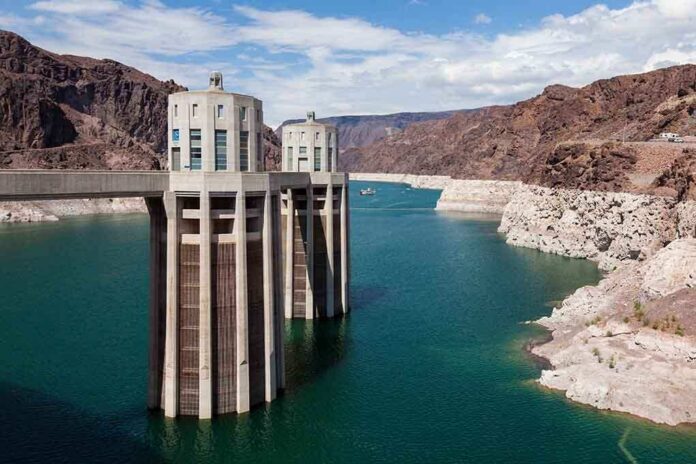
Lake Powell, the nation’s second-largest reservoir, has fallen to a new record low, heightening risks to water and power for millions.
Story Snapshot
- NASA confirmed Lake Powell’s water level hit a record low in early September 2026.
- The drop followed a very weak snow season and reduced runoff across the Colorado River Basin.
- Federal projections warn of continued strain on water deliveries and hydropower if trends persist.
- Managers face hard choices as supply and demand in the basin remain out of balance.
What Hit Record-Low Means Right Now
NASA reported that satellite images captured Lake Powell at a record-low elevation of about 3,517 feet in early September 2026, below the prior low set in 2023. The new mark confirms that storage has slipped again after years of drought and heavy use. The level matters because the reservoir helps supply water to cities, farms, and tribes across the Southwest. It also powers turbines at Glen Canyon Dam, which need a minimum pool to generate electricity.
Daily records show the lake hovered near 3,517 feet through mid to late September, underlining how deep the drawdown has become. Photos from major outlets show wide, dry shorelines and stranded boat ramps. Those images match the data story: less water came in than went out, and storage kept sliding. While small day-to-day rises can occur, experts say the broader trend has pushed the system into rare territory not seen since before Lake Powell first filled.
Why Levels Fell So Far This Year
Scientists and federal officials link the drop to an exceptionally dry, warm winter that left little mountain snow to melt in 2026. That weak runoff followed many years of drought across the basin. Less snow means smaller spring inflows, so the reservoir did not recover after summer draws. NASA’s analysis points to reduced seasonal snowmelt as a key driver of this year’s decline, which lined up with what water managers reported on the ground.
The Bureau of Reclamation’s recent updates and projections describe a system under stress from both climate forces and long-standing overuse. Managers have warned that Lake Powell and Lake Mead together reached the lowest combined storage since the late 1950s. That combined drop forces tougher choices on deliveries and releases. It also narrows the safety margin for hydropower and for meeting legal obligations to downstream users if another weak winter arrives.
What It Means for Water, Power, and Policy
Federal guidance documents lay out the core problem: the Colorado River has a structural gap between supply and demand after more than two decades of drought and very low runoff. Record-low levels raise the odds of tighter cuts to users, higher power costs if hydropower falters, and rising conflict among states, tribes, cities, and farmers. These pressures land hardest on everyday people who pay the bills, while agencies and political leaders debate how to share a smaller river.
Lake Powell Falls to 3,517 Feet, a New Record
Read the full story: https://t.co/kFpyEYZRBl
Lake Powell hit a record-low 3,517 feet in September 2026-two feet below the 2023 record-as megadrought and a failed snowpack threatened water and power for 40 million people.… pic.twitter.com/w94LEC0inm
— wondernews.now (@wondernews_now) September 23, 2026
Officials say near-term operations will keep focusing on balancing releases, stabilizing hydropower, and preserving critical elevations if possible. But long-term fixes require deeper reforms so use matches likely supply. That could include updated rules, conservation gains, and new investments. Many readers across the political spectrum see a common failing here: big promises and slow action while the water drops. The record low at Lake Powell turns that concern into a clear, measurable fact.
Sources:
sciencedaily.com, science.nasa.gov, lakepowell.water-data.com, usbr.gov, reuters.com