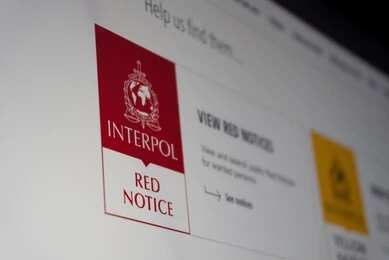
A 39-year-old Ukrainian woman is now the global focus of a bombing probe in Monaco, even as key evidence behind her Red Notice remains hidden from the public.
Story Snapshot
- Interpol named Ukrainian woman Anastasiia Berezovska as the suspect in a Monaco parcel bomb attack.
- The blast injured three people and reportedly targeted tycoon Vadym Yermolaev, who has links to Russia.
- Monaco authorities issued an arrest warrant and Interpol a Red Notice, but have not released forensic proof.
- The case highlights wider concerns that powerful systems can label people as criminals before evidence is seen.
Interpol’s Red Notice and the Monaco bombing suspect
Authorities in Monaco and the International Criminal Police Organization (Interpol) are searching for Anastasiia Berezovska, a 39-year-old woman from Ukraine, now formally named as the suspect in a recent parcel bomb attack. The Red Notice on Interpol’s website describes her as Ukrainian-born, with dark hair, a possible snake tattoo on her right arm, and German language skills. Monaco officials say she is wanted for attempted murder, placing an explosive device on a public road with criminal intent, and criminal conspiracy.
Reports say the bomb exploded earlier this week in Monaco, injuring three people and reportedly targeting Ukrainian-born tycoon Vadym Yermolaev, now a Cypriot national. Local outlets and international wires describe him as a wealthy businessman with links to Russia, making the attack instantly political in the public eye. Media accounts say the device was sent as a parcel, which fits a pattern of attacks meant to reach high-value targets even inside very secure, wealthy areas.
What investigators say they know – and what they have not shared
The Monaco prosecutor’s office has said that a suspect was identified and that an international arrest warrant has been issued, but public details remain thin. According to reporting that cites the prosecutor, investigators traced a rented vehicle with German license plates used to deliver the parcel, then tracked the suspect’s route from France into Italy and back toward Germany. A Monaco judicial source told reporters that the suspect was disguised as a man during the operation and was later spotted in Germany, but did not disclose supporting documents or footage.
Right now, no open-source reporting shows forensic proof linking Berezovska to the bomb, such as DNA, fingerprints, or clear video of her handling the device. There is also no public court filing or detailed indictment explaining the evidence behind the charges, beyond the fact that an arrest warrant exists in Monaco and a Red Notice has been posted. This means the world is being asked to accept a serious label—would-be bomber—mostly on the strength of an international alert and limited statements by prosecutors, rather than on evidence people can see and judge for themselves.
How Red Notices work, and why both left and right worry about them
The Interpol Red Notice system was built to help countries find and arrest suspects across borders, but experts stress that a Red Notice is *not* proof of guilt. Legal analysis from the United States and Europe shows that Red Notices are like global “wanted posters,” based on a national arrest warrant, and not the result of any independent Interpol investigation. Courts in several countries, including U.S. federal courts, have found that a Red Notice alone is usually not enough to establish probable cause for arrest.
🚨🇲🇨 BREAKING: Interpol has issued a Red Notice for Anastasiia Berezovska, a 39-year-old Ukrainian woman
Berezovska is suspected of carrying out the recent Monaco bombing that reportedly targeted a Ukrainian tycoon with links to Russia pic.twitter.com/opNMY03orc
— Politics Global (@PolitlcsGlobal) July 3, 2026
Those expert studies also describe troubling cases where governments or powerful business interests have misused Red Notices to chase rivals, debtors, or political opponents. In some situations, corrupt officials created weak or false warrants at home, then pushed Interpol to publish a Red Notice, turning a local dispute into a global manhunt. Immigration guidelines in the United States now warn officers not to rely on a Red Notice without checking the underlying evidence and making sure the case is for a real, serious crime. These patterns feed a wider fear, shared by many conservatives and liberals, that large systems can be bent by elites to crush ordinary people.
In the Monaco case, there is no public sign yet that the Berezovska Red Notice is abusive or fake. The crime is clearly serious, and a bomb that injures three people in a major financial hub deserves strong investigation. But the combination of a high-profile tycoon, cross-border politics involving Ukraine and Russia, and the lack of visible evidence naturally raises questions for people on both sides of America’s political divide. Many citizens already believe global bodies and national justice systems sometimes act first, explain later, and hide the facts from the public.
Media coverage, public trust, and the risk of assumed guilt
Major outlets from the Associated Press to Sky News have followed the official line, repeating that Berezovska is the suspect named by Interpol and wanted for attempted murder, while offering little detail about the proof behind that claim. Social media posts and breaking-news banners frame her as the person who “blew up” an oligarch, even though no court has heard the case and no trial has tested the evidence. When press coverage locks onto a single narrative this quickly, many readers feel that ordinary due process has been replaced by trial-by-headline.
For Americans who already distrust both mainstream media and international bodies, this story fits a larger pattern. A powerful system labels someone a criminal; global alerts go out; news outlets echo the claim; and only later, if ever, do we learn what evidence really existed. People on the right see echoes of politicized law enforcement and a deep state that protects insiders while hunting others. People on the left see another example of secretive power structures and opaque justice. Both sides worry that if this can happen in Monaco, it can happen anywhere—while regular citizens have almost no say and almost no insight into how such life-changing decisions are made.
Sources:
insiderpaper.com, wtop.com, usnews.com, creators.yahoo.com, dspace.nuft.edu.ua, thesun.co.uk, apnews.com, yahoo.com