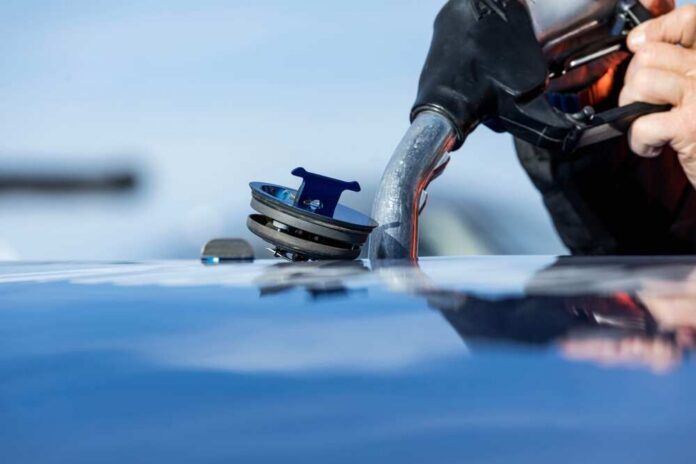
Donald Trump’s latest push for $2.50 gasoline puts him back in a familiar fight over who really controls the pump.
Quick Take
- Trump said oil companies are not cutting pump prices fast enough and told the Department of Justice to investigate.
- Industry groups say gasoline prices follow global oil markets, not one company’s whim.
- Experts also point to a normal delay between falling crude prices and cheaper gas at retail stations.
- The dispute taps a long-running political issue: voters want relief, but pricing is still shaped by markets, taxes, and refining costs.
Trump Reopens the Gas Price Fight
Trump said gas companies should lower prices after claiming oil costs have fallen faster than pump prices. He posted that the big oil companies are not dropping prices “commensurate” with lower oil costs and said customers are being gouged. He also said he instructed the Department of Justice to “immediately” look into possible price gouging.[1][2][3]
That message matters because it turns a kitchen-table complaint into a federal enforcement question. It also fits Trump’s wider habit of using price cuts as a public test of economic success. Supporters see the move as pressure on powerful firms. Critics say it risks oversimplifying a market that is shaped by many moving parts, not just one executive decision.[4][15]
Why Gas Prices Do Not Move in Lockstep
Industry groups say no single company sets gasoline prices. They say crude oil, refining, distribution, marketing, and taxes all feed into the final price at the pump. The American Petroleum Institute says about half of a crude price change shows up in retail gasoline within two weeks, which helps explain why prices do not always fall the same day oil prices drop.[10][15]
That lag is central to the dispute. Trump is arguing that the delay is too slow and proves unfair treatment of drivers. Oil industry defenders say the gap is normal and reflects the time needed for older, more expensive fuel to move through the supply chain. That leaves the real question less about slogans and more about timing, margins, and local station pricing.[10][17]
The Political Stakes Behind the Numbers
This fight reaches beyond gasoline. It taps anger on both sides of the political map. Many conservatives see high fuel prices as a sign of overregulation, waste, and corporate excuses. Many liberals see the issue through the lens of corporate power and rising costs for working families. Both groups often agree on one point: Americans want lower prices and less talk from Washington.[4][15]
Why gas prices aren't falling & Trump is mad about it:
The "crack spread" is the difference between what refineries pay for crude vs what they sell gas/diesel ⛽ for. It's refinery profit. Why is the crack spread at historical highs?
1. Crude might be cheap, but it takes time… pic.twitter.com/OO9Sx17pTn
— Mankosmash (@Mankosmash) June 30, 2026
The new DOJ review may clarify whether there is evidence of illegal conduct, but history suggests that these cases are hard to prove. Past investigations have usually pointed to supply disruptions, market shifts, and refining costs rather than broad price fixing. If the administration wants to make the case stick, it will need hard data on current margins, not just a sharp public demand for cheaper gas.[15][18]
Sources:
[1] Web – Donald Trump says gas companies should lower prices to $2.50 a gallon
[2] Web – Trump says DOJ will ‘immediately’ look into price gouging at the gas …
[3] Web – Trump alleges gas price gouging, calls for DOJ investigation
[4] Web – Trump accuses oil companies of gas price ‘gouging,’ calls for DOJ …
[10] Web – Trump says he ordered DOJ to probe gas price ‘gouging’
[15] Web – ELI5: How do gas stations determine the price of gasoline … – Reddit
[17] Web – Factors That Affect Gas Prices | NACS
[18] YouTube – Gas Prices Explained | Understanding the price we pay at the pump.