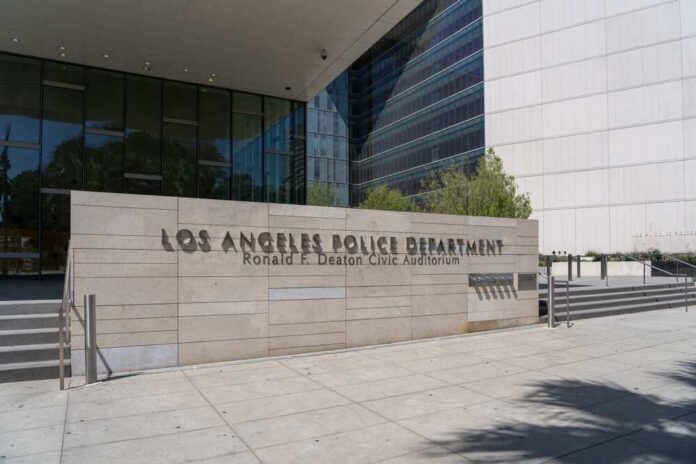
A Los Angeles police shooting over what turned out to be a replica rifle is raising new questions about police use of force, public transparency, and how officer-involved shootings are investigated.
Story Snapshot
- LAPD says officers shot Jeremy Flores after a 911 call reported a man with a “possible assault rifle” who refused commands and raised the weapon.
- The gun was a realistic MP5-style BB airsoft rifle, part of a growing pattern of deadly encounters over imitation firearms in California.
- Family members and activists say edited video hides key angles, insist Flores never pointed the gun, and demand full bodycam and drone footage.
- An ongoing California Department of Justice investigation and rising LAPD shooting numbers are fueling wider distrust of both police and oversight systems.
What Happened In The Jeremy Flores Shooting
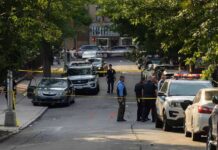
Los Angeles Police Department (LAPD) officers went to Boyle Heights after a 911 caller reported a man with a “possible assault rifle” near Spence and 8th Street. Critical Incident video shows officers surrounding a parked car and ordering 23-year-old Jeremy Flores to get out and drop the gun. They warned him, “You will get shot, dude,” while pointing their own weapons at the vehicle. LAPD’s official statement says Flores refused commands, raised the rifle, and an officer-involved shooting followed.
After the shooting, Special Weapons and Tactics officers sent in a small drone to check the car. Drone footage released later shows Flores slumped over the steering wheel, still belted in, with the replica rifle across his lap. Police say he was unresponsive but still armed, so they approached carefully and removed the gun. The weapon was later described as a battery-powered MP5-style BB airsoft rifle that fired metallic projectiles and looked like an automatic rifle. Three LAPD officers were named as the shooters in media and department releases.
Why The Video And Evidence Are Being Disputed
The official LAPD brief admits the body-worn camera does not clearly show the exact moment Flores raised or pointed the gun. That gap is a big reason critics doubt the shooting was justified. Family members argue the released footage does not show Flores pointing the rifle at officers. They also point out he was wearing a seatbelt and badly wounded right away, so they believe he physically could not follow orders to exit the car.
Activists and relatives say the video released in late August is “highly edited” and skips the head-on angle of officers firing into the windshield. They claim this editing hides whether Flores was actually threatening officers at the moment bullets were fired. Supporters have held rallies in Boyle Heights demanding full, uncut footage from every officer, plus raw drone video from before and after the shooting. These demands rely on California transparency laws that require agencies to release critical incident video on a set timeline, but critics say the current rules still let departments control the narrative.
A Growing Pattern: Replica Guns And Rising Shootings
This case is not happening in a vacuum. Los Angeles Police Chief briefings show officer-involved shootings have jumped sharply in recent years, with a notable increase in cases involving imitation or replica guns. A statewide study finds that most deadly police encounters in California involve guns, and about six percent involve firearm replicas that looked real enough to be treated as deadly threats. National work on police shootings also shows states with more household gun ownership see higher rates of fatal police shootings overall.
At the same time, Los Angeles media have documented repeated shootings of people in crisis holding knives or other “edged weapons,” even after years of promised reforms. Many citizens on both the left and the right now see a system where police are trained and legally shielded to shoot fast, while investigations move slowly and rarely lead to charges. In Flores’s case, the California Department of Justice is handling the review because he was effectively unarmed in the legal sense—holding a replica, not a real firearm—when he was killed. That probe can take up to a year, keeping the community in suspense.
Why This Case Feeds Broader Distrust Of Government Power
For conservatives who worry about rising crime and weak accountability, the Flores shooting hits a nerve: officers faced what looked like an assault rifle in a city with more guns and more violent calls than before, yet the evidence proving a direct threat is unclear. For liberals focused on racial justice and police reform, the case fits a pattern where officers kill a young man of color in a parked car, then control the video and the story while families fight for every scrap of truth.
Both sides share a deeper fear—that powerful institutions close ranks when something goes wrong. The demand for full, unedited footage is really a demand to see whether the state can be trusted when only its cameras and its reports stand between life and death. The case is likely to remain under close scrutiny until investigators release their findings and any additional available evidence.
Sources:
nypost.com, thelalocal.org, latimes.com, abc7.com, fightbacknews.org, youtube.com, facebook.com, instagram.com, lapdonline.org, reddit.com