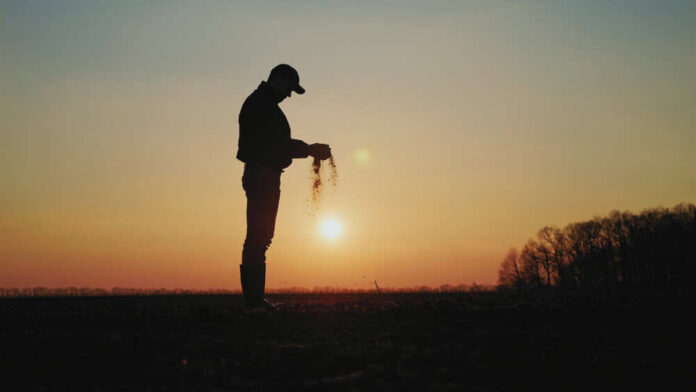
As California’s new groundwater fees hit Napa Valley, vineyard owners warn their way of life is at risk while state and county officials insist the charges are the price of keeping local control and avoiding a deeper water crisis.
Story Snapshot
- Napa vineyards face new groundwater fees of up to $98.74 per irrigated acre starting in 2026.[3][4]
- County leaders say the fees are required by state law to stop long‑term aquifer decline and keep control local.[3][4][9]
- Growers say added costs on roughly 45,900 acres could push smaller vineyards toward “economic oblivion.”[1][2][7]
- Media and lobbying groups on both sides are shaping the story, while key data on real impacts is still missing.[2][3][12]
New Groundwater Fees Hit Napa’s Vineyards
Starting with the 2026–2027 tax year, Napa County will charge an annual groundwater sustainability fee on land inside the Napa Valley Subbasin.[1][4] Vineyard owners who irrigate with groundwater will pay a combined rate of $98.74 per planted acre, made up of a $38.58 base fee and a $60.16 irrigation fee.[3][4] Dry‑farmed acres or vines using surface or recycled water will pay only the base $38.58 per acre.[3][4] These charges will appear directly on property tax bills, turning water management into a visible yearly cost for growers who already feel pressured by rising regulation and inflation.[2]
The fee program funds Napa’s Groundwater Sustainability Plan, which was created under California’s Sustainable Groundwater Management Act of 2014.[4][9] That law ordered local agencies across the state to keep aquifers from being pumped to collapse, or risk state takeover.[9] Napa officials stress that this fee is not a charge for water use itself but for the monitoring, reporting, and planning work needed to track groundwater levels and prove the basin is sustainable.[4] In theory, this lets Napa keep decisions local instead of handing control to distant bureaucrats.
Growers Warn of Economic “Oblivion”
A regulatory cost study for Napa vineyards shows how steep the jump will be.[2] In 2025, overall groundwater compliance cost was about $38.26 per acre; when the new fee hits, most agricultural users will owe an additional $98.74 per planted, groundwater‑irrigated acre.[2][3] That pushes total water‑related compliance over $150 per acre before a single gallon is pumped.[2] For the roughly 45,900 acres in the subbasin, that means hundreds of dollars per acre in new overhead, with smaller vineyards often paying more per acre than large ones.[1][2][14] Many owners say they can “see where this ends” if layered fees and rules keep stacking up on an industry already squeezed by high land prices, labor costs, and global competition.[2][7]
The Board of Supervisors vote to adopt the fees was close, three to two, showing local leaders themselves are split.[1] Two supervisors opposed the plan, signaling concern about the burden on farmers and well users.[1] Industry groups like Napa Valley Vintners and Napa Growers report that the first fee numbers sent to property owners were even higher, causing “significant financial shock” and leading to organized pushback.[3][17] Their advocacy helped cut the original proposal by 50 to 60 percent, a rare win for local growers, but one that also confirms how extreme the starting point felt.[17] At the same time, the county will put in $500,000 a year from the general fund, including money for hardship waivers, to soften the blow.[3][4]
Water Crisis, Local Control, and Deep Distrust
State and county officials say there is no real choice: groundwater across California has been pumped hard during years of drought, and data now shows major aquifer decline.[21][25][26] In other basins, studies find that raising the price of groundwater makes farmers cut pumping and sometimes switch crops, lowering long‑term stress on the water supply.[18][21][22] Napa’s fee follows that same model, aiming to fund the science and enforcement needed to avoid the kind of collapse seen in the Central Valley.[25] Supporters argue that paying for honest data and strict limits now is cheaper than watching wells go dry later.
Yet both left‑leaning and right‑leaning residents see a familiar pattern behind the policy talk. Many feel a small group of regulators, industry lawyers, and large landowners shape the rules, while ordinary growers and workers carry the costs. The Groundwater Sustainability Agency board and county leaders have deep ties to the wine industry, which feeds fears of “regulatory capture” even when fees are meant to serve long‑term public goals.[1][2] Media coverage adds another layer: national outlets focus on “furious” vineyard owners and “crucifying” fees, while state agencies stay mostly silent in public.[7][10][11] The result is a lot of emotion, little clear explanation, and growing distrust of a system that seems to answer more to elites than to everyday citizens.
Missing Data and Shared Questions About Fairness
Behind the loud headlines, important facts are still unclear. Napa has not yet released a detailed, independent cost‑of‑service study showing exactly how each dollar of the $98.74 fee ties to real work on groundwater.[2][3] There is also no public economic model showing how many vineyards might switch to dry farming, cut production, or close because of the higher costs.[2][12] Research from other parts of California suggests steep water price hikes can push farmers out of perennial crops and leave more land unused.[21][23] But Napa‑specific numbers are missing, leaving growers to imagine worst‑case outcomes and regulators to insist the pain is manageable.
That gap in hard information fuels a broader frustration that crosses party lines. Conservatives see yet another mandate from Sacramento raising costs and threatening local business. Liberals worry that fees, without strong oversight, may favor large wineries that can absorb them while small operators disappear, widening the gap between the haves and the have‑nots. Both sides see government repeating the same pattern: pass complex rules, talk about “sustainability,” but fail to explain clearly, measure impacts honestly, or protect ordinary people from getting squeezed. Napa’s groundwater fight is not only about water; it is another test of whether public agencies still serve citizens first, or the deep networks of money and power that shape modern America.
Sources:
[1] Web – Furious Napa Valley vineyards facing oblivion as crucifying new fees …
[2] Web – Groundwater Sustainability Fee
[3] Web – Proposed Groundwater Sustainability Agency Fee for FY 2027
[4] Web – Napa County to Implement New Groundwater Sustainability Fees …
[7] Web – 2026 Fee Study – Wyandotte Creek Groundwater Sustainability …
[9] Web – AB 2026: Water diversion: groundwater recharge: permit.
[10] Web – Sustainable Groundwater Management Act (SGMA)
[11] Web – Napa County approves groundwater pumping fees for 2026
[12] Web – Thousands of Napa County property owners to pay new …
[14] Web – Groundwater Sustainability Fee | Napa County, CA
[17] Web – Napa’s groundwater fee is here. Here’s what it actually costs you …
[18] Web – Groundwater Fees Reduced by 50-60% Following Industry Advocacy
[21] Web – California passed a law to limit and fine farmers for ground water …
[22] YouTube – Rising Regulatory Costs Cripple California Farmers as New Rules …
[23] Web – Cost of Water Increases Likely to Cause Big Shifts in California …
[25] Web – California farmers may switch to less water-intensive crops due to …
[26] Web – Policy Brief: Drought and California’s Agriculture