
NATO is quietly debating whether to park more U.S. nuclear bombs closer to Russia, even as many citizens no longer trust their own governments to act wisely with that kind of power.
Story Snapshot
- NATO is discussing the biggest shift in its nuclear sharing plans since the Cold War, including possible roles for Poland and the Baltic states.
- Supporters say moving nuclear assets east is needed to deter Russia and keep the United States tied to Europe’s defense as doubts about Trump’s long-term commitment linger.
- Critics warn the move could spike tensions with Moscow at a time when old arms control treaties have collapsed and crisis hotlines are weak.
- The fight over where to place nuclear bombs highlights a deeper problem both left and right see: unaccountable elites making life-and-death decisions far from public view.
What NATO Is Really Debating
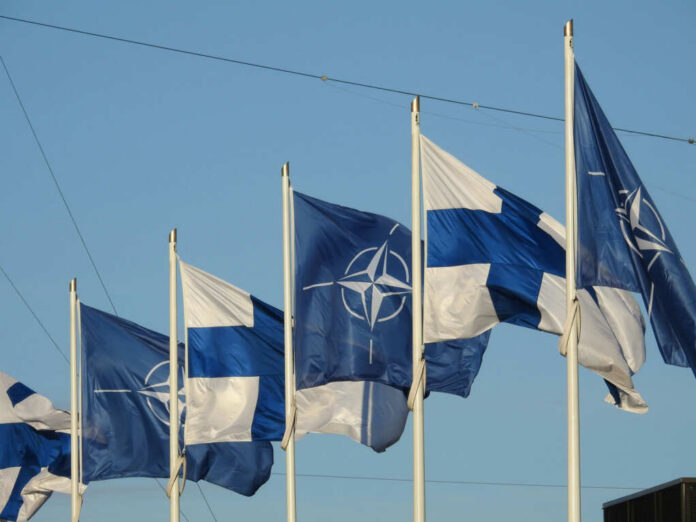
North Atlantic Treaty Organization (NATO) officials and United States leaders are now weighing whether to expand nuclear “sharing” by adding new host countries, including Poland and possibly Baltic states.[4] NATO’s nuclear sharing system puts U.S. nuclear bombs in a handful of allied countries, whose pilots train to deliver them in war while Washington keeps control.[14][10] Today, weapons are stored in states like Germany and Italy, far from Russia’s borders.[2] Moving them east would be the largest shift since the Cold War ended.[8]
Poland’s leaders have pushed hardest for a bigger nuclear role. Former President Andrzej Duda and earlier conservative governments argued that hosting U.S. nuclear assets or giving Polish F‑35 jets a nuclear role would show Moscow that any attack on Poland risks nuclear escalation.[1][2] Polish policy experts say such steps would not just protect Poland, but also prove NATO is serious about defending its eastern flank.[1] A recent Polish report called including Poland in nuclear sharing “high political significance” because it is so close to Russia.[1]
Why Allies Want Nukes Closer to Russia
Supporters of expansion say the security map has changed. Russia’s war against Ukraine and threats to deploy nuclear weapons to Belarus have shaken frontline states.[2][1] Polish Prime Minister Mateusz Morawiecki publicly requested to join NATO’s nuclear mission after Moscow signaled moves into Belarus, arguing that forward-based fighter-bombers with low-yield nuclear weapons can best deter aggression.[2] Analysts linked to NATO argue that adding more countries with nuclear-capable F‑35 jets, and maybe bombs, would strengthen alliance unity and ensure enough planes survive a first strike.[1][18]
Many in Europe also worry about the long-term reliability of the United States under Donald Trump. Scholars describe “U.S. ambivalence” and say some allies want nuclear sharing as a tripwire to keep Washington locked into Europe’s defense even if politics in Washington swing wildly.[3] They see nuclear sharing not only as military firepower, but as a way to bind America politically to NATO. NATO itself calls nuclear sharing arrangements “at the heart” of its deterrence and defense posture and a way to spread risks and responsibilities among allies.[6][8]
Why Others Fear Escalation and Elite Drift
On the other side, critics warn that moving bombs closer to Russia looks like placing nuclear weapons “in Russia’s backyard” and could fuel a dangerous spiral.[8] Analysts note that many Cold War arms control treaties between Washington and Moscow have collapsed, leaving almost no verified limits or reliable crisis hotlines.[8] Military planners caution that in a world with weak guardrails, any misread signal or false alarm near the border could escalate faster than leaders can control.[8] That risk falls hardest on ordinary people, not on the elites making the call.
Some experts argue nuclear sharing is now more about alliance politics than real battlefield need. Research finds that roughly one hundred U.S. nuclear bombs in five European countries mainly serve as tools of “alliance management,” helping keep NATO together even as many governments doubt the weapons’ true military value.[20] Others say the same credibility could be kept by sharing information and planning without parking more physical bombs in new countries.[19] For them, adding new hosts creates new targets without fixing NATO’s deeper political cracks.
Where the Debate Leaves Ordinary Citizens
For many Americans and Europeans, this fight hits a raw nerve that crosses party lines. People on the right see globalist institutions and defense bureaucrats pushing risky moves while ignoring border security, debt, and basic economic pain. People on the left see the same elite circles making nuclear decisions with almost no public debate, while social inequality grows at home. Both camps suspect that a small class of insiders is playing nuclear chess over their heads and calling it “deterrence.”
The bigger story is not only about where bombs sit on a map. It is about who decides, how open the process is, and whether anyone is ever held accountable if things go wrong. NATO officials promise they will take “all necessary steps” to keep nuclear forces safe and secure, but they release few details the public can judge.[21] As nuclear discussions move east, citizens on both sides of the Atlantic are left to ask whether their leaders are truly guarding peace, or just guarding their own power.
Sources:
[1] Web – NATO Is Weighing the Biggest Expansion of Its Nuclear Weapons Sharing …
[2] Web – nuclear sharing: why poland is pushing for NATO nuclear sharing
[3] Web – explaining the dynamics behind Poland’s desire to join NATO …
[4] Web – Poland and Lithuania explore playing bigger role in NATO’s nuclear …
[6] Web – Will Poland agree to French nuclear sharing under these … – Reddit
[8] Web – Poland’s Prime Minister declared Warsaw’s interest in hosting …
[10] Web – The Ukraine War and nuclear sharing in NATO
[14] Web – Towards a New NATO Nuclear…
[18] Web – [PDF] Spreading the Burden: How NATO Became a ‘Nuclear’ Alliance
[19] Web – To deter Russia, NATO must adapt its nuclear sharing program
[20] Web – [PDF] Options for NATO Nuclear Sharing Arrangements
[21] Web – Still a useful myth? NATO’s theater nuclear weapons as tools of …