A private AI camera network meant to fight crime is now repeatedly sending armed police after innocent people, including two journalists, and the company admits the system is working exactly as designed.
Story Snapshot
- AI-driven Flock Safety cameras wrongly triggered police stops of two automotive journalists after partial plate matches.
- The company says its system “performed as designed” and blames bad data and human error, not the technology itself.
- Internal numbers show hundreds of millions of misreads each month and local audits find high rates of mistaken stops.
- Civil rights groups, cities, and some police audits now question whether this growing surveillance network can be trusted.
AI Camera Alerts Lead Police to Wrongly Stop Two Journalists
Automotive journalist Joel Feder and his wife were stopped in Plymouth, Minnesota after Flock Safety’s automatic license plate reader flagged their Jaguar Land Rover press vehicle as stolen. Days later, another automotive journalist driving a different press car was tracked across a state and stopped after the same network treated a single bad entry in a police “hotlist” as proof every similar plate was stolen. In both cases, officers responded to real-time alerts from cameras mounted on poles and in neighborhoods, then escalated to armed traffic stops.
Police reports and follow-up coverage show the core problem was not a car thief on the loose, but bad information fed into a system that never checked for missing characters or context. In the Plymouth case, a National Crime Information Center record listed an incomplete license plate number; Flock’s system then treated any plate containing those characters as a hit. In the second journalist’s case, a truncated plate entry tied to one Jaguar Land Rover media car caused cameras to flag every similar press vehicle nationwide as stolen.
Flock Safety Says System ‘Performed as Designed’
Flock Safety’s chief communications officer Joshua Thomas told The Drive that the cameras did what police agencies asked them to do: look for partial character matches and fire alerts when those characters appeared. He stressed that a camera hit “does not equal probable cause” and should only be one step in an investigation, like a burglar alarm going off. Company policy and training materials say officers must manually verify each automatic license plate reader alert before taking action, including checking the full plate and vehicle details.
Thomas and other company statements also lean on accuracy claims to defend the technology. Flock says its system is about 99 percent accurate while scanning roughly 20 billion plates each month, which still means on the order of 200 million misreads every month. Earlier marketing materials and civil rights studies cite a 93 percent capture rate, which would yield more than one billion inaccurate readings monthly when applied across the network. The company argues that most misreads are harmless because they do not lead to traffic stops, but admits no one tracks how many alerts become armed encounters.
Audits, Lawsuits, and Canceled Contracts Show a Wider Pattern
Local audits and lawsuits now suggest these journalists’ experiences are part of a larger pattern, not rare flukes. In Oak Park, Illinois, an internal review found that 40 percent of 25 Flock-triggered stops over a period were mistakes tied to bad data or officers failing to verify. A lawsuit from the Toledo Police Department alleges it is “commonly known” inside the agency that the Flock system is unreliable and often misreads plates. Business Insider identified at least a dozen incidents nationwide where misreads or poor officer checks led to innocent people being stopped at gunpoint, jailed, or even bitten by police dogs.
Independent testing by surveillance research firm IPVM found a roughly 10 percent error rate in Flock’s Falcon camera output, including regular misreading of license plate states and car details. Flock disputed the findings and cut off sales to IPVM. A study highlighted by the Institute for Justice showed that in many cities, one-third of traffic stops triggered by Flock alerts ended with drivers released due to data problems. In Los Angeles, an audit found 161 innocent drivers were wrongly investigated as stolen-vehicle suspects in just two months, prompting the police department to let its Flock contract expire.
Mass Surveillance Concerns Cross Party Lines
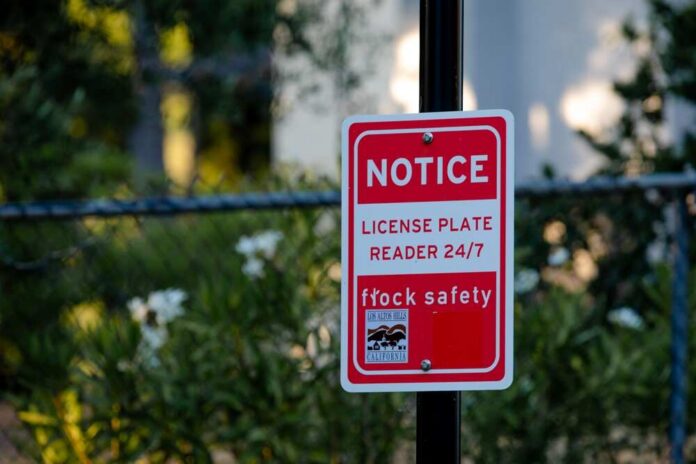
As these systems spread, the debate is shifting from left-versus-right to a shared fear that powerful tools are watching everyone while no one is watching the watchers. Flock now operates more than 80,000 cameras nationwide and advertises crime-fighting benefits, but civil liberties groups say the network tracks the movements of millions of innocent drivers for 30 days at a time. The American Civil Liberties Union’s “Get the Flock Out” campaign reports that one in ten plates scanned by Flock readers misreads the state, and lists cases where people were pursued or accused based solely on flawed alerts.
Flock Safety Defends Cameras After AI System Triggers Wrongful Police Stops Of Two Journalists
www.zerohedge https://t.co/f39WT2XwDX— Inspector Clueso (@IClueso) July 19, 2026
The Electronic Frontier Foundation’s investigations describe Flock’s system as mass surveillance that can chill speech and target vulnerable groups, especially when linked to federal databases and sensitive issues like abortion, immigration, and protest activity. At least 50–53 cities or agencies have canceled or restricted Flock contracts over privacy, accuracy, or data-sharing concerns, including unauthorized access by federal authorities. Several officers across Georgia and other states have been arrested or disciplined for using the cameras to stalk ex-partners or look up people for personal reasons, despite company claims of strong audit tools and work with “democratically elected governing bodies” to ensure proper oversight.
Sources:
zerohedge.com, remio.ai, datafordefenders.org, malwarebytes.com, gadgetreview.com, wnd.com, businessinsider.com, eff.org, aclu.org, classlawgroup.com, 404media.co, deflockokc.com, timesofindia.indiatimes.com, facebook.com, mrsc.org, reddit.com