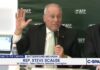
President Trump’s first-ever live, televised Cabinet meeting at Camp David put America’s inner circle of power on public display as war, gas prices, and trust in government all collided in one room.
Story Snapshot
- President Trump held the first live, televised Cabinet meeting at Camp David in American history.
- The meeting focused on Iran, high gas prices, immigration, and midterm election stakes.
- The White House framed the event as proof of transparency and major policy progress.
- Critics saw a scripted show that fell short of real openness or answers for everyday Americans.
What Made This Camp David Meeting Truly “Historic”
President Trump gathered his full Cabinet at Camp David on July 31, 2026, and opened the doors to live cameras for what the White House called the first live, televised Cabinet meeting at the presidential retreat in American history. Camp David has hosted many high-stakes talks before, from President Dwight Eisenhower’s post–heart attack Cabinet session to war planning after the September 11 attacks. Trump’s team leaned on that history and setting to frame the event as a sign of strength, stability, and national purpose.
The White House release said the session showed “rapid progress” in restoring American strength, security, prosperity, and “common sense” after what it called years of decline. Cameras carried Trump’s remarks and Cabinet updates live on multiple networks and online streams, turning what is usually a closed-door strategy meeting into a made-for-TV moment. Supporters pointed to the real-time access as proof that the administration was willing to let voters watch government work instead of hearing about it later through leaks and spin.
What Was on the Agenda: War, Wallets, and a Fractured World
News outlets reported that the Camp David agenda centered on the war with Iran, the related spike in gasoline prices, and pressure on Republicans heading into the midterm elections. Trump and his advisers also discussed immigration, Ukraine, Israel, and alleged fraud issues, reflecting a long list of crises that have piled up in the second term. For many families, those topics are not abstract: war affects kids in uniform, gas prices hit every commute, and immigration fights show up in local schools and hospitals.
Reporters noted that this was the 13th Cabinet meeting of Trump’s second term and his third trip to Camp David during that period. The retreat’s rustic, almost storybook setting—wood paneling, golf carts, quiet hills—stood in sharp contrast to the heavy issues on the table. That contrast feeds a familiar worry on both left and right: that America’s top decision-makers debate war and the economy far from the places where average people line up for groceries, gas, and rent.
Television Cameras vs. True Transparency
Administration allies highlighted the cameras as proof of uncommon openness, stressing that viewers could see and hear Trump and his Cabinet without a media filter. Yet major outlets also described past Trump Cabinet meetings as long, heavily managed sessions where officials took turns praising the president while giving brief updates. This mix of real policy talk and personal flattery raised a basic question: was the nation watching genuine debate or mostly a public-relations exercise meant to project unity and control?
Political communication experts often draw a line between access and openness. Live coverage lets people watch, but it does not always show how hard choices are made, where officials disagree, or how they weigh costs and tradeoffs. Many Americans on both sides already suspect that the “deep state” or other elites make key decisions out of view. For them, a televised meeting can feel like a carefully staged show that stops just short of revealing who really wins and who really loses when policies are set.
Why This Matters to Americans Who Feel Left Out
President Trump used the Camp David backdrop to tout policies like “Trump Accounts,” tax-free savings accounts he said were already opened by over seven million children, with a goal of reaching 70 million families. Supporters see these plans as a way to reward work, savings, and personal responsibility. Critics counter that such programs may help families with extra money to invest while doing little for people living paycheck to paycheck in an economy still marked by inflation and debt.
President Donald Trump, at his historic Camp David Cabinet meeting, touted his administration's accomplishments and made the case that it delivered results at a record pace.
Trump highlighted the economy, border security, and dealings with Iran before pointing to Spain's recent… pic.twitter.com/s2oMiqXxpT
— lisa Boothe (@lisaBoothewn3g) August 1, 2026
Beyond the talking points, the event touched a shared nerve: many Americans in both parties now believe Washington serves itself first. Conservatives are tired of global wars, high energy costs, and the feeling that border promises are broken. Liberals are tired of growing gaps between rich and poor, and crackdowns on migrants that they see as unfair. Watching a Cabinet meeting at a secluded presidential retreat, some may see leadership at work. Others may see a ruling class talking to itself, far from the daily grind of the people it was elected to serve.
Sources:
youtube.com, foxnews.com, ms.now