President Trump turned Abdul El-Sayed’s Michigan primary win into a full-throated attack on the progressive Democrat’s politics, his funding model, and his stance on Israel.
Quick Take
- Trump called El-Sayed a “communist” and accused him of hating Jews and Israel.
- El-Sayed campaigned on Medicare for All and cutting corporate money out of politics.
- Trump also revived claims of corruption in Wayne County, but offered no evidence.
- The clash turns a Senate race into a larger fight over ideology, Israel, and trust in government.
Trump Uses Primary Night to Escalate the Fight
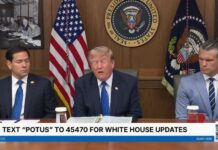
President Trump blasted El-Sayed shortly after the Michigan Democrat won his Senate primary. In remarks and social posts, Trump called him a “communist,” a “man of hate,” and a candidate who “hates Jews” and “hates Israel.” Reporting from multiple outlets says the attack came fast, in public, and without a careful policy debate. Trump also linked El-Sayed to broader claims about socialism and disorder in major cities.
The timing matters because the attack landed before the general election fight had even settled. El-Sayed is now the Democratic nominee against Republican Mike Rogers, and Trump’s comments immediately framed the race in the harshest possible terms. That gives Republicans a ready-made contrast and forces Democrats to defend a candidate whose own words on Israel and corporate power are already controversial in a tight, high-stakes Senate contest.
El-Sayed’s Own Positions Give Trump Ammunition
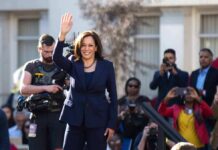
El-Sayed has publicly said he opposes unconditional military aid to Israel and other countries. He has also described his economic agenda in sweeping terms, saying he wants to get money out of politics, put money in people’s pockets, and pass Medicare for All. CNN’s coverage noted that he rejects corporate money while backing the end of Citizens United and a ban on super PACs. Those positions are not hidden; they are central to his campaign.
That gives Trump a real political target, even if his language goes far beyond policy criticism. El-Sayed’s supporters can point to his emphasis on human rights, international law, and health care. His critics can point to his sharp language about Israel, including earlier remarks describing Israeli policy in terms of genocide and apartheid. In a polarized race, those words make it easy for opponents to cast him as far outside the political mainstream.
Corruption Claims and Broader Political Fallout
Trump also tried to widen the attack by alleging corruption in Wayne County, the Detroit-area county that often sits at the center of Michigan election fights. Politico reported that he described it as one of the most corrupt voting areas in the United States and suggested fraud, but the same report noted that he gave no evidence. That makes the claim politically potent but factually unsupported in the material reviewed.
Dr. Abdul El-Sayed has publicly criticized Mike Rogers, accusing him of being closely aligned with major corporate interests and former President Donald Trump. The remarks are part of ongoing political debate ahead of future elections. #Politics #USPolitics #Michigan https://t.co/eNZuHhTlmV
— The Workers Rights (@theworkersright) August 7, 2026
The larger story is bigger than one candidate. Trump’s response shows how quickly a primary winner can be turned into a symbol for everything the other side fears: socialism, weak borders, hostile foreign policy, and elite corruption. Supporters on the left see a familiar smear campaign. Supporters on the right see a nominee whose own rhetoric invites the charge. Either way, the fight reflects a country where distrust now sits near the center of politics.
Sources:
facebook.com, detroitnews.com, youtube.com, bloomberg.com, independent.co.uk, c-span.org, thehill.com, politico.com