
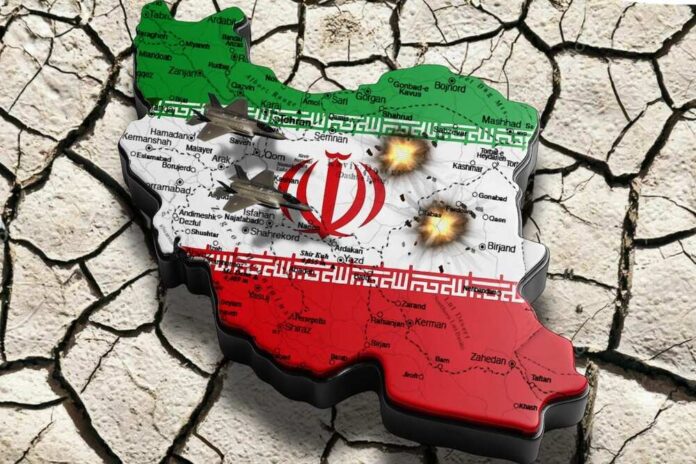
The latest Iran headlines are being spun as if the IRGC has some secret “outlast America” master plan—yet the documented record shows the opposite message coming from U.S. leadership.
Quick Take
- U.S. Defense Secretary Pete Hegseth publicly argued Iran cannot sustain a long fight against the United States.
- February 2026 diplomacy attempts (Muscat and Geneva) preceded U.S./Israel strikes on Feb. 28 after talks failed.
- Iran’s posture in the sources centers on deterrence—missiles, threats to shipping, and proxy pressure—rather than a proven endurance strategy.
- Energy risk remains real: any escalation around the Strait of Hormuz can hit global oil markets and U.S. household costs.
What the “Outlast” Claim Gets Wrong—and What We Can Actually Verify
Revolutionary Guard Corps has unveiled a new plan to “outlast” the U.S. military. The clearest, on-the-record statement in the opposite direction comes from U.S. Defense Secretary Pete Hegseth, who said Iran “cannot outlast us,” framing U.S. staying power as a central part of deterrence. That gap matters because it separates viral framing from verifiable facts.
That does not mean Iran lacks options. The same research shows a familiar pattern: Tehran leans on asymmetric tools—missiles, air defenses, internal security through the IRGC, and pressure through regional proxies. Those are real capabilities, but the supplied sources stop short of documenting a newly announced IRGC endurance blueprint.
How the February Timeline Built Toward Strikes
Events in February 2026 form the backbone of what can be verified. Indirect talks in Muscat took place on Feb. 6, followed by talks in Geneva on Feb. 17. The same window included Iranian revolution anniversary rallies on Feb. 11 and an episode involving Strait of Hormuz closure during drills, all in a climate of escalating rhetoric. After diplomacy failed, U.S. and Israeli strikes were reported on Feb. 28, moving the crisis into a more dangerous phase.
U.S. messaging during this period emphasized pressure and preparedness rather than open-ended nation-building. The research describes Trump-era demands focused on Iran’s nuclear program, ballistic missiles, and support for proxies, with a stated insistence on ending uranium enrichment and curtailing destabilizing activities. On Iran’s side, Supreme Leader Ali Khamenei publicly threatened U.S. warships, while Foreign Minister Abbas Araghchi signaled diplomacy as a path to avert conflict—two tracks that often run in parallel inside the regime.
What “Outlasting” Really Looks Like in Practice: Asymmetry and Economic Pain
Even without proof of a formal “outlast” plan, the research points to tactics Iran can use to stretch a conflict and raise costs—especially through regional proxies and by threatening maritime chokepoints. The Strait of Hormuz is the obvious pressure point; disruptions there can ripple into global energy prices. For Americans still angry about years of inflation and fiscal mismanagement at home, energy shocks are not an abstract geopolitical issue—they show up fast in household budgets and in broader economic confidence.
The sources also warn about risks beyond the battlefield, including instability inside Iran and the possibility of mass atrocity risks for civilians if conflict widens. Those concerns do not excuse the regime’s behavior, but they do explain why neighboring states, including Qatar, have historically warned against escalation spirals. A prolonged, messy conflict is exactly the kind of scenario where Tehran bets it can gain leverage through disruption and intimidation, even if it cannot match U.S. conventional power.
U.S. Endurance Claims vs. Iran’s Deterrence Posture
Hegseth’s statement that Iran cannot outlast the United States is significant because it sets expectations: Washington is signaling it believes it can sustain operations longer than Tehran can absorb them. That is a deterrence message aimed at Iran’s leadership—and at any proxy actors considering follow-on attacks. At the same time, IRGC movements and activity that appear consistent with standard deterrence behavior, not proof of an innovative new campaign design.
Iran’s IRGC Now Has a Plan to Outlast the U.S. Militaryhttps://t.co/H65OJqyk9Q
— 19FortyFive (@19_forty_five) March 6, 2026
Sources:
‘Iran cannot outlast us,’ says US defense chief.