
Federal agents searched Representative Ilhan Omar’s home with a court-approved warrant just weeks before Election Day, while public evidence of the most explosive allegation remains unproven.
Story Snapshot
- Justice Department confirmed a judicially authorized search; the affidavit stays sealed.
- Omar denied marrying a brother, saying “Not to my knowledge,” in her first post-raid interview.
- Reports cite unnamed sources on possible DNA evidence, but no charges have been filed.
- The search’s timing revived worries about election-season law enforcement actions.
What Officials Confirmed And What They Withheld
The Department of Justice said Homeland Security investigators executed a judicially authorized search warrant at Representative Ilhan Omar’s Washington, D.C., home on October 12, 2026. Officials did not release the supporting affidavit or any evidence. That means a judge found probable cause to search, but it does not prove guilt. No charges were announced at the time of the search, and the investigation is ongoing, according to public statements and reports.
The New York Times reported the search took place 22 days before Election Day, which raised concerns because the Justice Department has long tried to avoid visible steps that could sway voters so close to a vote. Policy bars timing actions to affect an election, though it is guidance, not law. Legal analysts noted the tension between acting on probable cause and protecting public trust during campaign season.
Omar’s On-Air Denial And Her Framing Of The Search
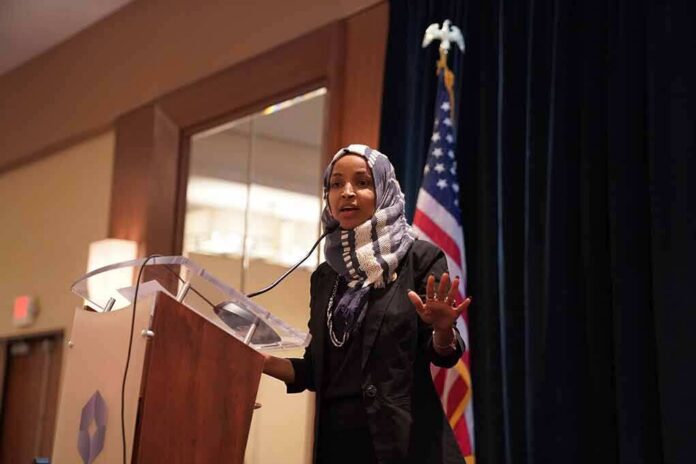
Representative Omar sat for her first television interview after the search and was asked if there was any “weird kernel of truth” to the claim that she married her brother, Ahmed Nur Said Elmi. She replied, “Not to my knowledge.” The allegation has circulated for years but has not been substantiated publicly, and no court has ruled on it. Omar also called the search political targeting in public comments after the raid, disputing the narrative against her.
People magazine and other outlets described her posts arguing that federal law enforcement was being used to target political enemies. While that echoes fears many Americans have about “the system,” the facts so far are limited: a judge approved a warrant, agents searched, and the affidavit is sealed. Without the affidavit, the public cannot see the core evidence that persuaded the court to allow the search.
The Anonymous-Source Claims And The Evidence Gap
Separate reports said investigators obtained DNA that could relate to the sibling claim. These accounts rely on unnamed sources. They do not include lab records, a chain of custody, or a court filing. No prosecutor has laid out that evidence in a public case. As a result, the reported DNA functions more as a claim than as established proof in the public domain. Skeptical readers on both left and right will want to see documents, not rumors.
🚨In her first interview since federal agents raided her Washington, D.C., home, Representative Ilhan Omar sits down exclusively with Chris Hayes.#IlhanOmar #Trump #Raid
🎥MSNOW pic.twitter.com/odg5CTJUuO
— Amy Leigh (@IAmyLeigh) October 22, 2026
Jurist summarized possible offenses listed in the warrant, including false statements and immigration-related fraud, but the site also noted that the affidavit stayed sealed and that no charges were filed when the search occurred. That mix fuels a cycle many Americans resent: sweeping allegations, limited records, and heated spin. Until documents are unsealed or charges are filed, key facts remain behind court seals and agency silence.
Why This Matters Beyond One Politician
This case lands in a country already split over trust in federal power. Conservatives see a history of double standards and weak enforcement on immigration. Liberals see favoritism for the powerful and selective crackdowns on critics. Both sides worry that elites bend rules. A judge’s approval signals evidence exists, but anonymous leaks and election-season timing add to doubt. Clear records, not slogans, will be needed to restore confidence in the outcome—whatever it is.
Sources:
redstate.com, yahoo.com, nytimes.com, npr.org, people.com