
A massive plume of tropical moisture stretching across the Pacific is pouring rain and mountain snow onto California, and scientists say storms like this one are becoming more dangerous as the climate warms.
Story Snapshot
- Satellite images show a large atmospheric river pushing into California, prompting flood warnings for millions of residents.
- Peer-reviewed research finds atmospheric rivers are the main driver behind California’s worsening extreme rain risk.
- A 2022 study found climate change has already roughly doubled the yearly odds of a flood on the scale of California’s historic 1862 disaster.
- Scientists warn that back-to-back atmospheric rivers can cause more damage than any single storm’s strength would suggest.
What An Atmospheric River Actually Is
An atmospheric river is a long, narrow band of moisture that flows through the sky like a river in the air. When one of these bands hits the California coast, it can dump huge amounts of rain and snow in a short time. Weather stations across the state have tracked these storms for decades, and researchers say the cycle of floods and droughts in California is closely tied to how many atmospheric rivers arrive each year.
Forecasters have been tracking this particular system as it moves across the Pacific and makes landfall in Southern and Northern California, triggering flood watches, mountain snow advisories, and warnings for low-lying areas. Local emergency officials have flagged the risk of flash flooding, rockslides, and dangerous mountain travel as the wettest part of the storm pushes through the region.
Why Scientists Call This A Growing Risk
A 2022 study published in the journal Science Advances used climate models and detailed weather simulations to study California’s flood risk. The research found that atmospheric rivers are the main reason extreme rainfall is expected to get worse in California as the planet warms. The same study compared today’s climate to 1920 and found climate change had already roughly doubled the yearly chance of a flood similar to the state’s historic 1862 disaster.
That same research found the odds of an even bigger, rarer flood, one expected only once every 200 years, had jumped by about 234% under one major climate model. These are not predictions that a storm will happen on a specific day. They are estimates of how much more likely severe flooding has become compared to a century ago, based on climate simulations rather than direct observation of a single storm.
Back-To-Back Storms Raise The Danger
Scientists have also found that when several atmospheric rivers hit California one after another, the combined damage can be worse than any single storm would cause on its own. A federal study on these storm sequences found that consecutive atmospheric rivers create outsized flood danger because soaked ground and full rivers from an earlier storm leave little room to absorb the next one. This stacking effect is a major reason California emergency officials watch multi-week forecasts closely during the winter storm season.
The financial toll from these storms is already large. A study tracking 40 years of flood insurance data found atmospheric rivers cause most of the flood-related economic losses across the western United States. That means the current storm’s impact on roads, homes, and businesses could add to a long pattern of costly flood damage tied to this type of weather system, even before factoring in future climate trends.
What History Shows Is Possible
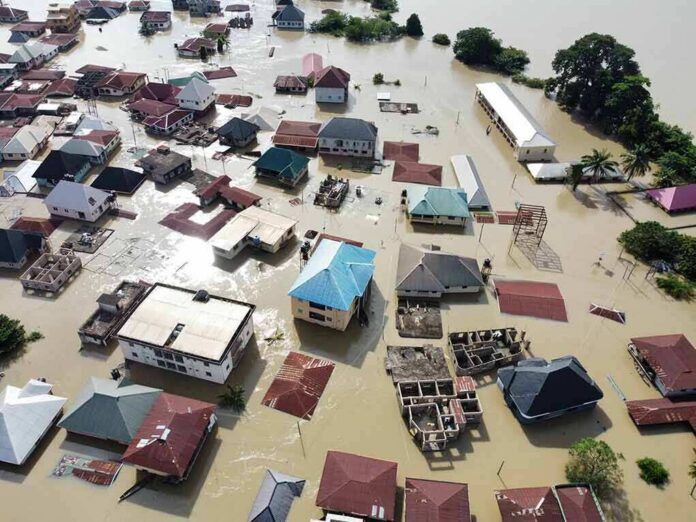
California’s benchmark flood disaster happened in the winter of 1861-62, when weeks of nonstop atmospheric river storms turned much of the Central Valley into an inland sea roughly 300 miles long. Geologic evidence shows floods of that size have struck the state roughly every 100 to 200 years. Researchers say today’s climate science supports treating another flood of that scale as genuinely possible, not just a historical curiosity, though no current forecast says this particular storm will reach that level.
Southern California could see inches of rain from atmospheric river next week | KTLA https://t.co/xgur3hPW3S
— RED Sand 🇺🇲🇮🇱🇬🇧🇩🇪⚓🤿🏴☠️🔱🃏♦️♣️♥️♠️ (@Trumplar) November 24, 2026
Figuring out exactly how much of today’s storm risk comes from climate change versus natural weather swings takes more detailed study of each individual event. Researchers note that projections built from climate models depend heavily on the methods and data sets used, and different approaches can shift the numbers. Still, the overall message from the published science is consistent: atmospheric rivers remain the main engine behind California’s biggest flood threats, now and in the future.
Sources:
youtube.com, nhess.copernicus.org, repository.library.noaa.gov, nature.com, onlinelibrary.wiley.com