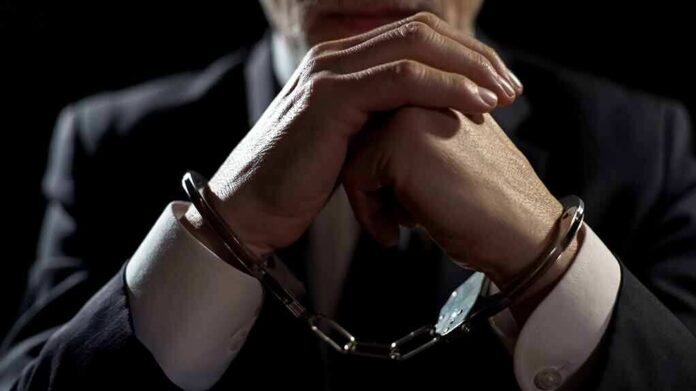
When a high-profile figure like Tony Romo is arrested on suspicion of operating while intoxicated, the real stakes are less in the headlines than in how officer observations, state law, and incomplete public records combine to shape an enduring narrative long before a court ever weighs the evidence.
Key Points
- Romo was stopped on southbound Interstate 43 in Milwaukee and arrested after performing poorly on standardized field sobriety tests, according to the Milwaukee County Sheriff’s Office.
- Deputy observations included an abrupt lane maneuver, odor of alcohol, and bloodshot, glossy eyes; Romo reportedly refused a preliminary breath test and an intoxication test after arrest.
- The case is classified as a first-offense OWI under Wisconsin law, treated as a civil traffic violation rather than a criminal charge, with a court date set for September 21.
- No blood-alcohol or toxicology result has been publicly disclosed, leaving the public record driven largely by officer description, video snippets, and media summaries.
What the Arrest Record Actually Shows
The core facts of the case are not in serious dispute: Tony Romo was stopped by a Milwaukee County deputy while driving southbound on Interstate 43 and was taken into custody on suspicion of operating while intoxicated. Multiple outlets that obtained the arrest-detention report agree on the basic sequence. The report places the stop shortly after 6 p.m. on a Thursday evening, with traffic described as rush hour on one of Milwaukee’s most heavily traveled interchanges.
According to those sheriff’s records, Romo was pulled over after the deputy observed his vehicle abruptly cut in front of another car on the Marquette or Hoan bridge segment of I‑43. Once stopped, the deputy documented several classic alcohol indicators: a strong odor of an alcoholic beverage on Romo’s breath and red, bloodshot, glossy eyes. The report states that Romo told the deputy he had just left the golf course and was heading to meet family; he denied having anything to drink, immediately called his lawyer, and placed his phone in the back seat to record the encounter.
Romo was then taken to the jail sally port for standardized field sobriety testing. Across national and local reporting, the arrest report’s language is consistent: he “performed poorly” on those standardized tests. That poor performance is explicitly identified as the basis for taking him into custody for OWI, first offense. He was booked into the Milwaukee County Jail and released later that evening with a court appearance scheduled for September 21.
Field Sobriety Tests and Refusal Evidence
Standardized field sobriety tests (SFSTs)—typically including the horizontal gaze nystagmus, walk-and-turn, and one-leg stand—are designed to give officers a structured way to detect impairment. In Romo’s case, the Milwaukee County arrest report and subsequent summaries do not enumerate the exact scores or individual clues observed; they compress the outcome into the phrase “performed poorly.” That shorthand is common in public-facing documents, but it inevitably leaves gaps: we know the deputy concluded the tests indicated impairment, not precisely how many validated cues were recorded or whether any medical or environmental factors were considered.
Local reporting adds one more important piece: court records indicate Romo refused to take a preliminary breath test roadside and later refused a post-arrest test for intoxication, for which he has already received a separate citation. Under Wisconsin’s implied-consent framework, refusal of a chemical test after arrest can carry its own civil penalties, including license consequences, even apart from an OWI finding. Yahoo Sports and Fox News both refer to those refusal records, with a district attorney’s spokesperson describing the underlying OWI matter as a traffic violation rather than a criminal case.
Refusal evidence sits in an ambiguous space. Prosecutors and police routinely treat it as corroborative—suggesting a driver feared what a quantitative test might show—yet defense counsel often frame refusal as a procedural decision, sometimes linked to advice of counsel or concern about the testing process. In the public record surrounding Romo’s arrest, no detailed defense explanation has been reported, so the refusal remains a bare data point: it is in the file and has been formally cited, but its meaning has not been litigated in public.
Wisconsin’s OWI Framework and Why This Is a “Traffic Case”
One reason this arrest has generated confusion is the way Wisconsin classifies first-offense OWI. In many states, “DUI” is criminal from the first conviction; Wisconsin takes a different path. A first OWI in Wisconsin, absent aggravating factors such as injuries, very high blood alcohol concentration, or a minor passenger, is generally treated as a civil forfeiture—a traffic violation—with penalties that typically include a fine in the low hundreds of dollars and a period of license revocation.
That is why a spokesperson for the Milwaukee County District Attorney’s Office is quoted as saying Romo’s case is “a traffic violation and not a criminal charge in Wisconsin.” The classification does not mean the arrest is trivial or unfounded; it reflects the state’s statutory scheme rather than the officer’s assessment of impairment. Romo’s arrest-detention report describes him as booked for OWI, first offense, and multiple outlets note that he faces the standard civil consequences associated with such an allegation.
The distinction matters for public perception. For a national audience accustomed to thinking of drunk driving as a criminal offense, labeling Romo’s case “a traffic violation” can sound like a minimization. For Wisconsin practitioners, it is routine: the vast majority of first-time OWI incidents are processed in this traffic-court lane unless aggravating facts push them into criminal territory. That procedural reality is part of why the public record emphasizes booking, release, and a future court date rather than immediate criminal filing.
Body-Camera Footage and the Visual Narrative
TMJ4 and other outlets have reported that body-camera footage exists and has been released, showing the stop, Romo exiting the Jeep he was driving, and portions of the field sobriety tests. Video in these contexts is double-edged. It can confirm that the deputy accurately described the driving maneuver, the outward signs of impairment, and the SFST performance; it can also reveal nuance that does not fit neatly into a short arrest summary—hesitations, environmental distractions, footwear, or road-surface issues that experienced defense attorneys routinely scrutinize.
In the reporting referenced here, the video is described but not analyzed frame by frame. Clips shared in sports and entertainment coverage emphasize Romo’s interaction with the deputy, his statement that he was on his way to see family, and his visible difficulty during parts of the testing sequence. Those images reinforce the narrative that law enforcement formed a reasonable suspicion of impairment. They do not, on their own, answer deeper evidentiary questions: whether each SFST was administered in strict compliance with National Highway Traffic Safety Administration protocols, whether the lighting and noise conditions at a busy interchange affected performance, or whether any medical issues could explain eye appearance or balance.
What Is Missing from the Public Record
For all the detail in the arrest summaries, the public record still lacks several pieces that would normally anchor a definitive judgment about impairment. Most conspicuously, no blood-alcohol concentration (BAC) or other chemical test result has been disclosed in the reporting set. TMJ4 notes that the sheriff’s office sought a search warrant for a blood draw to test Romo’s BAC, but those results have not been reported. Without that quantitative data, the case as it appears in public is built largely on observation and standardized testing rather than lab-confirmed numbers.
The media accounts also do not reproduce the full arrest-detention report, SFST scoring sheets, or deputy narratives. Instead, they quote selected phrases—“performed poorly,” “strong odor,” “bloodshot, glossy eyes”—that are highly suggestive but inherently abbreviated. There are no third-party witness statements from other motorists or bystanders in the record presented, and no medical documentation that might be used to challenge or contextualize the deputy’s sensory observations.
Equally important, there is no public defense-side document in this evidence set: no motion to suppress, no sworn statement from Romo detailing his account beyond the brief denial captured in the arrest summary, and no expert critique of the SFSTs. Side B of the record—the counter-narrative—is almost entirely procedural: it notes that charges had not yet been formally filed at the time of early reporting and that the district attorney views the matter as civil traffic, not criminal. It does not contest the core facts of the stop, the poor SFST performance, or the deputy’s sensory descriptions with specific alternative evidence.
Media Dynamics: From “Celebrity DUI” to Fixed Narrative
What distinguishes Romo’s case from thousands of similar OWI arrests is not the fact pattern; it is the speed and intensity with which a preliminary arrest report was turned into a national storyline. Local stations such as WISN, FOX6, and TMJ4 obtained the arrest-detention report quickly and pushed out detailed summaries. Within hours, national outlets—from the Associated Press to Yahoo Sports and major broadcast networks—echoed those facts, often leading with Romo’s identity as a former Cowboys quarterback and current CBS analyst.
That amplification compresses complex evidentiary issues into a simple narrative: deputy sees abrupt lane change, smells alcohol, notes bloodshot eyes, administers SFSTs, Romo fails, is arrested. In the retelling, nuance tends to be lost. The classification as a civil traffic OWI rather than a criminal charge is often mentioned but rarely explored; the absence of BAC data is acknowledged in passing, if at all. Meanwhile, Romo’s silence—ABC and E! News both report that attempts to reach his representatives drew no response—means the law-enforcement account stands largely unchallenged in the public sphere.
For readers, the effect is subtle but powerful. Repetition across outlets—each quoting the same “performed poorly” line from the sheriff’s report—can harden into an assumption of guilt long before a court weighs the evidence. That dynamic is not unique to Romo; it is baked into how modern arrest reporting works. But celebrity cases magnify it, because the subject’s public role ensures that even routine traffic matters become fodder for commentary, social media clips, and speculative analysis about career implications.
CBS NFL Analyst and Former Dallas Cowboys Quarterback Tony Romo Arrested on Suspicion of OUI https://t.co/igkPL8DlB1
— World I Used To Know 🇺🇸 (@pccote6623) July 24, 2026
How to Read This Case Going Forward
Given the available evidence, the central claims about what happened on southbound I‑43 are well supported. The Milwaukee County Sheriff’s Office’s arrest-detention report, corroborated across multiple independent newsrooms, documents an abrupt lane maneuver, classic alcohol indicators, poor performance on standardized field sobriety tests, and a custodial arrest for OWI, first offense. Court records confirm booking, release, and a scheduled appearance, as well as a citation for refusing an intoxication test after arrest.
At the same time, the absence of publicly disclosed chemical-test results and detailed SFST scoring should temper any rush to conclude more than the record actually supports. What we can say with confidence today is that law enforcement believed they had probable cause to arrest Romo for operating while intoxicated and acted on that belief within the framework of Wisconsin’s civil OWI regime. What remains unanswered in the public domain is whether that probable cause will translate into an adjudicated finding of violation once the full evidentiary package—video, testing results, defense arguments—is assembled and tested.
For an informed reader, the most responsible stance is neither to dismiss the arrest as “only a traffic ticket” nor to assume that “performed poorly” is synonymous with proven intoxication. Instead, this case is best understood as a textbook illustration of how officer observation, standardized testing, and state law intersect—and how, in the age of instant media, a single arrest report can define a narrative long before the law has had its say.
Sources:
thegatewaypundit.com, nytimes.com, nbcnews.com, nypost.com, tmj4.com, cbsnews.com, wisn.com, foxnews.com, abcnews.com, okcfox.com, abc7ny.com, sports.yahoo.com, youtube.com, facebook.com, kltv.com, reddit.com