Chicago voters will decide this November whether the federal government should pay the city back for ICE raids that led to hundreds of arrests and split families apart.
Story Snapshot
- Chicago’s City Council approved a ballot question for the November election on ICE compensation.
- Voters will decide if the city should try to recover money from the federal government for raid-related costs.
- The push follows “Operation Midway Blitz,” which led to more than 800 arrests since September.
- Eighteen former apartment residents already filed federal claims seeking millions in damages.
- Critics say Chicago’s shaky budget makes new payouts risky, even if the vote is only advisory.
Ballot Question Targets Federal Immigration Sweep
The Chicago City Council voted to put a referendum on the November ballot. It asks whether the city should “pursue all lawful means to recover financial compensation from the federal government” for costs tied to ICE operations under President Trump’s administration. The measure covers lost tax revenue, public safety response costs, and services given to affected families and residents.
Mayor Brandon Johnson backed the proposal, which the council approved by a wide margin. The referendum is nonbinding, meaning it asks for voter opinion but does not force any government action on its own. Still, it marks one of the clearest efforts yet by a major U.S. city to treat federal immigration enforcement as a billable expense.
Raid That Sparked The Push
The vote follows months of intense ICE activity in Chicago known as “Operation Midway Blitz.” Federal agents arrested more than 800 undocumented immigrants since early September, according to a Department of Homeland Security release. One raid at a South Shore apartment building resulted in 37 arrests and separated American children from their parents, drawing national attention to the operation’s tactics.
Alderman William E. Hall, who helped shape the ballot language, said the referendum reflects real costs the city says it absorbed from the raids, including emergency response and family services. Advocacy groups like CAIR-Chicago have also pushed a related “ICE Out” pledge, asking local officials to reject money from companies tied to immigration enforcement work.
Legal Claims Already Filed
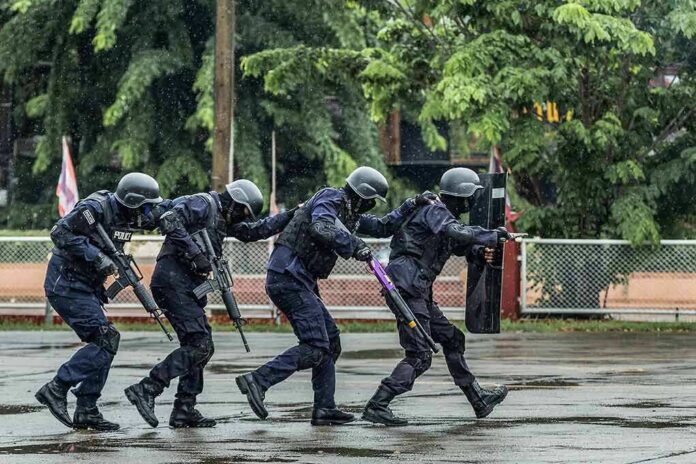
Separate from the ballot question, 18 former residents of the South Shore building filed federal tort claims this year. They are seeking millions of dollars in damages, calling the raid a “surreal middle-of-the-night” operation carried out with military-style force. That case moves through the legal system on its own track, apart from whatever voters decide in November.
Financial And Political Reaction
Critics argue the timing is bad. Chicago faces serious budget pressure, and opponents say pursuing new compensation claims adds risk while the city already struggles to pay for basic services. Supporters counter that if federal operations truly cost the city money, taxpayers deserve a chance to ask for it back through lawful means, rather than simply absorbing the expense.
Democrats Now Pushing Reparations For So-Called ICE Raid Victims? | @DrewHLive
Woke Chicago Mayor Brandon Johnson is now proposing a ballot referendum that would seek financial compensation and “reparations” for communities impacted by recent ICE immigration raids in the city.… pic.twitter.com/Spb05hlQbJ
— The Gateway Pundit (@gatewaypundit) July 30, 2026
The debate has also drawn reaction online, with critics framing it as taxpayer-funded reparations for people who entered the country illegally, while supporters describe it as a fair attempt to hold the federal government accountable for local costs. Seven advisory referendum questions in total advanced through council committees this summer for the November and February ballots.
Chicago’s History With Reparations Programs
This is not Chicago’s first use of the word “reparations.” Johnson also created a Reparations Task Force in 2024 to study historical harms against Black Chicagoans, a separate and long-running effort unrelated to immigration enforcement. Decades earlier, the city paid reparations to victims tortured by former police commander Jon Burge, through a $5.5 million fund capped at $100,000 per victim. The new ICE-related referendum extends that same framework to a very different, and far more recent, controversy.
Sources:
thegatewaypundit.com, news.wttw.com, thepostmillennial.com, justthenews.com, townhall.com, amnestyusa.org, chicago.gov, thehill.com