Nitrogen gas executions raise ethical questions as Alabama inmate Anthony Boyd pleads for gubernatorial intervention hours before his scheduled death.
Story Snapshot
- Anthony Boyd scheduled for execution via nitrogen hypoxia, a controversial method.
- Boyd claims innocence and requests a meeting with Governor Kay Ivey.
- Federal courts have rejected Boyd’s appeals, and clemency seems unlikely.
- The case sparks debate on the constitutionality of nitrogen gas executions.
Alabama’s Controversial Execution Method
As of November 27, 2025, Anthony Boyd is set to be executed by nitrogen hypoxia at the William C. Holman Correctional Facility. This method, recently adopted by Alabama, involves replacing breathable air with pure nitrogen gas, causing death through oxygen deprivation. Critics argue it causes undue suffering, though the state asserts it is humane. Boyd’s case highlights the intense debate over this execution method’s constitutionality, with significant implications for future legal challenges.
Boyd’s plea for a meeting with Alabama Governor Kay Ivey aims to assert his innocence in the 1993 murder of Gregory Huguley. Boyd maintains he was wrongfully convicted, with his legal team presenting evidence that contradicts the prosecution’s account. Despite these claims, federal courts, including the U.S. Supreme Court, have denied his appeals. Boyd’s request for clemency remains his last hope, though it appears unlikely given the state’s position.
Governor Ivey’s Role and Response
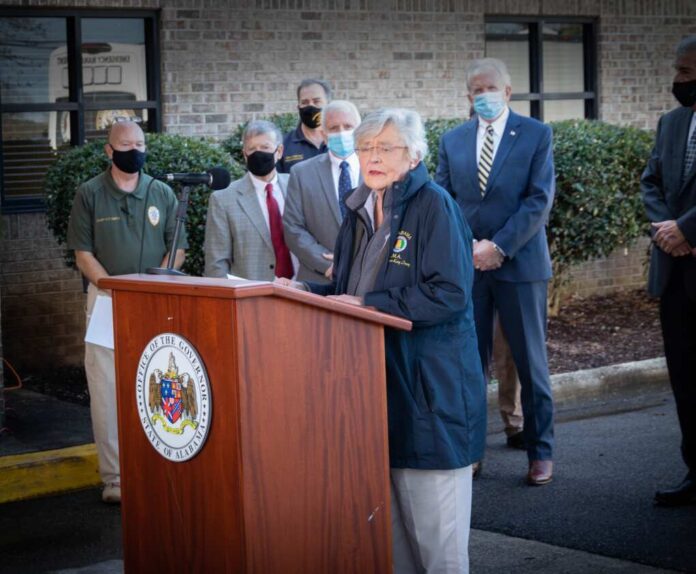
Governor Kay Ivey holds the power to grant clemency, yet her office has only intervened in one execution since she took office in 2017. Boyd’s plea, made through a recorded message, emphasizes his innocence and invites the governor to personally evaluate his case. However, Ivey’s spokesman, Mike Lewis, dismissed the request for a one-on-one meeting as unworkable, stating that no new evidence has been presented to support Boyd’s innocence.
Boyd’s execution, if carried out, will be the seventh nitrogen hypoxia execution in the U.S., further fueling the debate on capital punishment methods. Justice Sonia Sotomayor’s dissent in the Supreme Court highlights concerns about the method’s legality, describing evidence of its unconstitutionality. This case may impact future legal battles and public opinion regarding execution methods.
Implications for Capital Punishment
The outcome of Boyd’s case holds significant implications for capital punishment policies nationwide. As debates over ethical and constitutional issues continue, states considering nitrogen hypoxia will closely monitor Alabama’s experiences and legal challenges. The case also underscores the broader discussion on the potential for wrongful convictions and the need for comprehensive review processes in capital punishment cases.
Just over an hour after 3 Supreme Court justices warned that Alabamian Anthony Boyd would suffer psychological torture, he was subjected to the longest nitrogen gas execution in US history, gasping for air more than 225 times. Read my eyewitness account: https://t.co/56eTbGtrCY
— Lee Hedgepeth (@lee_hedgepeth) October 24, 2025
The execution of Anthony Boyd represents a pivotal moment in the ongoing debate over capital punishment, with implications for legal precedents, public policy, and ethical considerations. As Alabama moves forward with this controversial method, the nation watches closely, weighing the balance between justice and humanity.
Sources:
Death row inmate asks to meet Alabama governor ahead of nitrogen execution
Alabama inmate asks to meet with governor ahead of execution
Alabama to execute man for 1993 murder in state’s latest nitrogen gas execution