
Six Flags will add seat belts to major coasters after a rider’s fatal fall, even though Georgia inspectors found no violations months before.
Story Highlights
- Six Flags plans to add seat belts to Goliath and similar coasters after a deadly ejection in Georgia.
- Georgia regulators say Goliath passed a March 16, 2026 inspection with no violations.
- Investigators are still probing causes, including mechanical failure or operator error.
- Nine similar rides were temporarily closed across the United States and Canada after the incident.
Company Response: Seat Belts Added, Goliath Still Closed
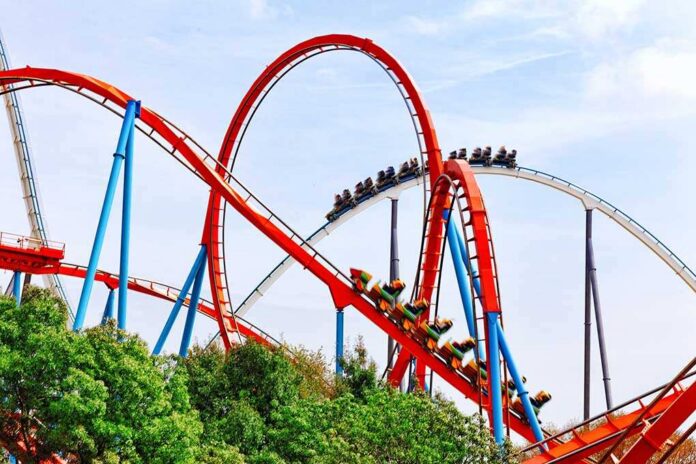
Six Flags said it will add seat belts to Goliath and other coasters with the same style of lap bar. The move follows the October death of Hassan Jihad Ibn Kariem at Six Flags Over Georgia. Company leaders called the change a safety reinforcement while the park keeps Goliath closed during the probe. Reports say the company framed the belts as an added layer, not a final cause finding. Regulators have not cleared the ride to reopen yet.
Six Flags also paused operations on several similar coasters. News outlets counted nine rides temporarily shut across the United States and Canada after the fall. This broad pause signaled caution to guests. It also raised public concern about a wider risk. The company’s choice balanced safety optics with business pressure during peak seasons. Critics saw the closures as proof of deeper problems. Supporters saw them as a careful step while facts are gathered.
Regulatory Findings: Passed Inspection, Ongoing Investigation
The Georgia Office of Commissioner of Insurance and Safety Fire said Goliath passed a state inspection on March 16, 2026. The office reported no violations, deficiencies, citations, or red tags from that visit. After the October incident, the state secured the ride and opened an investigation. The agency has not released a final cause. The park cannot run Goliath until safety reviews are done and approvals are granted, according to state updates.
Investigators and ride experts outlined several possible causes. They include a mechanical failure in the restraint, a failure by operators to check and secure the bar, or both. Reports also described Goliath’s restraint as a padded clamshell lap bar that locks over the thighs. That design is common on high-speed coasters. Operators typically confirm a locked state before dispatch. The exact failure path in this case is still unknown as the inquiry continues.
Known Facts and Open Questions About the Restraint
Witness accounts said the victim was ejected after a restraint came undone. Those accounts are powerful but do not name the precise part that failed. Officials have not shared sensor logs, lap-bar lock data, or operator check records. Without those details, the public cannot tell if this was a one-off part failure, a missed check, or a fit issue. The state probe aims to match accounts with engineering records to confirm what went wrong.
Six Flags’ decision to add seat belts will likely shape public views of the older setup. Some will see belts as proof the lap bar alone was not enough. The company calls them a backup in line with layered safety. That debate is common after rare but serious ride incidents. A ride can pass inspection and still face real-world risks when parts wear, staff routines slip, or riders vary in size and posture under extreme forces.
Why This Matters Beyond One Park
This case highlights how safety rules for fixed-site rides vary by state. There is no single national system for these parks. A passed state inspection does not answer every safety question. It shows the ride met the listed checks on that day. Families want more than checklists. They want proof that systems, staff, and backups all work when things go wrong at full speed. That trust is fragile and hard to rebuild after a public tragedy.
Six Flags says the Goliath coaster at its Georgia park will reopen with seat belts added. The rider thrown from it on Oct. 12, a 42-year-old Atlanta teacher, didn't have one.
A single clamshell lap bar was the only thing holding every rider in. No seat belt, no shoulder harness,… https://t.co/4uNF58Tt5R
— IredcapI (@IredcapI) October 24, 2026
For now, the clearest facts are simple. A man died after a restraint did not keep him in the train. The ride had passed its last state inspection months earlier. The park is adding seat belts and keeping Goliath closed. The state is still investigating. The final report should answer key questions about the restraint lock, operator checks, maintenance notes, and whether belts would have changed the outcome. Until then, caution and transparency are the only smart path.
Sources:
wsbtv.com, oci.georgia.gov, cnn.com, bbc.co.uk, ew.com