A former “American Idol” contestant and pastor shot his wife in their bedroom, then staged the scene to look like a break-in, so he could walk away from his marriage without the cost of a divorce, a jury found.
Story Snapshot
- A jury convicted Caleb Flynn on all nine counts, including aggravated murder, after a little over two hours of deliberation.
- Prosecutors said Flynn staged the Tipp City, Ohio, bedroom shooting of his wife, Ashley, to look like an intruder attack.
- More than 107,000 texts with his mistress, Alleigha Botner, formed the backbone of the state’s motive evidence.
- Flynn was sentenced to life without parole on October 5, despite repeatedly telling the court he did not kill his wife.
Jury Rejects Intruder Story After Brief Deliberation
A Miami County, Ohio, jury convicted Caleb Flynn on September 29 of aggravated murder and three counts of tampering with evidence, among nine total charges. Jurors deliberated a little over two hours before reaching their decision, a short turnaround for a trial that stretched more than a week. Flynn had told police he was asleep when he heard a gunshot and insisted an unknown intruder killed his wife, Ashley.
Prosecutors argued Flynn fatally shot Ashley and then rearranged the scene to make it look like a break-in gone wrong. They pointed to electronic device records that contradicted his claim of being asleep, along with a total lack of forensic evidence supporting any unknown intruder. The jury’s quick verdict suggests those gaps in Flynn’s account carried real weight in the deliberation room.
Text Messages Formed Core of Prosecution’s Case
The state built much of its case around a massive paper trail: 34 binders holding roughly 107,000 text messages between Flynn and his mistress, Alleigha Botner. Botner testified for two days, reading from the archive and explaining the context behind the messages, including one from Flynn reading, “If I could literally kill her and not go to hell, I would do it in a heartbeat”.
Prosecutors said a text sent hours before the killing sealed their motive theory. Flynn wrote to Botner, “I choose you. I’m free. Actions will come tomorrow.” Botner testified she understood that message to mean Flynn planned to deal with the divorce that day. Defense attorneys did not dispute the messages existed, calling them “ugly, hurtful” but not proof of murder.
Defense Says Affair Proven, Not Murder
Flynn’s attorney, Patrick Mulligan, told jurors in closing arguments that prosecutors proved an affair, not a killing, and stressed that investigators never recovered a murder weapon. “This simply is proven versus not proven, and respectfully I would suggest this is a matter of not proven,” Mulligan argued. The defense also noted Flynn’s lack of any prior criminal record when asking the court for a sentence that would allow eventual parole.
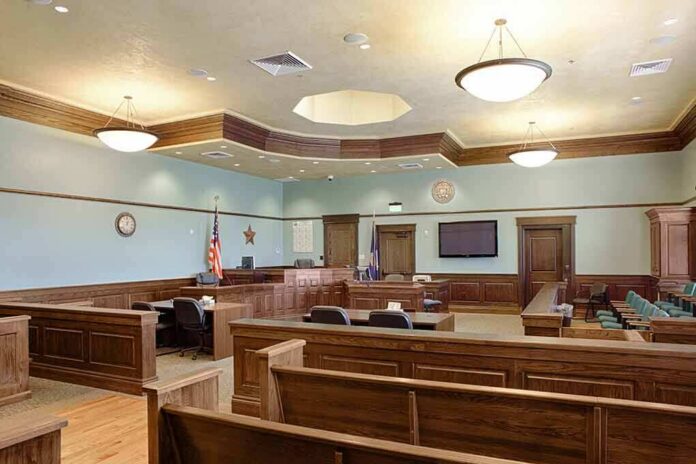
Flynn did not testify at trial but spoke directly to the courtroom before his sentencing. “I am not lying when I say I did not kill my wife,” he said, addressing the packed Miami County courtroom while shaking. “I will continue to fight for my innocence as long as the Lord allows me to,” he added, a statement repeated across multiple sentencing reports.
🚨 BREAKING: PROSECUTOR CALLS CALEB FLYNN MURDER A “PLANNED AND CALCULATED EXECUTION” — ASKS FOR LIFE WITHOUT PAROLE
The prosecutor highlighted something especially disturbing: Flynn’s alleged attempts to coach his own daughters on what to tell police after their mother was… pic.twitter.com/d9IfcWbaXB
— Lindsay 🇺🇸 (@TheLinzerShow) October 5, 2026
Case Fits a Known Pattern in Domestic Homicide Cases
Criminologists who study crime-scene staging say intimate partners are the most common relationship type behind these cases, and most staged scenes are built to resemble suicide or an outside attack rather than admit domestic violence. That research context does not prove anything about Flynn’s guilt on its own, but it places this case inside a recognized investigative pattern rather than an unusual or isolated event.
The trial also shows how heavily modern prosecutions lean on digital evidence when no witness saw the crime happen. A 107,000-message archive gave jurors a detailed timeline of motive and intent, but it also gives critics an opening to argue that any single quote can be taken out of context. That tension between powerful digital proof and selective-quote criticism is likely to follow this case well past sentencing.
Sources:
youtube.com, bbc.com, abcnews.com, cbsnews.com, nbcnews.com, cnn.com