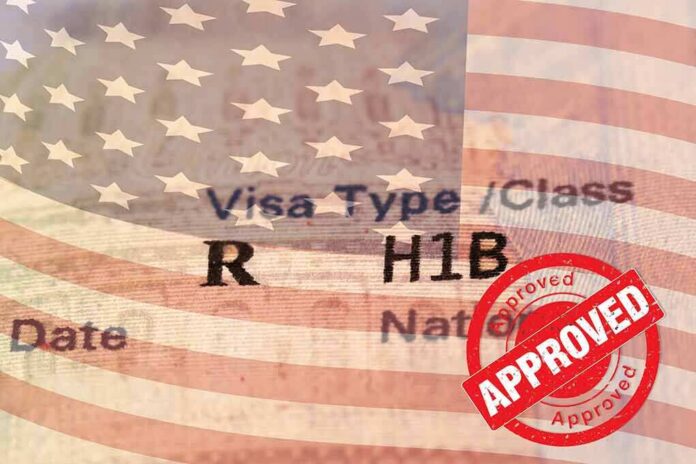
Vice President JD Vance said the H-1B system is being used to swap out Americans for cheaper labor, and the White House just moved to flag petitions from companies tied to layoffs.
Story Snapshot
- Vance said H-1B should not replace American workers and cited wage undercutting examples.
- White House ordered extra scrutiny of H-1B petitions linked to recent or planned layoffs.
- Administration highlighted a steep drop in outsourcing-firm registrations as a sign of pressure.
- Research and industry groups argue H-1B often complements U.S. workers and supports growth.
What Vance Said And Why It Matters
Vice President JD Vance said companies are using the H-1B visa to replace U.S. workers with lower-paid foreign hires. He gave a concrete example of an American accountant making $60,000 replaced by a foreign worker paid $45,000. He argued that Congress lacks the will to fix this and that the administration is acting through executive steps. His remarks anchor an abuse-first frame: stop firms that use visas to cut wages rather than seek rare, high-value talent.
Vance added that the program should focus on “actual geniuses,” not cheaper substitutes. That line echoes long-running concerns among laid-off mid-career workers who feel squeezed by global labor practices. It also speaks to a wider mood: people across the spectrum suspect the rules favor large employers and lobbyists. Vance’s comments fit that feeling by pointing to a system where insiders find loopholes while regular workers bear the pain of cost-cutting.
What The Executive Order Changes
President Trump issued an order directing agencies to consider whether H-1B petitioners have recent or planned layoffs of similar U.S. workers. The White House said this “enhances program integrity” and boosts coordination among the departments that run the program. The order tells adjudicators to look harder at cases with a higher risk of displacement. That is a formal nod to the scenario Vance describes, putting new guardrails around petitions tied to layoffs.
Coverage of the changes also cites two tools the administration favors: a wage-based selection tilt and a $100,000 payment for certain new filings. Supporters say these moves raise the bar and deter low-wage substitution. The White House has pointed to a sharp, reported fall in registrations from big information technology staffing and outsourcing firms as evidence that pressure is curbing misuse, though full data behind that figure has not been released publicly in the research at hand.
Where Supporters And Critics Clash
Supporters of the crackdown argue that enforcement will stop firms from laying off Americans while importing cheaper labor. They see layoff screening as basic fairness. They also say the process must reward truly scarce skill, not cost-cutting. Critics counter that many studies find H-1B workers often complement U.S. workers and help firms grow. They warn that sweeping limits could slow innovation, shrink teams, and push investment overseas, hurting the very workers policymakers want to protect.
Vance Backs Scrapping ‘Completely Broken’ H-1B Visa Program
Vice President JD Vance said Thursday that he favors abolishing the H-1B visa program, arguing that companies exploit it to hire lower-paid foreign workers in place of Americans.
Speaking with Jack Posobiec aboard Air…
— Tony Seruga (@TonySeruga) October 2, 2026
The record in this research shows Vance pushing tighter rules and executive action. It does not prove he called for fully abolishing H-1B. The stronger facts show a focus on fraud screens, wage protections, and layoff review, not an end to the program. That leaves the policy debate here: can tougher filters fix the incentives, or is the structure too easy to game? For now, the government chose reform, not repeal, while signaling that displacement risks will draw extra scrutiny.
Sources:
humanevents.com, foxnews.com, ndtvprofit.com, newsweek.com, republicworld.com, financialexpress.com, manifestlaw.com, indystar.com