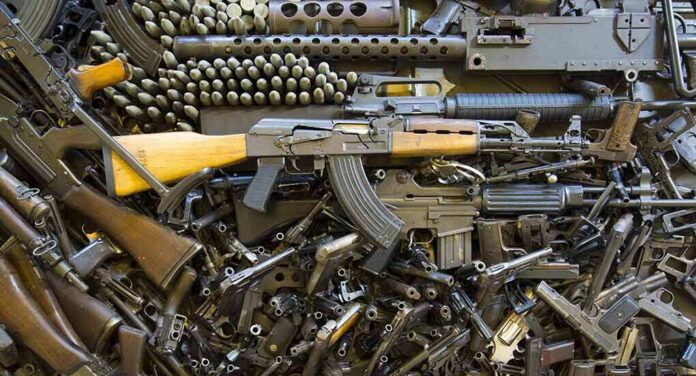
A sitting U.S. ambassador says President Trump asked China’s leader about buying American weapons, and the White House now insists no such sale was ever on the table.
Story Snapshot
- Ambassador David Perdue said Trump asked Xi if China wanted to buy U.S. arms.
- President Trump denied discussing an arms sale and suggested Perdue meant Taiwan.
- The White House and State Department said there is no offer or plan to sell arms to China.
- U.S. law has blocked arms sales to China since 1989, setting a hard legal wall.
What Perdue Said And Why It Landed With A Thud
U.S. Ambassador to China David Perdue said on television that President Trump asked China’s President Xi Jinping if he would like to buy American weapons. Perdue placed the remark during the Xi state visit, linking it to wider talks about Taiwan arms sales and tensions with Beijing. Major outlets ran the same quote, which suggests a consistent record of what Perdue claimed. The comment sounded startling because it touched a long-standing legal ban on selling U.S. weapons to China.
President Trump answered questions the next day. Trump said he never discussed selling weapons with Xi. Trump added that Perdue was probably talking about Taiwan, not China. Trump also said China might want U.S. gear because American equipment is better, but he kept his denial that any sale talk happened. These statements left the public with two tracks: a named envoy describing a question being asked, and a president flatly saying it did not occur as a sale discussion.
The Fast Official Pushback And The Legal Red Line
The White House responded soon after the story ran. Officials said the United States had no plans to sell arms to China. The State Department went further, saying U.S. law prohibits arms sales to China and that there was no offer or plan to do so. That legal line dates back to the Tiananmen era and has been restated in recent briefings and reports. This wall matters. Even a casual remark about weapons to China triggers hard policy alarms that both parties know well.
That is why the claim met instant denial. Without documents, transcripts, or a second named witness, the debate turns on memory and wording. Reporters highlighted that no transcript of the Xi exchange is public and no other participant has gone on record to back Perdue’s exact phrasing. That does not prove it did or did not happen. It shows how secret talks and strict law create a fog where anecdotes thrive but evidence tends to be thin.
How To Read The Dispute Without Taking Sides
Newsrooms and the public face a simple choice tree. If Perdue meant a literal offer, that would collide with law and policy. If he meant a rhetorical aside or a reference to Taiwan, the shock fades. Trump’s denial, plus his Taiwan remark, pushes the story toward the second lane. But Perdue’s clear quote keeps the first lane alive in headlines. The lack of a transcript leaves both lanes open. That is the core tension, not a grand plot or a media trick.
People on the right and left can see a familiar pattern here. Leaders speak behind closed doors. Later, staff or envoys offer a version that sounds off-key. Then institutions rush to contain fallout. Many Americans feel this cycle hides the ball and protects the powerful. That frustration is fair. Still, on this specific claim, the most solid facts are narrow: a public quote from the ambassador, a direct presidential denial, and firm law that blocks any real sale.
Why This Matters For Policy On China And Taiwan
This flap lands during stalled discussions over weapons for Taiwan and rising military pressure in the region. Beijing hates U.S. arms for Taipei and treats them as a threat. Washington says Taiwan needs those arms to deter attack. If a stray line about selling to China was heard wrong, it could muddy messages to allies and rivals. Clear, on-the-record statements help reduce that risk. The official denials serve that purpose by restating the ban and the policy baseline.
For citizens, the takeaway is straightforward. There is no plan to sell U.S. weapons to China. The law blocks it. The ambassador’s quote raised a question. The president said it did not happen, at least not as a sale discussion. Until documents or another witness appear, that is where the public record sits. Demanding records and clarity from all sides is not partisan. It is how a self-governing people keeps power in check and policy on track.
Sources:
insiderpaper.com, aa.com.tr, apnews.com, thehill.com, congress.gov