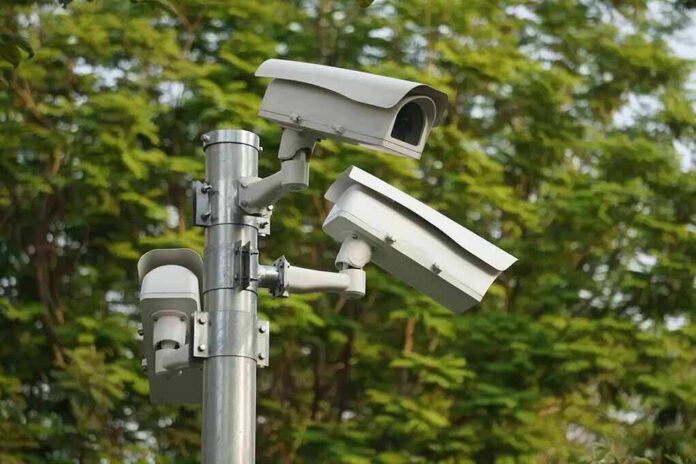
A legal threat to erase a public map of Flock Safety’s camera network landed just as Congress spotlighted the company’s vast reach, sharpening a nationwide fight over who gets to see the tools that can see us.
Story Snapshot
- A researcher’s map claimed about 300,000 Flock-linked devices; a trademark complaint sought its removal.
- Senators cited a network of 120,000 cameras in 49 states and 20 billion monthly scans.
- Flock says its system is not mass surveillance and data sharing is opt-in and audited.
- Civil liberties groups defend public mapping as protected, noncommercial criticism.
A public map collides with a corporate takedown demand
Cybersecurity researcher Joshua Michael published a map that he said identified roughly 300,000 Flock Safety devices nationwide, including more than 170,000 cameras and about 130,000 supporting devices. Reporting says the data came from publicly accessible, unauthenticated endpoints. Soon after, a trademark complaint from a brand enforcement firm representing Flock alleged misuse of the company’s mark and customer confusion, and pressed for the map’s removal. The dispute centers on transparency versus control of brand-linked information.
Advocates say the map lets the public see where license plate readers and related gear are installed. They argue this knowledge helps residents and local media track contracts, evaluate oversight, and push for guardrails. Civil liberties lawyers at the Electronic Frontier Foundation stated that similar “DeFlock” naming and mapping efforts are noncommercial criticism protected by federal law. They rejected trademark dilution claims as a way to silence watchdog work rather than stop real confusion. The legal back-and-forth has chilled volunteers who host such tools.
Congress questions the size and power of the network
Senator Josh Hawley’s panel described Flock’s footprint as a nationwide surveillance network, citing more than 120,000 cameras deployed in 49 states and about 20 billion vehicle scans every month. Lawmakers pressed for answers on who can access the data, how long it is kept, and how often it flows across jurisdictions. These questions reflect a broader concern shared by many Americans: when private vendors power public policing, basic transparency can fall through the cracks, leaving citizens in the dark.
Flock’s trust statements push back on the charge of mass surveillance. The company says searches focus on vehicle traits, not faces, and that it does not use facial recognition. It says local agencies control access, every query is logged, and there is no anonymous browsing. It also says nothing is shared across agencies by default; participation in a broader network is opt-in and governed by agreements. Those policies, if enforced as written, aim to prevent fishing expeditions and limit misuse.
What the numbers do and do not prove
The 300,000-device figure is striking, but the record in public reporting does not include a full, independent technical audit of the dataset. The map grouped cameras and supporting infrastructure, so some entries may not be live field units. By contrast, the 120,000-camera count and 20 billion monthly scans cited in Congress have been repeated across multiple outlets and official remarks, yet they also rely on statements rather than audited filings. The gap shows why third-party validation matters.
Flock Safety Wants the Map of Its Cameras Taken Down After Researcher Exposes 300,000-Device Dragnet https://t.co/l7MqQyi9u9 I APPRECIATE FOLLOWS #FlockSafety #Surveillance #PrivacyRights #DataProtection #TechnologyNews pic.twitter.com/kwW7IAzg1H
— Jimbo Trump (he/she/bullshit) (@jimbotrump) September 26, 2026
The stakes cut across usual party lines. Many conservatives worry about costly, unaccountable systems that watch everyday drivers. Many liberals worry about dragnet effects on civil rights and the poor. Both sides see a pattern: powerful institutions build expansive tools, then resist sunlight when the public asks basic questions. Here, the fight is not only over cameras. It is over whether people can know where those cameras are, how the data moves, and who benefits when the lights stay off.
How this affects your town and what to watch next
City councils and county boards decide whether to buy, expand, or cancel these systems. Residents should look for clear rules: short data retention, strict user audits, warrant standards for historical searches, and public logs on cross-agency sharing. Lawmakers can demand vendor transparency and require regular reporting. Watch for three things: independent verification of device counts, disclosure of how often outside agencies query local data, and whether legal threats keep public maps offline or force them into hiding.
Sources:
thegatewaypundit.com, gadgetreview.com, thehill.com, ground.news