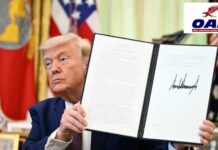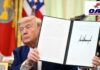
President Trump signed an executive order that pushes federal health agencies to review the childhood vaccine schedule and consider more spacing between routine shots.
Quick Take
- The White House published Executive Order 14407 and said Trump signed it on May 29, 2026.
- The order tells the Centers for Disease Control and Prevention and its vaccine advisers to review the scientific assessment and update the schedule if allowed by law.
- The text calls for more flexibility in the timing and sequencing of routine immunizations.
- The order also says insurance and public programs should continue covering listed vaccines without cost sharing.
What the Order Does
The White House order is titled “Realigning United States Core Childhood Vaccine Recommendations With Best Practices From Peer, Developed Countries.” It says the federal government should align childhood vaccine policy with scientific evidence and with practices used in peer developed countries. The document also says federal agencies should preserve vaccine access, protect parental authority, and respect religious freedom and other legal protections.
The order does not itself rewrite every vaccine rule on the spot. Instead, it directs the Centers for Disease Control and Prevention and its Advisory Committee on Immunization Practices to review the latest scientific assessment and clinical data, then take appropriate steps to update the childhood and adolescent schedule where law allows. The text also says the review should seek maximum flexibility in how routine immunizations are timed and sequenced.
Why Supporters See It as a Policy Shift
Supporters are treating the move as a major signal because it reaches beyond a speech or campaign promise. The order tells executive departments and agencies to align actions, rules, funding, and coverage with the schedule recommended by the Advisory Committee on Immunization Practices and adopted by the Centers for Disease Control and Prevention. It also says vaccines in those categories should still be covered without cost sharing by private insurance, Medicaid, the Children’s Health Insurance Program, and the Vaccines for Children Program.
GovInfo records the document as Executive Order 14407 and says it was published in the Federal Register on June 3, which confirms it was formally issued and entered the public record. Contemporary reporting from CNN and the American Hospital Association said the order linked federal policy to a Department of Health and Human Services scientific review and directed agencies to line up their work with that assessment.
What Is Still Unclear in Practice
The clearest open question is how much immediate change the order can produce. Congress and health-policy analysis note that the existing federal childhood immunization schedule had already been stayed by a court ruling, and later review said the order had little operational force on its own. That means the directive matters as a policy statement, but its real-world effect depends on later agency action, legal limits, and any updated guidance from the Centers for Disease Control and Prevention.
👏👏 Donald Trump today signed an executive order calling for sweeping changes to U.S. vaccine policy, including reducing the number of diseases for which kids receive routine childhood vaccines from 18 to 11. The order also ends the birth dose of the hepatitis B shot,
— Rigge Nørmark (@RiggeNormark) August 11, 2026
That gap between headline and implementation is where the politics now sit. News coverage has framed the order as a push for fewer childhood vaccines, more spacing between shots, and possible changes to the MMR vaccine, while medical groups have warned about weaker scientific support and public confusion. For readers on both left and right, the larger issue is familiar: a major federal announcement can reshape the debate long before the bureaucracy finishes the work.
Sources:
youtube.com, govinfo.gov, trumpwhitehouse.archives.gov, theguardian.com, cnn.com, aha.org, usatoday.com