
Police arrests, blocked lanes, and 9/11 Memorial graffiti turned a protest over an immigration shooting into a citywide stress test of order, respect, and voice.
Story Snapshot
- About 14 people were arrested after protesters blocked the Brooklyn Bridge, halting traffic into Manhattan.
- Marchers invoked Martin Luther King Jr.’s legacy while criticizing immigration enforcement and gun violence.
- Officials say red paint was sprayed across engraved 9/11 victims’ names; a man was arrested and charged.
- Research shows disruptive tactics draw attention but often shrink public support, raising strategy questions.
What Happened On The Bridge
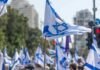
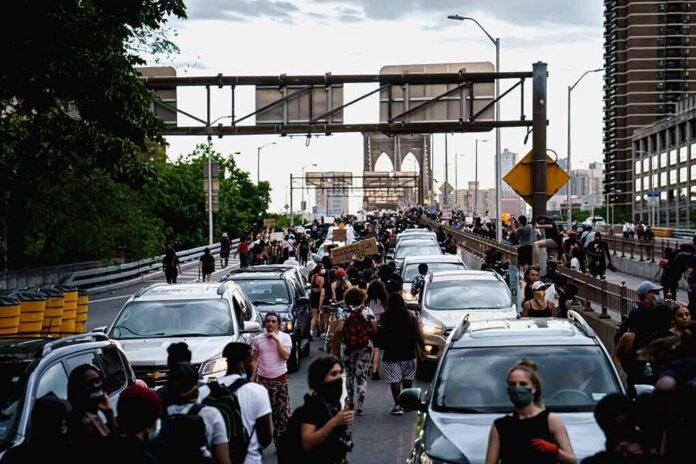
New York Police Department officials said about 30 protesters formed a line on the Manhattan side of the Brooklyn Bridge, blocking both vehicle and pedestrian traffic. Police took at least 14 people into custody after orders to disperse were ignored. Officials reopened all lanes before 1:30 p.m., but video showed cars backed up for blocks during the stoppage. The protest targeted immigration enforcement and recent shootings tied to immigration officers, according to local coverage.
PIX11 reported that demonstrators sat on the bridge and held a banner that read “Stop Shooting Us,” while chants criticized immigration enforcement, gun violence, and city police. CBS New York described a separate march of more than 100 people on Martin Luther King Jr. Day that crossed the bridge into Manhattan. Marchers cited Dr. King’s legacy and called for transparency in the investigation into the death of Renee Good, which involved an immigration officer.
9/11 Memorial Graffiti And Fallout
Authorities arrested a gun regulation activist after red paint was sprayed across panels at the North Pool of the 9/11 Memorial. Reports say the paint crossed names engraved to honor victims. The 9/11 Memorial and Museum called the site a sacred place of reflection and said security and law enforcement restored the area to its commemorative state. Former Governor George Pataki condemned the act as a “vile, disgraceful crime”.
The New York Daily News identified the arrested man as Jonathan Andrew Tijerina and reported he faces charges that include criminal mischief and making graffiti. Reporting linked him to a website that urges universal background checks, a national gun registry, and “nonviolent civil resistance.” The coverage does not show that his memorial act was coordinated with the bridge organizers, and it does not document measurable policy impact from the stunt.
Public Order, Free Speech, And Strategy
Courts protect peaceful protest, but a blockade of critical roads is usually treated as conduct, not protected speech, and is subject to arrest. That tension showed on the bridge, where police enforced orders to clear lanes while protesters insisted the disruption was needed to be heard. This pattern is common: disruption reliably earns media attention, but often reduces public support for the cause and rarely moves policy on its own.
Is the US immigration system failing? Protesters against it paralyzed traffic on the Brooklyn Bridge in New York. The trigger for the action was the ICE shooting in the Bronx. Officers opened fire on a migrant’s car, and his five-year-old son was inside.
This system has another… pic.twitter.com/gWoCi7TVTI
— Doc Hub (@DocHubX) October 29, 2026
The “protest paradigm” in news coverage also plays a role. Research finds reporters focus on confrontation, arrests, and property damage more than the underlying message. That tilt can drown out policy demands, whether the issue is immigration enforcement or gun laws. In this case, arrests and the 9/11 Memorial graffiti dominated headlines, while protesters’ calls for investigative transparency and policy change got less oxygen.
Why This Resonates With Broad Frustration
Drivers stuck for blocks, families protective of the 9/11 names, and residents demanding government accountability saw their concerns collide in one day. People on the right and left worry that institutions are not listening unless you shout, yet they also fear that shouting now means breaking rules and disrespecting shared spaces. The bridge blockade and memorial graffiti sharpen that dilemma: do disruptive tactics make leaders act, or do they harden the public against change?
Open Questions That Deserve Answers
Key facts remain unclear from available reporting. It is not shown whether the bridge action had a permit or agreed safety plan. Officials have not released detailed findings in the Renee Good case that protesters cite. If the aim is accountability, transparency from agencies matters, and so do tactics that preserve goodwill. Without both, the cycle repeats: a traffic jam, some arrests, loud headlines, and little movement on the core issues.
Sources:
foxnews.com, yahoo.com, pix11.com, brooklyn.news12.com, academic.oup.com