
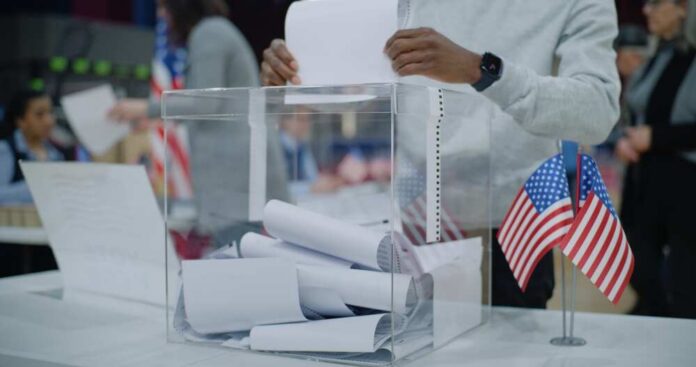
Fire-damaged mail-in ballots discovered inside a Los Angeles drop box days before a mayoral vote raise fresh alarms about ballot security and chain of custody.
Story Snapshot
- Multiple vote-by-mail ballots with fire damage were reportedly found in an official Los Angeles drop box shortly before the election [7].
- California law criminalizes interference with ballots and restricts possession of voting technology without a court order [2].
- State officials publicly insist systems have safeguards, paper trails, and audits, while acknowledging ongoing security threats [1][3][4].
- Officials have not identified a perpetrator or confirmed whether any damaged ballots were rejected, duplicated, or counted [7][3].
What We Know About The Burned Ballots Discovery
Local reporting states that election workers found multiple vote-by-mail ballots with fire-related damage inside an official Los Angeles drop box in the days leading up to the mayoral election [7]. Coverage frames the discovery as an anomaly, but offers no identification of a suspect, motive, or ignition source. The available material does not establish where or when the burning occurred relative to ballot deposit, leaving unanswered whether the damage happened inside the box or before a voter or third party dropped them off [7].
California’s election-security messaging emphasizes that the state uses paper ballots or voter-verifiable paper audit trails and conducts manual audits of random samples after each election [4]. Experts have said hacking the system is difficult but not impossible, and note that threats are “very real” and persistent [1]. The Secretary of State’s “trusted information” guidance warns against tampering by officials and describes layered safeguards, but those general measures do not answer case-specific questions about this drop box incident [3].
Law, Custody, and Why Chain-of-Custody Gaps Matter
California recently tightened laws around ballot custody, prohibiting police from seizing ballots from election officials and making unauthorized access to voting technology illegal without a court order [2]. The policy goal is clear: protect the chain of custody and prevent outside interference. That legal backdrop underscores why a fire event in a drop box is serious. Even if small in scale, any unexplained damage to ballots inside an official receptacle raises questions about access controls and physical protection of the box [2].
The Secretary of State explicitly says it is against state and federal law for election officials to tamper with the process and outlines signature verification and handling protocols designed to preserve voter intent [3]. Those procedures can allow election workers to duplicate damaged ballots under supervision so valid votes are not lost. However, the record provided does not confirm whether affected ballots in this incident were successfully remade, rejected, or counted, keeping the impact on voters uncertain [3].
Competing Narratives: Isolated Anomaly Or Integrity Warning Sign?
State and media messaging often aim to reassure the public that California’s election systems are resilient, citing audits, paper trails, and the lack of confirmed systemwide breaches in prior cycles [1][4]. That perspective argues a localized incident is unlikely to change an outcome. Yet the same security pages concede that threats persist, implying vigilance is warranted. Voters reasonably expect election officials to document incidents, preserve evidence, and provide transparent findings when ballots are damaged [1][4].
The current evidence set has gaps. There is no publicly available chain-of-custody log for the specific drop box, no surveillance footage cited, no fire-origin report, and no registrar or Secretary of State determination about whether the incident constituted a breach or affected tabulation [7][3][4]. Without those records, citizens are left with a troubling image—burn marks on ballots where they should be safest—and few answers. Transparency would reduce speculation and reinforce confidence in lawful, accurate counting.
Accountability Steps That Would Build Public Trust
Los Angeles County can strengthen confidence by releasing the drop box’s retrieval timestamps, inspection notes, and any incident memos associated with the discovery. Officials can disclose whether ballots were remade to preserve voter intent, how many were impacted, and whether any were rejected. The California Secretary of State’s office can publish a summary of any review, aligning public statements with the state’s own guidance on safeguards and anti-tampering laws [3][4].
"Multiple vote-by-mail ballots found burned in a LA ballot box just days before the primary, plus a vandalized voting center? Baby, someone said 'democracy is under attack' and decided to literally set it on fire. The election integrity arc stays chaotic. California said 'hold my…
— GATEWAY XCHANGE (@Gatewayxchange_) June 1, 2026
If evidence exists, surveillance video from the area and a basic fire-origin assessment could clarify whether the damage was accidental, opportunistic vandalism, or targeted interference. While experts stress the system’s redundancy and audits, citizens deserve verification, not just reassurance [1][4]. Clear documentation—paired with strict adherence to custody rules already on the books—will protect every lawful ballot and uphold the principle that every legal vote must be counted accurately.
Sources:
[1] Web – HERE WE GO: Burned Mail-In Ballots Found in Los Angeles Drop Box DAYS …
[2] Web – Hacking California’s Election System Would Be Difficult, Not …
[3] Web – California bans cops from seizing election ballots – CalMatters
[4] Web – California Trusted Information – California Secretary of State – …
[7] Web – Election Security | California Voter Foundation