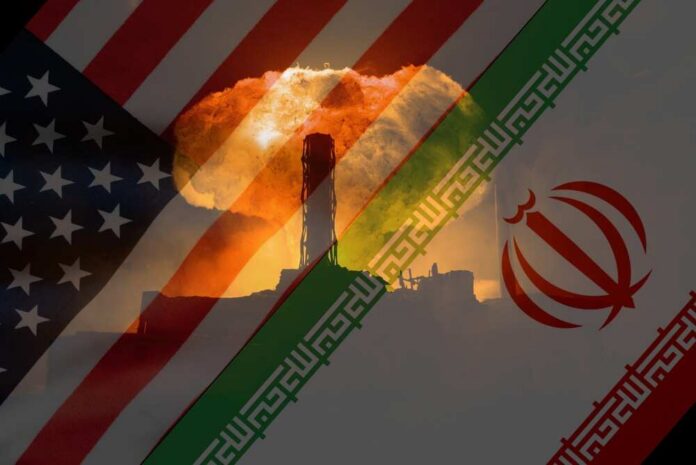
President Trump’s latest Middle East gambit has left America trapped in several weeks quagmire with Iran, securing none of his stated objectives while oil prices surge and global markets signal deepening alarm over a conflict with no visible endgame.
Story Snapshot
- Trump threatens “civilizational destruction” against Iran but fails to reopen Strait of Hormuz after weeks of escalating strikes
- Brent oil futures spike from under $100 to over $108 per barrel during Trump’s speech, signaling market rejection of administration strategy
- US launches war against militarily inferior Iran without allied consultation, eroding international credibility and trust
- Repeated deadline extensions and infrastructure threats replace coherent strategy as Iran halts ceasefire negotiations
- American taxpayers face mounting costs of prolonged conflict while global energy consumers absorb economic shockwaves
Six Weeks of Escalation Yield No Results
The Trump administration entered its sixth week of military confrontation with Iran in early April 2026 with no strategic gains to show American taxpayers. What began around late February as a response to Iran’s closure of the Strait of Hormuz—a critical chokepoint for global oil transport—has devolved into repeated ultimatums, extended deadlines, and escalating rhetoric. Trump issued his first deadline on March 21 demanding Iran reopen the waterway, only to extend it multiple times as US and Israeli forces bombarded Iranian targets including the Kharg Island oil hub. By April 7, the President declared further extensions “highly unlikely,” yet the Strait remained closed and ceasefire talks had collapsed.
Markets Deliver Harsh Verdict on Trump Strategy
Financial markets provided an unambiguous assessment of the administration’s approach during Trump’s April 7 address. Brent crude oil futures climbed from below $100 per barrel to over $108 as the President spoke, threatening to bomb Iran “into the Stone Age” rather than announcing a resolution. This market reaction reflected investor recognition that the Strait of Hormuz closure would persist indefinitely, driving energy costs higher for American consumers and businesses already struggling with inflation. The spike contradicted White House claims of imminent victory, suggesting sophisticated market participants see a protracted conflict ahead with no clear path to reopening the world’s most vital oil transit route.
Strategic Isolation and Credibility Concerns
The administration’s decision to initiate military operations without consulting allies has damaged America’s international standing at a moment when unified action might have produced leverage against Tehran. Traditional partners declined to participate in what observers describe as an ill-conceived conflict against a nation whose defense budget represents a fraction of US military spending. This isolation raises fundamental questions about whether Washington can be trusted to lead coalition efforts or coordinate on shared security challenges. For everyday Americans watching from home, the spectacle of the world’s most powerful military unable to compel a “fourth-rate” power to negotiate after six weeks of bombardment suggests deeper dysfunction in how elites prosecute foreign policy.
Threats Replace Diplomacy as Deadline Looms
Rather than pursuing off-ramps, Trump doubled down with apocalyptic threats via social media. Vice President JD Vance expressed confidence Iran would respond by the cutoff, while US forces struck non-energy targets at Kharg Island. Iran answered by halting ceasefire negotiations entirely, though White House officials insisted legitimate diplomatic channels remained open. The contradictory messaging and reliance on infrastructure destruction threats—targeting power plants and bridges—in place of coherent strategy left mediators scrambling and allies questioning American leadership. Ordinary citizens on both left and right increasingly wonder whether elected officials prioritize reelection posturing over resolving crises that directly impact gas prices and economic stability.
Economic and Political Fallout Mounts
The conflict’s costs extend far beyond military expenditures to encompass broader economic disruption and eroding public trust. Energy sector chaos resulting from the Hormuz closure ripples through global trade, hitting American consumers with higher prices at the pump and for goods dependent on shipping. Taxpayers fund munitions being depleted in strikes that yield no measurable progress toward stated objectives like waterway access or Iranian capitulation. Meanwhile, the perception grows domestically and internationally that Washington’s foreign policy apparatus serves entrenched interests rather than practical outcomes. This sentiment transcends traditional partisan divides, uniting frustrated voters who see elites—whether in government or media—more concerned with narratives than delivering the competent governance that made America prosperous and respected.