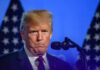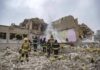
President Trump now faces a critical decision on whether to strike Iran militarily after the regime’s brutal crackdown reportedly killed over 2,500 protesters in just 17 days, signaling the most dangerous U.S.-Iran confrontation since his return to office.
Story Snapshot
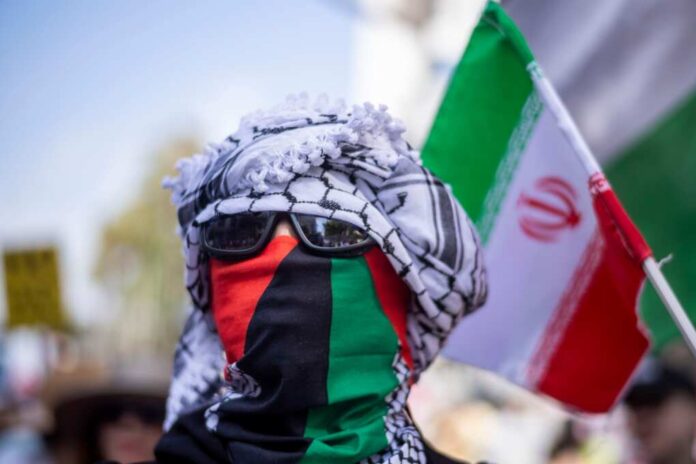
- Iranian security forces killed over 2,500 protesters during nationwide uprisings that began in late December 2025 over economic collapse, activists report
- Trump threatened military intervention on January 2, stating “we are locked and loaded,” and imposed 25% tariffs on countries doing business with Iran
- Supreme Leader Ayatollah Khamenei called Trump a “criminal” while Trump demands an end to Khamenei’s reign, escalating tensions to potential flashpoint
- Protests across 31 provinces now exceed the scale of 2022 uprisings, with Iran enforcing internet blackouts and airspace restrictions to suppress dissent
Brutal Crackdown Sparks Trump’s Intervention Threats
Iranian security forces unleashed deadly force against protesters beginning in late December 2025, with activist reports documenting more than 2,500 deaths over 17 days of demonstrations. The protests erupted initially over economic grievances including severe inflation and currency devaluation under international sanctions, but quickly evolved into broader anti-government uprisings calling for the end of the Islamic Republic. Trump issued his first warning on January 2, posting that the U.S. would intervene if Iran continued killing protesters, declaring America “locked and loaded” for potential military action.
Trump Deploys Economic Warfare Against Tehran
The Trump administration rolled out aggressive economic measures on January 12-13, announcing immediate 25% tariffs on any nation conducting business with Iran while sanctioning five Iranian officials. Trump publicly encouraged protesters to continue their demonstrations, promising “help is on its way” in a direct challenge to the regime’s authority. Additional U.S. sanctions followed on January 15, targeting Iran’s financial networks and key regime figures. This economic pressure campaign mirrors Trump’s “maximum pressure” strategy from his first term, but now intensified with the Venezuela precedent where U.S. Special Forces abducted that nation’s president on January 3, demonstrating Trump’s willingness to use military force abroad.
Regime Fights for Survival Amid Unprecedented Unrest
The scale of these protests surpasses even the 2022 “Women, Life, Freedom” uprisings that followed Mahsa Amini’s death, now spanning all 31 Iranian provinces with demonstrators calling for both regime overthrow and monarchy restoration under exiled Crown Prince Reza Pahlavi. Iran’s government responded by imposing internet blackouts exceeding 132 hours and closing airspace to limit information flow, while Supreme Leader Khamenei blamed the United States and Israel for instigating the chaos. On January 8, tens of thousands protested nationwide, prompting mass killings by security forces that activists documented in real-time despite communication restrictions. Trump’s National Security Council, including Secretary of State Marco Rubio and Defense Secretary Pete Hegseth, continues holding strategy meetings to weigh military options.
High-Stakes Dilemma for American Credibility
Policy experts warn that Trump faces a dangerous choice where both action and inaction carry severe consequences for American interests and global deterrence. Analysis from the Center for Strategic and International Studies suggests Trump may be using protesters as leverage for limited punishment rather than pursuing full regime change, noting that military strikes could backfire by rallying Iranians around the government. Conversely, the Washington Institute’s Michael Eisenstadt argues that U.S. inaction would erode American credibility and deterrence against adversaries like China and Russia. Trump recently claimed the “killing has stopped” based on intelligence sources, though this remains unconfirmed and he acknowledged uncertainty. This crisis tests whether Trump’s tough rhetoric translates into decisive action that supports freedom-loving Iranians without triggering broader regional war that could endanger American lives and interests.
The coming weeks will determine whether the Islamic Republic can survive its most serious internal challenge in decades, and whether Trump’s America will stand firmly with those fighting tyranny or watch another opportunity for liberation slip away. For conservatives who value American strength and the spread of freedom against oppressive regimes, this moment demands clarity on whether our nation will back its bold words with meaningful action that doesn’t recklessly endanger our troops or regional stability.
Sources:
Briefing on Protests in Iran – Security Council Report
Iran protests: 2,500 killed, activists say, as Trump urges US to act – ABC News
How Will the Trump Administration Respond to Violent Protests in Iran? – CSIS
Iran Endgame: Protests, Repression, and the Trump Administration – The Washington Institute