A U.S. diplomat’s death in Yangon has turned into a test of how little the public can verify when an opaque case moves faster than the facts.
Quick Take
- The United States State Department confirmed the death of a U.S. government employee assigned to Yangon.[1]
- People in the diplomatic community say police are treating the death as a possible homicide.[1][2]
- A Thai woman is reported to be in custody, but the public record does not explain her role.[1][2]
- The case centers on a hotel used by diplomats and other foreign visitors.[1][2]
What the Reports Say
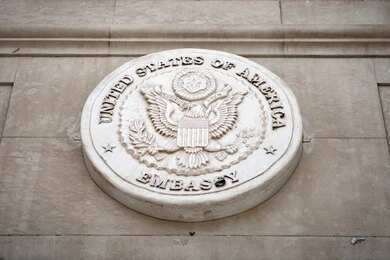
The Associated Press reported that an American diplomat was found dead in Myanmar’s largest city, Yangon, and that the State Department confirmed the death of a U.S. government employee assigned to the embassy there.[1] The same reporting says three people in the diplomatic community, speaking anonymously, said the body was found about two weeks earlier at the Sakura Residence & Hotel.[1][2] That location is about 1.5 kilometers from the American Embassy.[1][2]
The public account also says police are treating the case as a possible homicide and that a Thai woman has been detained in connection with the investigation.[1][2] Thailand’s Foreign Ministry said it provided consular assistance to the woman and notified her family.[1] No public source in the provided record explains what evidence led to the detention, what police believe happened, or whether she is viewed as a suspect, witness, or person of interest.[1][2]
What Remains Unclear
The biggest gap is the lack of official investigative detail. The available reporting does not include a police statement, autopsy report, toxicology result, or court filing.[1][2] That means the cause and manner of death are still not public. The homicide theory rests on unnamed diplomatic sources, not on a direct statement from Myanmar investigators.[1][2] In a case like this, that matters because early assumptions can harden before proof is released.
The timeline is also vague. The AP-based reporting says the body was found “about two weeks ago,” but it does not give an exact discovery date, a last-known-alive time, or a clear sequence of events.[1][2] That leaves major questions open about what happened inside or around the hotel. Without forensic findings and a firm timeline, the public is left with a serious claim but not the evidence needed to test it.[1][2]
Why the Case Draws Wider Attention
Deaths involving diplomats often move through a narrow channel of partial statements, consular caution, and slow official release. The U.S. Embassy in Yangon can help with family notification and remains, but it does not control local criminal findings. In Myanmar, where outside scrutiny is often limited, that split can leave journalists and the public dependent on secondhand accounts.[1][2] When that happens, rumors can spread faster than facts.
That gap matters for more than one reason. People who distrust government institutions often see cases like this as proof that powerful systems hold back key details. Others see the same silence as normal caution in an active criminal inquiry. Both reactions are understandable. What is clear now is narrower: a U.S. official died in Yangon, police are reportedly examining the case as possible homicide, and the public does not yet have the records needed to know more.[1][2]
Sources:
[1] Web – American Diplomat Is Found Dead in Myanmar Hotel – Woman From Thailand …
[2] Web – A Thai woman is in custody after an American diplomat was found …