
President Trump is accusing pollsters of publishing fake numbers designed to keep his supporters away from the ballot box.
Quick Take
- Trump calls unfavorable polls “suppression polls” meant to scare his voters into staying home.
- Research confirms polls underestimated his support in key battleground states in 2016 and 2020.
- Polling experts blame sampling and response problems, not intentional manipulation.
- No study has proven that bad polls actually caused fewer Trump supporters to vote.
Trump Renews His ‘Suppression Polls’ Warning
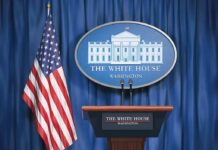
In archived White House remarks, Trump said “these really phony polls” were “designed to keep our voters at home, create the illusion of momentum for Mr. Biden, and diminish Republicans’ ability to raise funds.” He called them “suppression polls”. The claim has resurfaced again this election cycle, as Trump and allies argue that unfavorable surveys discourage conservative turnout before voters even reach the polls.
Trump’s theory rests on a simple idea. If voters think their candidate is losing badly, they may decide voting is pointless. If voters think their candidate is winning easily, they may decide their vote isn’t needed. Either way, the argument goes, a skewed poll can talk people out of showing up, regardless of whether the skew was intentional or accidental.
Proven Errors, But Not Proven Intent
The claim isn’t built on nothing. The American Association for Public Opinion Research found that polls underestimated Trump’s support in key battleground states in both 2016 and 2020. Researchers later traced much of that miss to how pollsters weighted their samples. The New York Times reported that properly accounting for education levels shifted typical national poll results by about four points toward Trump.
Voters without college degrees were less likely to answer pollster calls and more likely to back Trump, which skewed early estimates. CNBC reported that even after adjustments, pollsters struggled to explain the full size of the 2020 miss, calling it one of the least accurate polling cycles in decades. None of this proves anyone tried to mislead voters on purpose.
Pollsters Reject the Suppression Label
The same research group that documented the errors says intentional bias is rare among professional pollsters. The American Association for Public Opinion Research states that “legitimate polling professionals do not make up results to tell a particular story,” pointing instead to sampling, weighting, and nonresponse problems as the real causes of inaccurate polls. A 2024 task force review found that public polls that year were actually more accurate than in 2016 or 2020, and found no evidence that firms adjusted numbers to match their competitors.
Pollster Evan Roth Smith said presidential polls have underestimated Trump by roughly three to five points, but noted that midterm polling has generally stayed accurate within about one point and hasn’t consistently favored Democrats. That distinction matters because it suggests the pattern tied to Trump’s own races hasn’t automatically carried over to every other election on the ballot.
What remains unresolved is the gap between proven error and proven intent. Nobody disputes that polls have missed badly, especially involving Trump’s coalition of voters. But no public study has traced a direct line from a specific poll to a measurable drop in turnout among his supporters. For millions of Americans already skeptical of institutions, that gap won’t settle the argument either way, but it does explain why the fight over “suppression polls” keeps coming back every election cycle.
Sources:
youtube.com, yahoo.com, cbc.ca, academic.oup.com, trumpwhitehouse.archives.gov, cnbc.com