

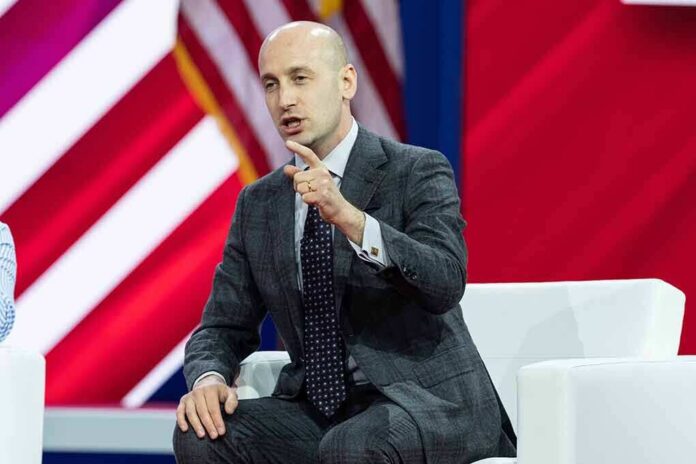
President Trump made immigration architect Stephen Miller White House chief of staff days after Republicans lost Congress, signaling no policy retreat.
Story Snapshot
- Trump promoted Miller to chief of staff soon after midterm losses, reflecting continuity on immigration.
- The White House praised Miller for “securing the border” and other priorities in its announcement.
- Reuters reporting ties Miller to directing the immigration crackdown and a 3,000-arrests-per-day target.
- Analysts caution that the move’s electoral meaning is unclear without deeper post-election data.
What Happened And Why It Matters
President Trump named longtime adviser Stephen Miller as the 33rd White House chief of staff on November 6, 2026, days after Republicans lost control of Congress. The role manages access to the president and sets daily priorities. Putting Miller in that seat puts an immigration hardliner at the nerve center. The White House framed the move as a reward for success on border security, crime, and fraud reduction, not as a course correction after defeat.
Reuters described Miller as the architect of the administration’s immigration crackdown during Trump’s second term. The reporting linked him to a push for broad arrests and a stated target of 3,000 arrests per day, far above prior levels. Supporters see that focus as proof he can drive execution inside the West Wing. Critics see it as a sign the administration will double down on a polarizing agenda despite the midterm outcome.
Signals Of Continuity, Not Retreat
Timing underscored the message. The promotion landed right after the election setback, and an administration voice told Reuters, “He’s not changing course”. The official White House release praised border security gains and cast Miller as central to those claims, which serves as an internal validation of the existing strategy. That narrative fits a broader pattern in Washington where staffing choices are used to signal intent without new written directives.
Susie Wiles, whom Miller replaced, publicly defended the administration’s record on securing the border and other priorities in previous reporting. That closing note from the outgoing chief reinforces the storyline of continuity. Backers argue that putting a veteran operator in charge will tighten decision-making and speed the agenda inside a divided capital. For many voters, though, the question is whether any of this improves daily life and fixes long-running system failures.
Public Opinion And The Limits Of The Evidence
Reuters reporting cited polling that found more Americans disapproved than approved of the crackdown earlier that week, suggesting national headwinds for hard-line enforcement. But the research package does not show that immigration alone drove the midterm losses. It also does not document a new post-election order to expand arrests, detention, or asylum limits tied directly to the promotion. Absent those records, the appointment signals intent more than it proves an operational shift.
That nuance matters for readers across the political spectrum. Voters who want strict enforcement may view Miller’s rise as overdue discipline after years of broken promises. Voters worried about due process, labor needs, or family impacts may see the move as more of the same. Many on both sides share a deeper frustration: leaders keep trading titles, but core problems—border chaos, legal backlogs, worker shortages, and cartel smuggling—remain unsolved. Personnel is not policy unless results follow.
What To Watch Next
Watch for formal directives, not just speeches. Documents would include new enforcement targets, detention capacity changes, or asylum-processing rules issued after November 6, 2026. Clear moves there would show Miller turning message into action. Track arrest and removal data over the next several months to see if outcomes change versus the period under Wiles. Compare any shift with seasonal patterns to avoid false spikes or dips.
🚨 CFR BREAKING NEWS: SUSIE WILES OUT AS WHITE HOUSE CHIEF OF STAFF — STEPHEN MILLER TAKES OVER!
Chicago Flips Red | November 7, 2026
President Donald Trump has announced a major White House leadership change following the November 3 midterm elections.
Susie Wiles, the first… pic.twitter.com/hZ9XVRCX9g
— Chicago Flips Red (@FlipChicagoRed) November 7, 2026
Also watch Congress. Even after losing both chambers, the administration can steer agencies and test legal authority. But budget fights, court rulings, and state pushback can complicate plans. Finally, watch public opinion. If arrests rise while border crossings fall, supporters will claim vindication. If costs, backlogs, or humanitarian concerns grow, opposition will harden. Either way, the deeper issue remains: Americans want a system that is firm, fair, and functional—and a government that delivers.