

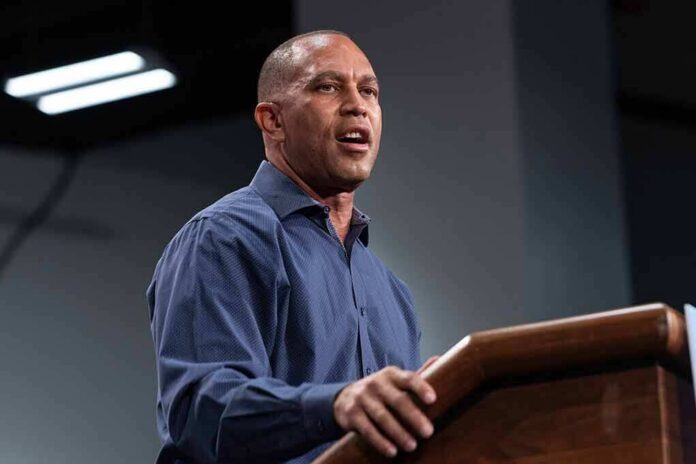
Progressive Democrats are openly challenging Hakeem Jeffries’s path to the speakership, citing his cautious stance on impeachment and ties to powerful donors as proof the party’s leadership listens to elites, not voters.
Story Snapshot
- Progressives fault Jeffries for a restrained impeachment posture toward President Trump, widening a party rift.
- Reports highlight major donor support for Jeffries, including pro-Israel networks and tech defense executives.
- Jeffries pitches an “affordable America” agenda, not impeachment, as Democrats’ unifying message.
- The fight reflects a historic struggle over whether the speakership serves activists, donors, or broad voters.
What Sparked The Intra-Democratic Clash
The week after the midterms, Hakeem Jeffries told reporters that House Democrats were not actively discussing impeaching President Trump, even as members split over whether to push charges or avoid alienating swing voters. That stance angered some progressive activists who want aggressive oversight now. They argue a soft approach lets wrongdoing go unpunished and sends a weak signal to the base. Party veterans counter that voters care most about costs, not courtroom drama.
Jeffries has tried to focus the caucus on a pocketbook message. He has said Democrats should lead with a plan to lower the cost of groceries, gas, housing, and health care, while holding bad actors accountable through regular oversight. His team frames this as the best way to build a stable majority and pass bills that help working people. Supporters say a speakership anchored in cost relief can unite liberals, moderates, and rural Democrats under one banner.
Why Donor Relationships Became A Flashpoint
Investigative reports on campaign money poured gasoline on the fire. Coverage detailed large contributions to Jeffries’s political network from the pro-Israel lobby and from executives tied to defense-tech and crypto industries. One report tracked tens of millions in giving by the American Israel Public Affairs Committee’s political arm this cycle, with substantial support across Congress. Critics say that kind of money can tilt access and priorities. Jeffries’s allies answer that donations do not buy votes or set his agenda.
The donor debate is not new, but the scale invites scrutiny in a moment of hard choices. Academic work on campaign finance shows mixed effects. Some studies find money can shape who wins and how leaders are chosen, which can change policy lanes in practice. Other research finds little direct link between contributions and floor votes, once district views are factored in. That split helps explain why many voters in both parties suspect Washington works for big funders first.
How The Speakership Stakes Affect Daily Life
The speakership is not just a title. The speaker sets the floor schedule, shapes committee priorities, and decides which bills live or die. If Jeffries wins, he plans to move affordability bills first, then pursue oversight aimed at waste, fraud, and abuse. Progressives pushing harder confrontations want hearings with teeth and faster timelines. The strategy choice affects issues families feel daily: food prices, rents, energy costs, and access to care. It also shapes how Congress counters executive power.
History shows these fights are not unusual. Past battles over the gavel tested party identity and control of the House agenda. Nineteenth-century speakership races show that even a winner can struggle to command a diverse caucus once voting starts. Today’s version adds modern pressures: nonstop media, outside money, and close national elections. Each factor makes compromise harder, even when most voters want cheaper bills and safer streets more than constant brawls.
What Each Side Is Really Arguing
Progressives argue that caution looks like capitulation. They point to promises about accountability and say anything less than full use of House powers risks normalizing misconduct. They warn that donors linked to defense-tech and foreign policy groups could narrow the debate on war, surveillance, and civil liberties. They want clarity now about red lines, timelines, and votes. Their core message: the people, not the patrons, should set the agenda.
🚨 NEW | Rep. Ro Khanna on Hakeem Jeffries becoming House Speaker despite opposition:
“Hakeem Jeffries is going to be House Speaker and is going to have the unanimous support of the caucus” pic.twitter.com/0x3afGs0K7
— Jimmy Media (@JimmyJMedia) November 8, 2026
Jeffries’s camp argues that voters hired Democrats to bring costs down first. They note that impeachment battles often fail to move elections and can even backfire in swing seats if they dominate cable news. They promise standard oversight to check corruption, but not at the expense of grocery and gas relief. Their core message: deliver results people can feel, then earn the trust to do more. This is the classic governing-versus-mobilizing tradeoff inside both parties.
How To Read The Signals Without The Spin
pjmedia.com, readsludge.com, britannica.com, wsj.com, npr.org, journals.plos.org, academic.oup.com